
Architectural Capriccio — History & Facts
Could a single brushstroke hold eternity? In Architectural Capriccio, the chaos of imagination collides with the structured beauty of architecture, inviting viewers into a realm where madness and creation intertwine. Focus first on the grand structures that dominate the canvas, their exaggerated forms twisting and spiraling in a dizzying array of colors. Notice how the light dances upon the ornate facades, revealing shades of ochre and azure that pulse with energy. The surreal alignment of these buildings, seemingly defying gravity, draws the eye upward, as if beckoning the viewer to lose themselves in a world where logic takes a backseat to creativity. Hidden within this tumult of form lies a commentary on the fragility of human reason.
The distorted proportions hint at the madness that often accompanies artistic genius—an intricate balance between order and chaos. As the viewer explores the vibrant palette, they might sense the underlying tension between aspiration and instability, capturing the fervor of a mind teetering on the brink of brilliance and insanity. François de Nomé created Architectural Capriccio during a period of experimentation in the late 17th century. Known for his imaginative compositions that challenged conventional perspectives, he thrived in a time when artists sought to push boundaries.
This work reflects the innovative spirit of an era rich with artistic exploration, as well as Nomé's own struggle to harmonize the visionary with the tangible in his pursuit of beauty.
More Artworks by François de Nomé
Browse all →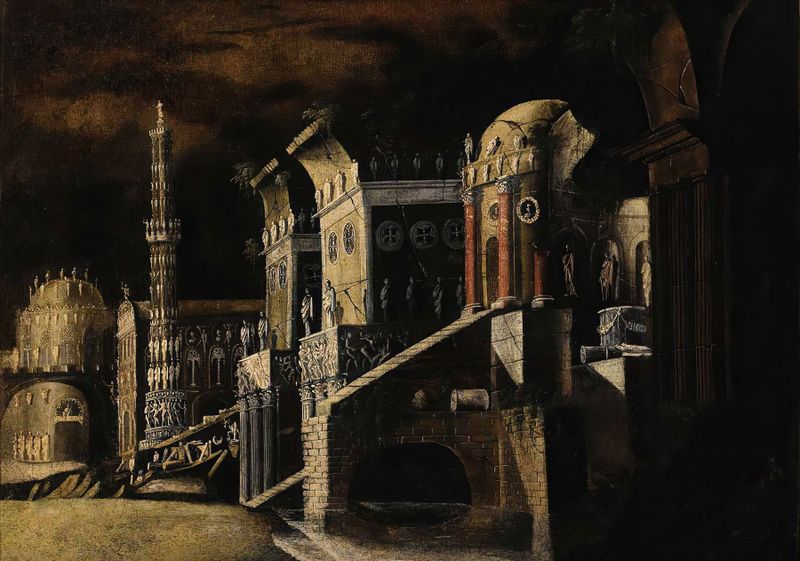
More Architecture Art
Browse all →
The statue of Liberty
Frédéric Auguste Bartholdi

View of Houses in Delft, Known as ‘The Little Street’
Johannes Vermeer

View of Houses in Delft, Known as ‘The Little Street’
Johannes Vermeer

The Cathedral in Rouen. The portal, Grey Weather
Claude Monet

The yellow house
Vincent van Gogh

The Church in Auvers-sur-Oise, View from the Chevet
Vincent van Gogh