
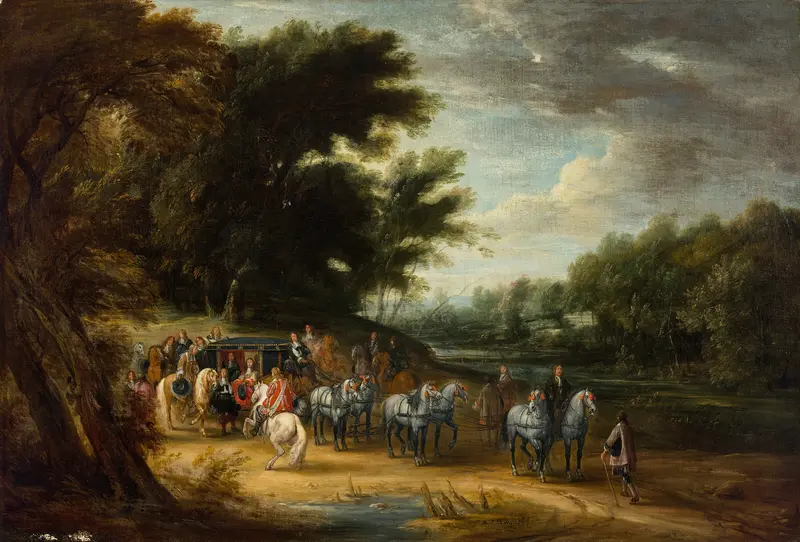
Arrival of Louis XIV at the army camp near Maastricht — History & Facts
What first catches the eye in this sweeping landscape is not the clash of armies, but the careful choreography of power: a mounted figure, splendidly dressed and surrounded by an attentive retinue, advances through a sea of soldiers and horses. The painter draws your gaze from this cluster of richly attired horsemen, across the rolling green plain, to the distant city on the horizon—its spires and towers just visible beneath a sky heavy with clouds and smoke. The drama here is one of arrival and anticipation: the king’s presence transforms the field into a stage, every gesture and glance among the figures signaling alertness, command, and the weight of expectation.
The wide, low horizon gives the sky a commanding role, its shifting light and shadow echoing the uncertainty and grandeur of the moment. Painted in 1673 by Adam Frans van der Meulen, this work belongs to the world of late seventeenth-century court painting, when grand military scenes were commissioned to celebrate royal victories and project the might of the Bourbon monarchy. Artists like van der Meulen were prized for their ability to blend documentary detail with theatrical spectacle, often accompanying the king himself on campaign to record such events. These paintings served as both propaganda and commemoration, destined for palaces and galleries where they would remind viewers of royal glory.
History has kept few traces of this particular version, now documented in the Shonagon collection, but its sweeping vision and careful staging invite us to imagine the ambitions—and anxieties—of a world where power was always on display. Look again at the horizon: the city waits, the outcome uncertain, the king at the center of it all.
Sources: Wikidata Q25174343 · Image source (Wikimedia Commons)
More Artworks by Adam Frans van der Meulen
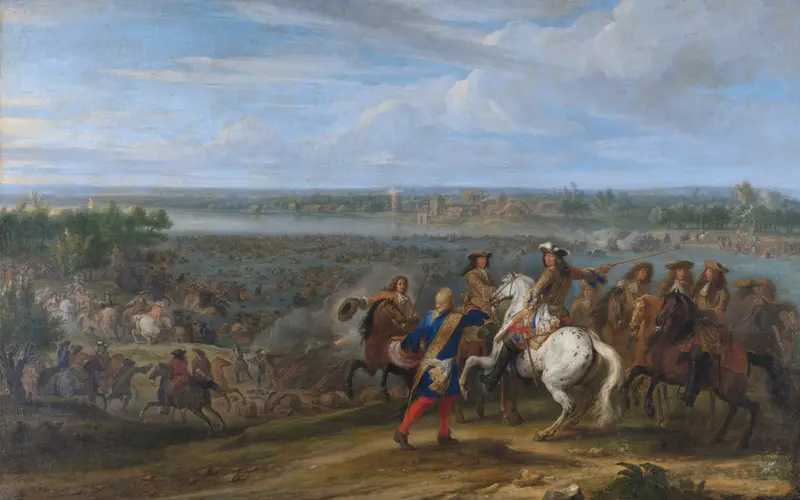
Louis XIV Crossing into the Netherlands at Lobith
Adam Frans van der Meulen
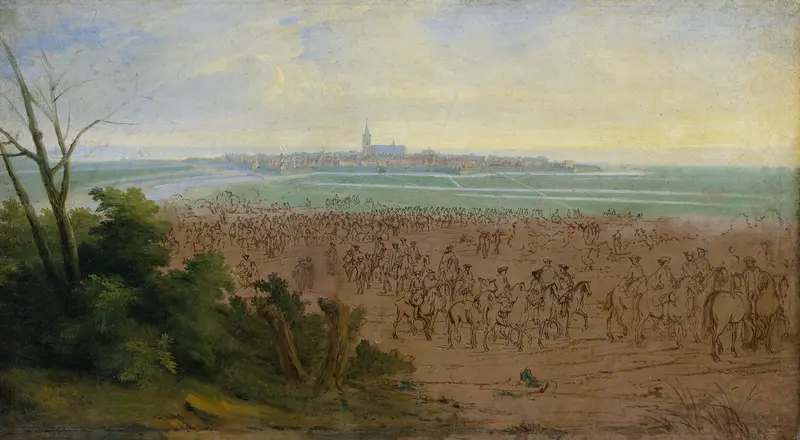
The Troops of Louis XIV before Naarden, 20 July 1672
Adam Frans van der Meulen
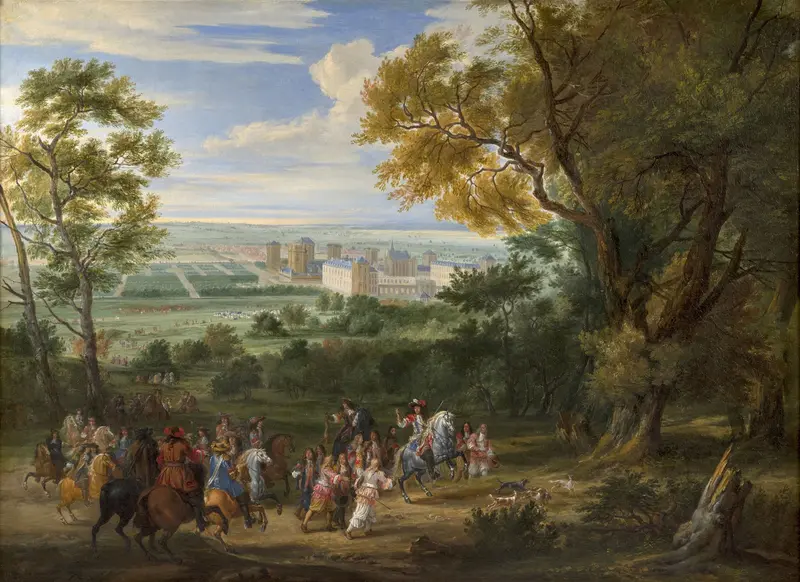
View of the château de Vincennes or The Departure of Louis XIV for the hunt
Adam Frans van der Meulen

A battle scene
Adam Frans van der Meulen
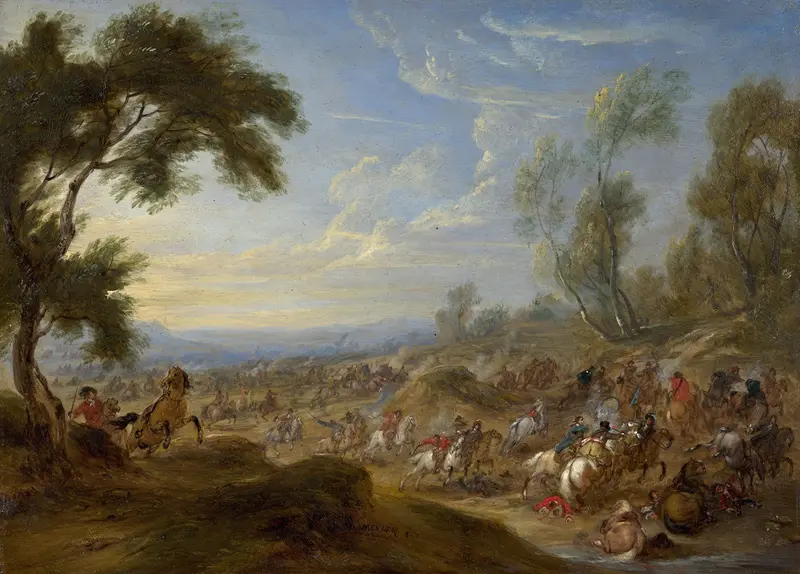
A cavalry charge
Adam Frans van der Meulen
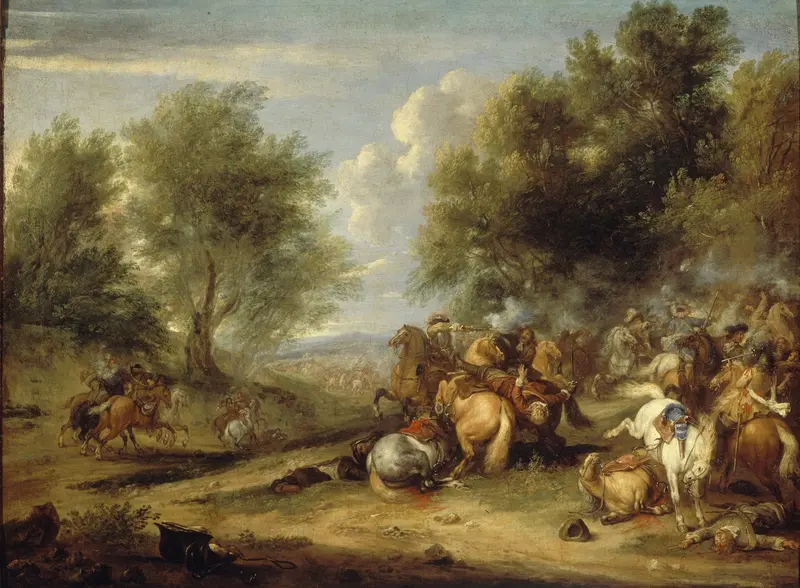
Choc de cavalerie ou Combat de cavalerie
Adam Frans van der Meulen
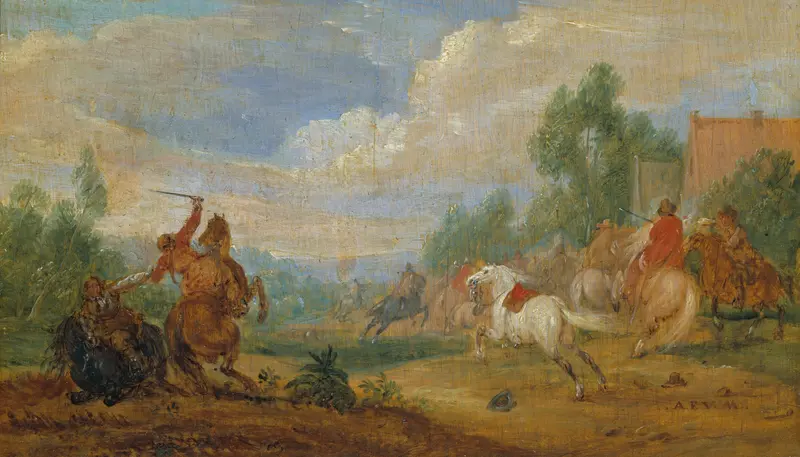
Cavalry Skirmish
Adam Frans van der Meulen
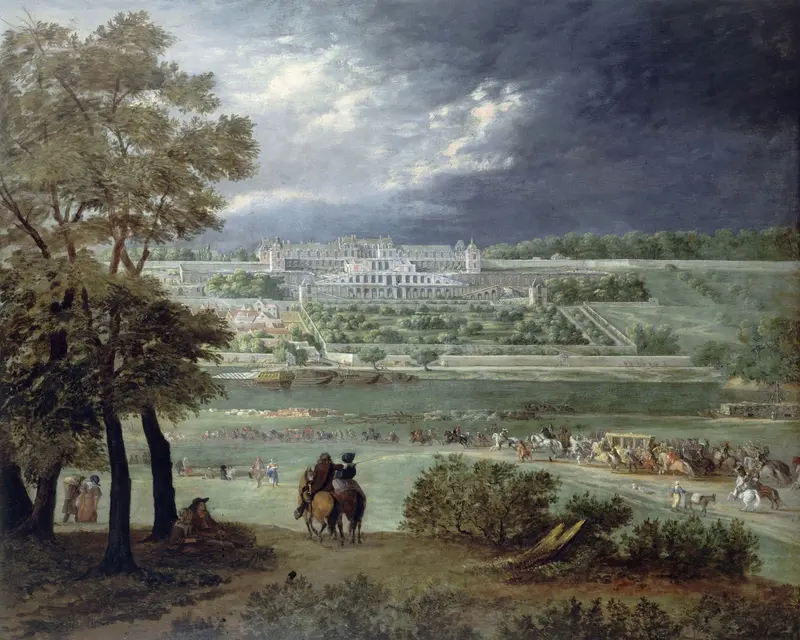
Le Château Neuf de Saint-Germain-en-Laye et les jardins, vus de la rive droite de la Seine
Adam Frans van der Meulen
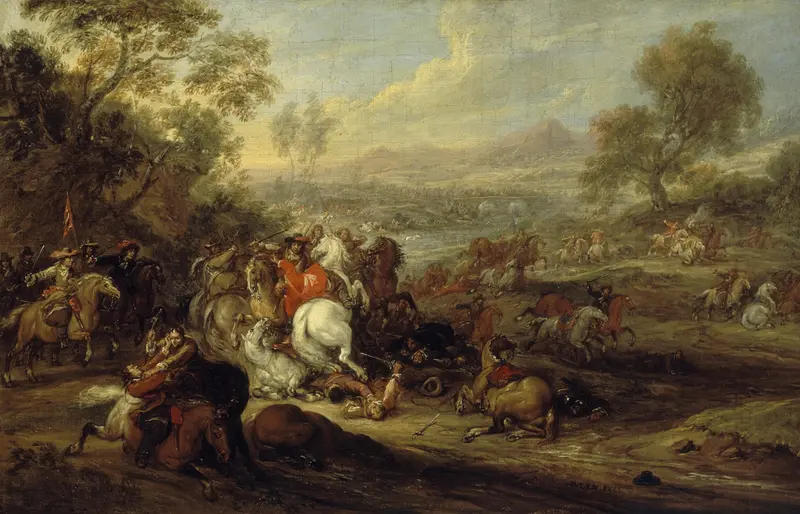
Choc de cavalerie ou Combat de cavalerie
Adam Frans van der Meulen
A nobleman in a state coach at rest escorted by his men and horses, with a gentleman on a white horse approaching and landscape beyond
Adam Frans van der Meulen





