
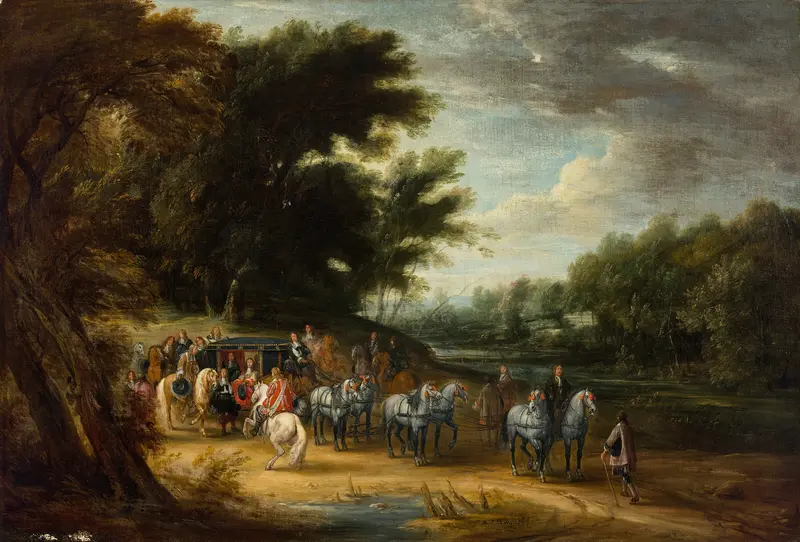
Arrivée de Louis XIV à Chambord Chambord — History & Facts
A golden carriage, drawn by a team of white horses and surrounded by a lively escort, catches the eye as it winds its way through a sun-dappled avenue toward the distant grandeur of Chambord. The painter, Adam Frans van der Meulen, orchestrates the scene so that every detail—the restless horses, the alert riders, the watchful figures pointing ahead—serves to heighten the sense of anticipation. The light draws the viewer’s gaze from the shadowed foreground, where courtiers and soldiers cluster beneath ancient trees, to the open expanse and finally to the castle itself, poised like a prize at the end of the journey.
The vast sky and the measured distance between the procession and the château give the event an air of ceremony and spectacle, making the arrival feel both momentous and meticulously staged. Works like this, painted in the 1670s, belong to a world where royal pageantry was not just a display but a statement of power and order. In the age of Louis XIV, such scenes were commissioned to immortalize the king’s movements and reinforce his presence across his domains—here, at the Château de Chambord, a symbol of royal magnificence. Van der Meulen was known for capturing these grand events, blending landscape and history painting to serve the ambitions of court and crown.
Though little may be recorded about this specific canvas beyond its home at Chambord, it stands as a window onto the rituals and ambitions of seventeenth-century France, inviting the viewer to imagine the sounds, the excitement, and the careful choreography of royal arrival.
More Artworks by Adam Frans van der Meulen
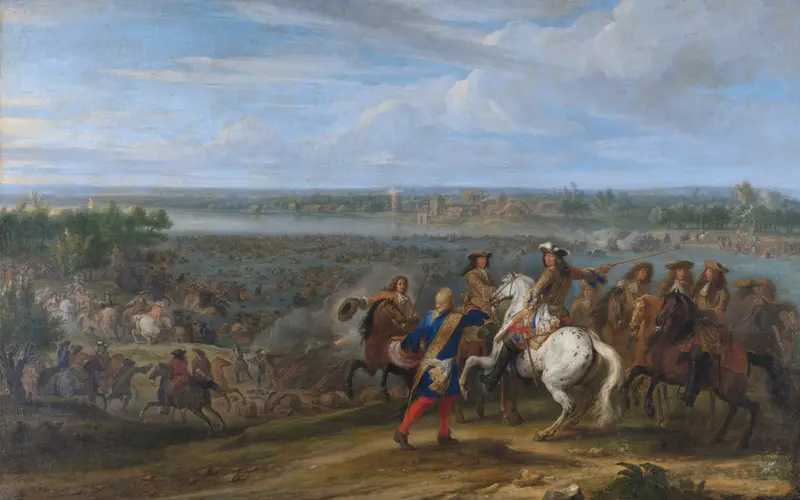
Louis XIV Crossing into the Netherlands at Lobith
Adam Frans van der Meulen
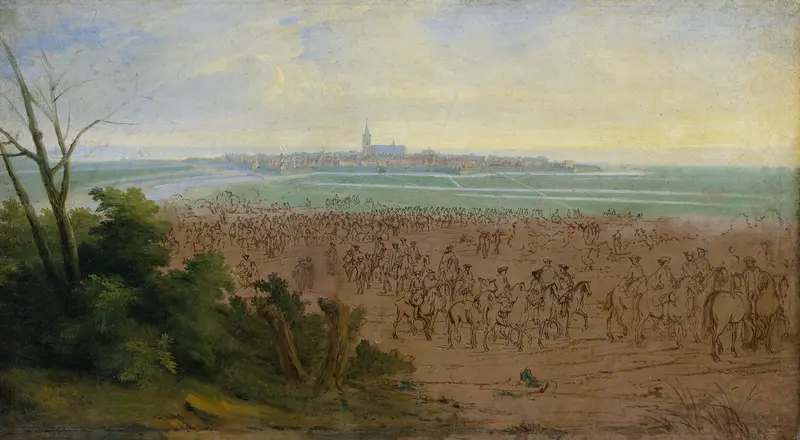
The Troops of Louis XIV before Naarden, 20 July 1672
Adam Frans van der Meulen
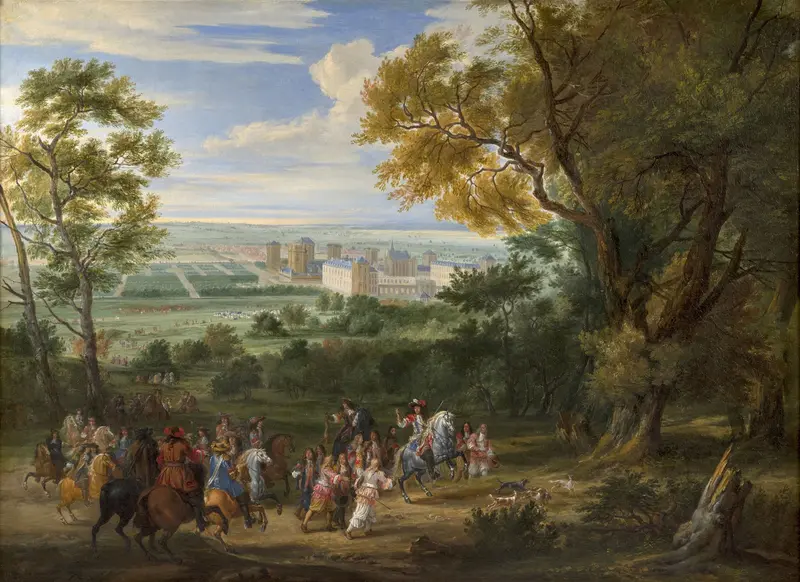
View of the château de Vincennes or The Departure of Louis XIV for the hunt
Adam Frans van der Meulen

A battle scene
Adam Frans van der Meulen
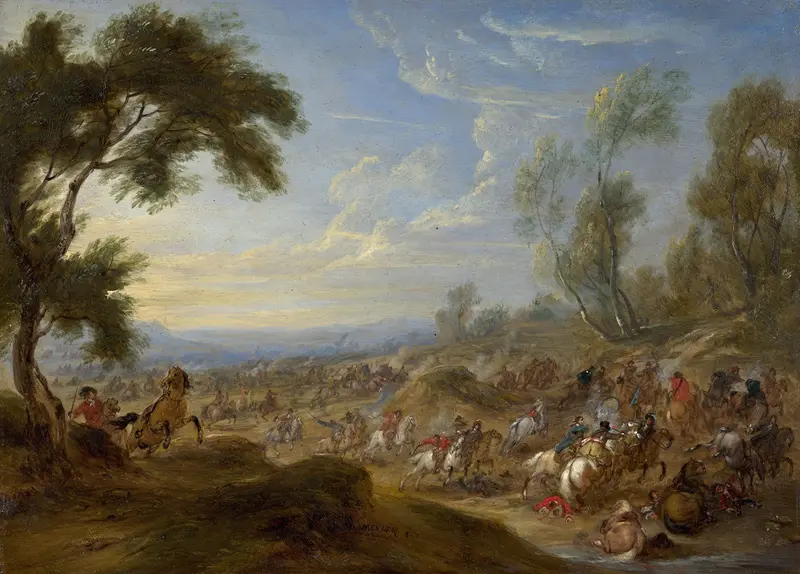
A cavalry charge
Adam Frans van der Meulen
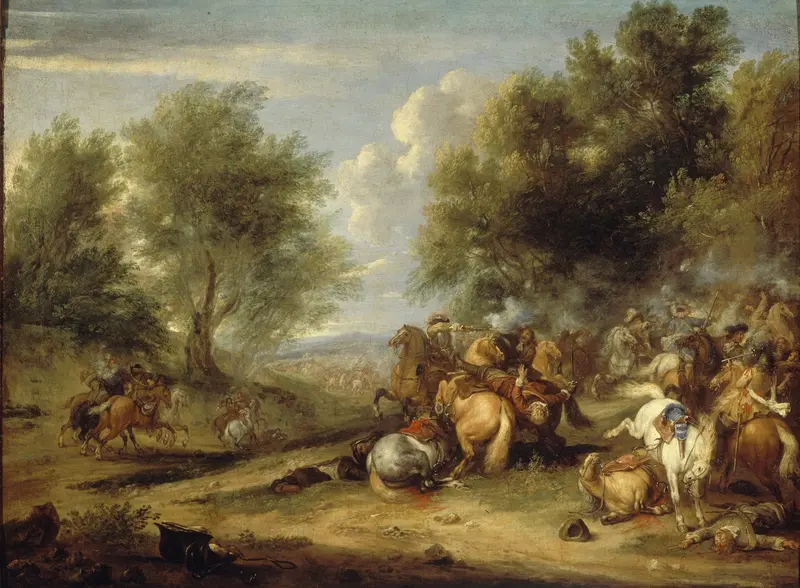
Choc de cavalerie ou Combat de cavalerie
Adam Frans van der Meulen
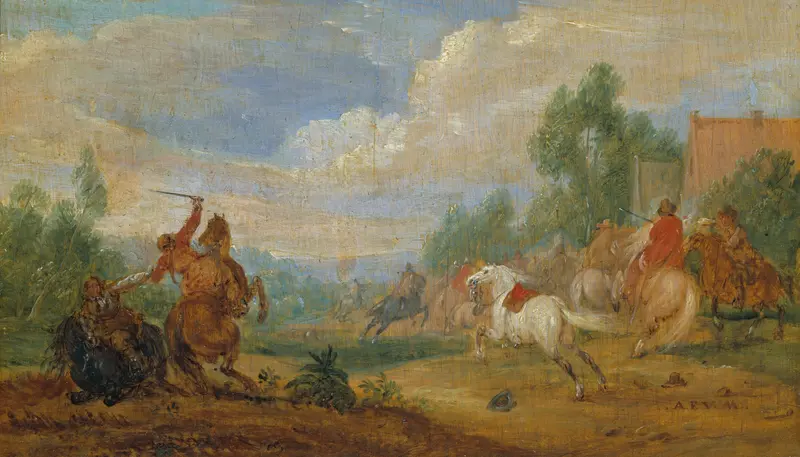
Cavalry Skirmish
Adam Frans van der Meulen
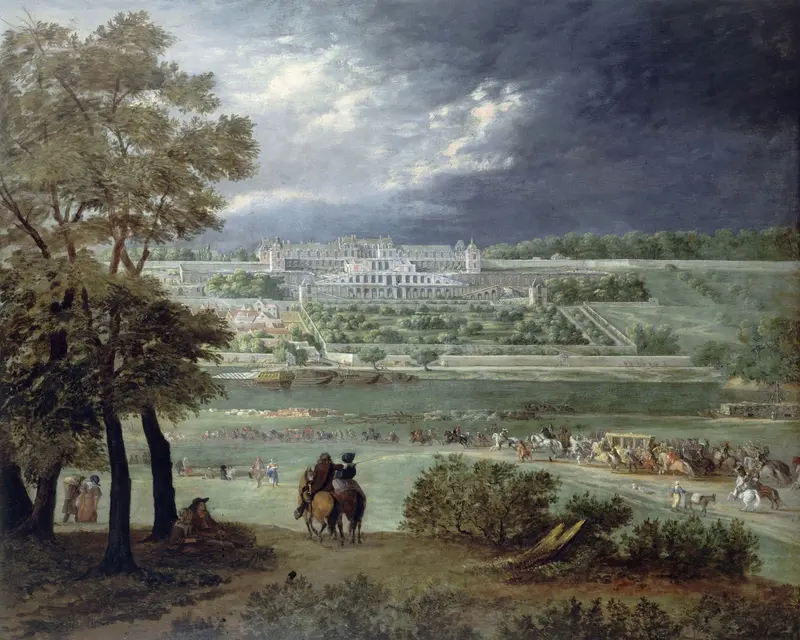
Le Château Neuf de Saint-Germain-en-Laye et les jardins, vus de la rive droite de la Seine
Adam Frans van der Meulen
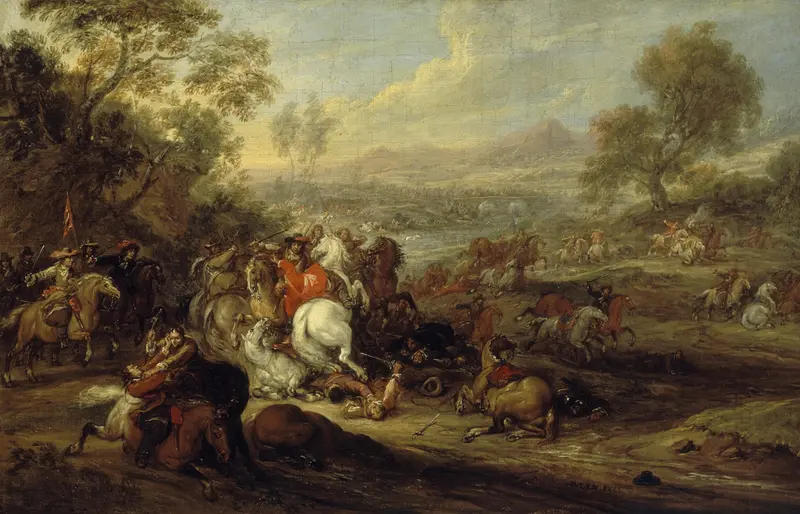
Choc de cavalerie ou Combat de cavalerie
Adam Frans van der Meulen
A nobleman in a state coach at rest escorted by his men and horses, with a gentleman on a white horse approaching and landscape beyond
Adam Frans van der Meulen





