Aspen Symphony — History & Facts
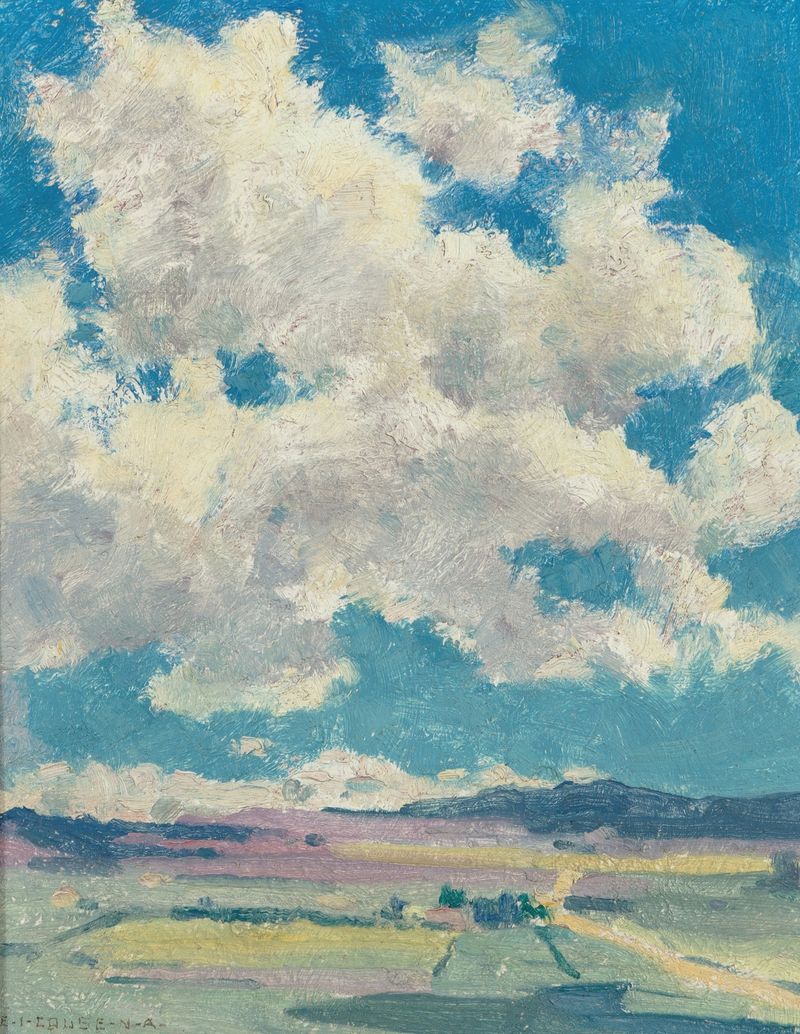
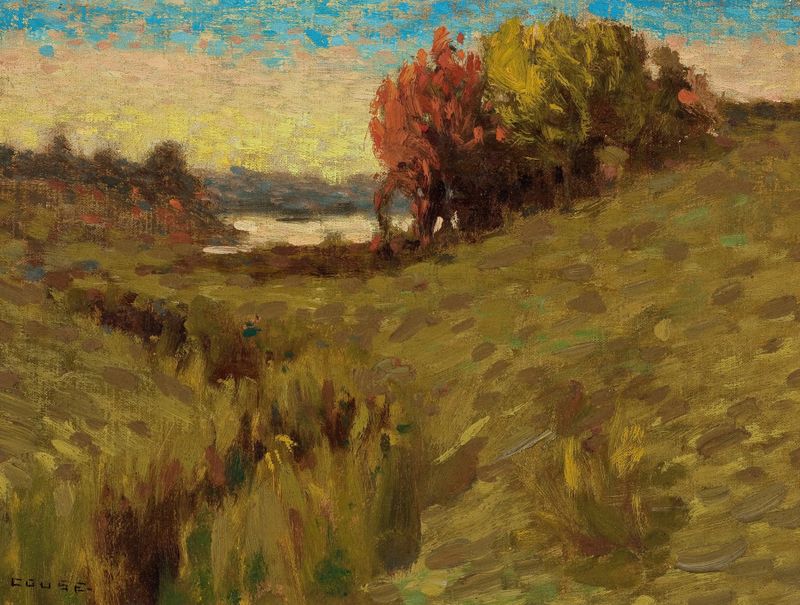
This sentiment resonates deeply within the luminous brushstrokes of Aspen Symphony. Capturing the interplay of light and shadow, the painting invites viewers to ponder the delicate balance between serenity and sorrow found in nature. Look to the upper left, where sunlight filters through the canopy of aspen trees, casting a golden glow upon the forest floor. The vibrant greens and warm golds interplay beautifully, weaving a tapestry of life and light that seems to pulse with energy.
Notice how the artist's deft use of texture elevates the foliage, each leaf seeming to shimmer and dance in a gentle breeze, revealing a world that is alive and breathing. Beneath the surface beauty lies a poignant tension. The aspen trees, typically symbols of resilience and renewal, stand sentinel amid a landscape that hints at impermanence. The gold highlights, while radiant, evoke a sense of fragility—a reminder that beauty often masks deeper truths.
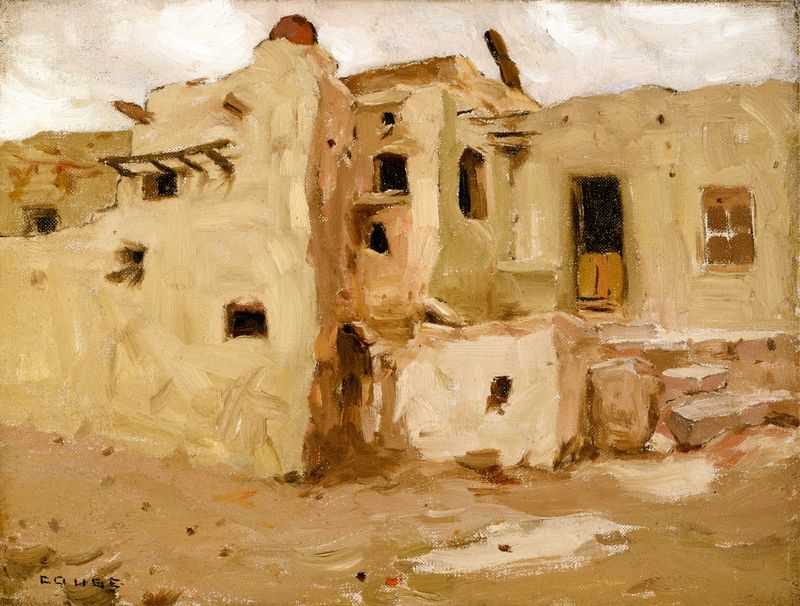
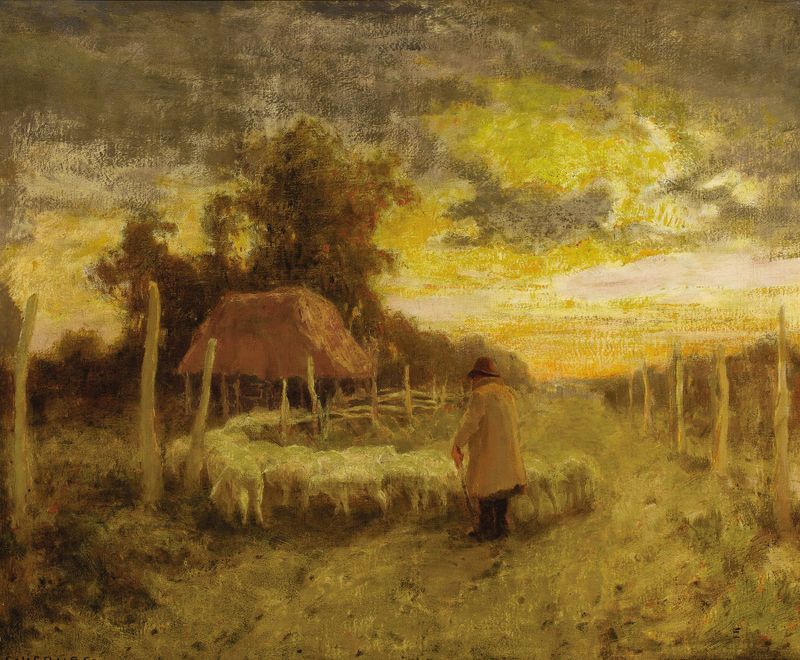
Couse’s choice of color palettes not only captures the awe of nature but also subtly communicates the underlying struggles that accompany life’s ephemeral moments. Created in 1902, this piece emerged during a transformative period for Eanger Irving Couse, who was deeply influenced by the American West. Living in Taos, New Mexico, he was part of a community of artists redefining American art. This painting reflects his evolving style, a blend of impressionism and a burgeoning appreciation for the landscapes and cultures around him, as he sought to convey both the majesty of nature and the complexities of human experience.