Sheep at Santa Cruz — History & Facts
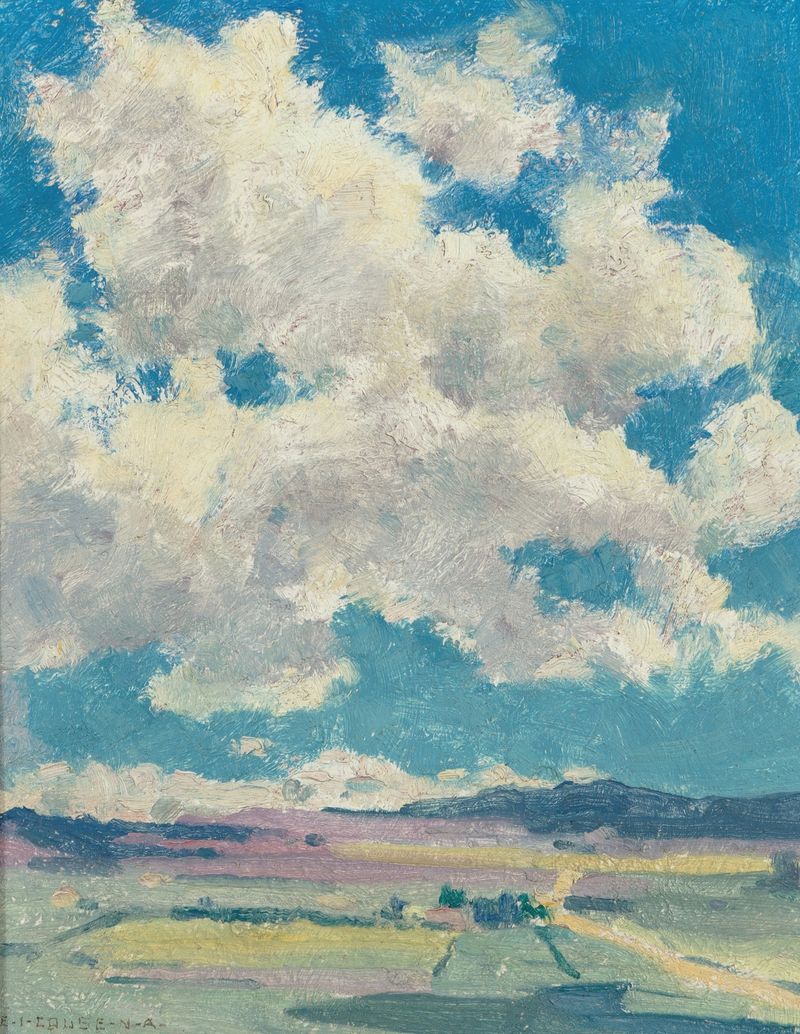
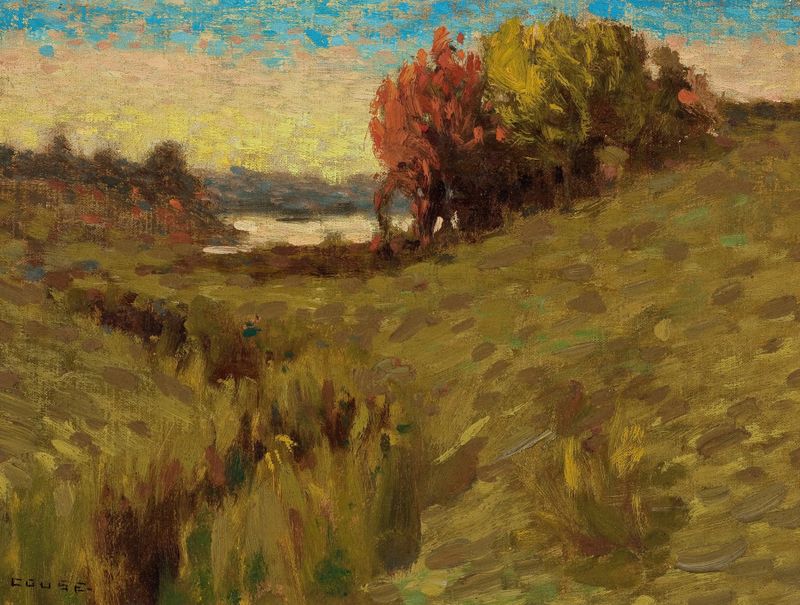
Is this a mirror — or a memory? In the quietude of Sheep at Santa Cruz, we find ourselves reflecting on the essence of truth as it intertwines with the fleeting nature of existence. Look to the left at the grazing sheep, their woolly forms softened by dappled sunlight filtering through the surrounding foliage. The artist’s brushwork creates a textured representation of the landscape, inviting the eye to dance among layers of greens, browns, and muted hues. Notice how the light seems to caress the sheep's coats, imbuing them with a sense of warmth and vitality, while the gentle undulations of the terrain guide our gaze deeper into this pastoral scene. Yet, beneath the tranquil surface lies a dichotomy of vulnerability and serenity.
The sheep, symbols of simplicity and innocence, are juxtaposed against the expansive sky, hinting at the vast unknown. This contrast may reflect a deeper exploration of the struggle between the comfort of the familiar and the allure of the untamed world beyond. Each brushstroke captures not just the landscape but the ephemeral nature of life itself, evoking a profound sense of nostalgia. Created during a period of significant change in the early 20th century, the artist worked diligently in New Mexico, where he sought to capture the unique interplay of light and land.
It was a time when the American art scene was increasingly drawn to the beauty of the West, exploring its landscapes and cultures. The evolution of Impressionism influenced Sheep at Santa Cruz, as Couse aimed to convey the truth of a moment — one that resonates even in its stillness.