Landscape at Dawn — History & Facts
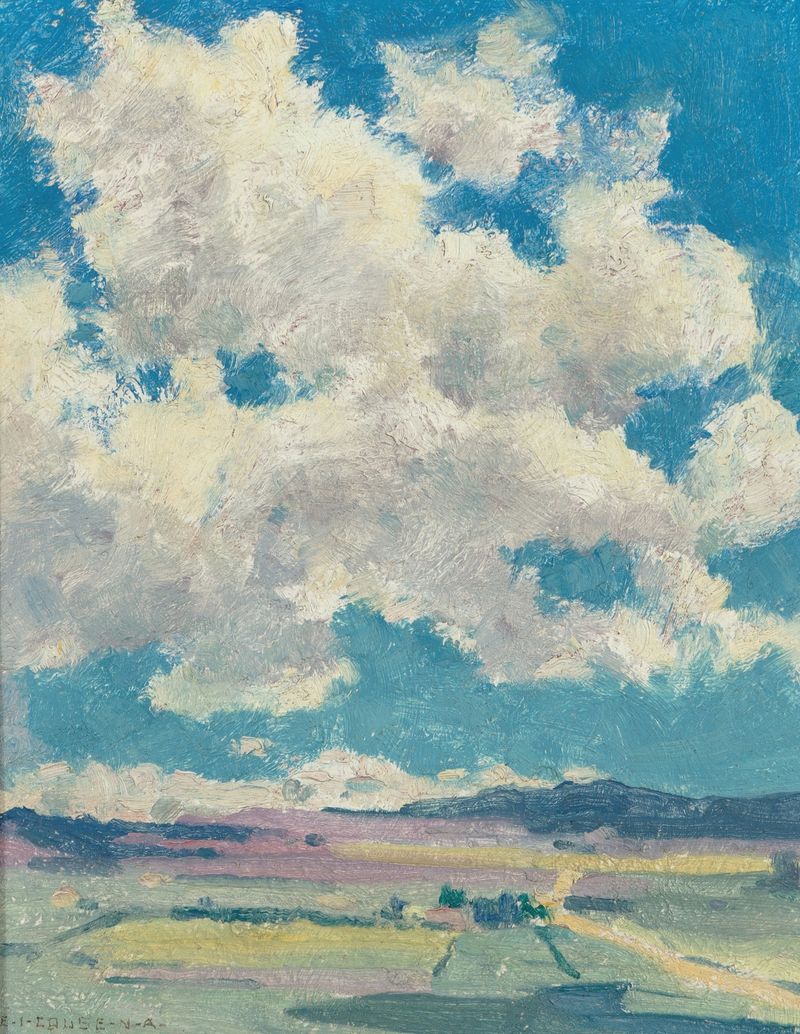
Can paint confess what words never could? In Landscape at Dawn, Eanger Irving Couse captures an ethereal truth that whispers to the soul, inviting us to look beyond the surface. Focus on the hazy horizon first, where the delicate interplay of pastel hues—soft pinks, gentle oranges—melds into a serene blue sky. The brushwork creates a sense of movement, as if the dawn itself breathes life into the landscape below. Notice how the trees stand silhouetted against the awakening light, their forms both sturdy and fragile, embodying the quiet resilience of nature.
Each stroke reveals the artist's deep reverence for the tranquility of this moment, drawing us into his world of solitude and peace. Within the stillness lies a profound contrast: the promise of a new day juxtaposed with the enduring shadows of night. Each element—the glimmer of dew on the grass, the golden light breaking through the branches—whispers of renewal, yet hints at the fleeting nature of these precious dawn moments. The painting encourages reflection on life's transient beauty, inviting viewers to pause and contemplate the emotional resonance of a world in transition. Couse painted this work during a time of exploration and expression in American art, likely in the early 20th century while living in New Mexico.
As a member of the Taos Society of Artists, he sought to capture the enchanting landscapes of the American Southwest, influenced by the region’s unique light and colors. His commitment to depicting the spirit of the land resonated with a growing fascination for nature in the art world, marking a significant chapter in the history of American landscape painting.