At Hale, Lancashire — History & Facts
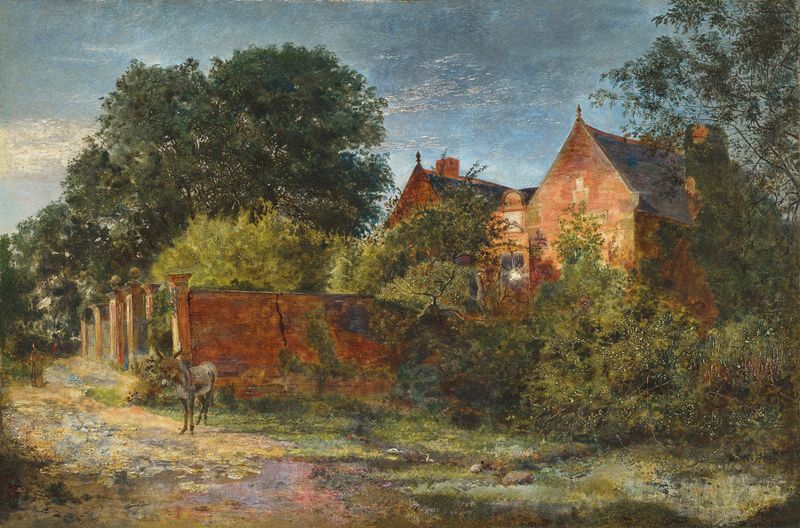
Is this a mirror — or a memory? A fleeting moment captured in time, an invitation to reflect on the legacies we inherit and the landscapes that shape us. Look to the right at the gentle contours of the hills, bathed in a soft, amber light that suggests the onset of dusk. The foreground is alive with delicate wildflowers, their colors rich against a muted backdrop, drawing the viewer’s eye towards the horizon where the sky melts into dusky pastels. The brushwork reveals a delicate balance between realism and impressionism, allowing the viewer to sense the texture of each petal and blade of grass, and to feel the atmosphere wrap around them like a soothing embrace. Beneath the serene beauty lies a subtle tension — the juxtaposition of the vibrant flora against the shadowy hills suggests a dichotomy of life and memory.
The play of light hints at the passage of time; it beckons the viewer to consider what has come before and what may lie ahead, echoing the themes of heritage and the unseen stories of generations. Each stroke seems to hold a narrative, urging us to explore the bonds between the land and those who tread upon it. William Davis created this piece during a time when England’s industrial landscape was rapidly changing, likely in the late 19th century. As the world around him transformed, artists sought to capture the essence of the natural world before it was irrevocably altered.
This work encapsulates not just a visual reality, but an emotional one, reflecting both personal and collective memories shaped by the land.