View from Bidston Hill — History & Facts
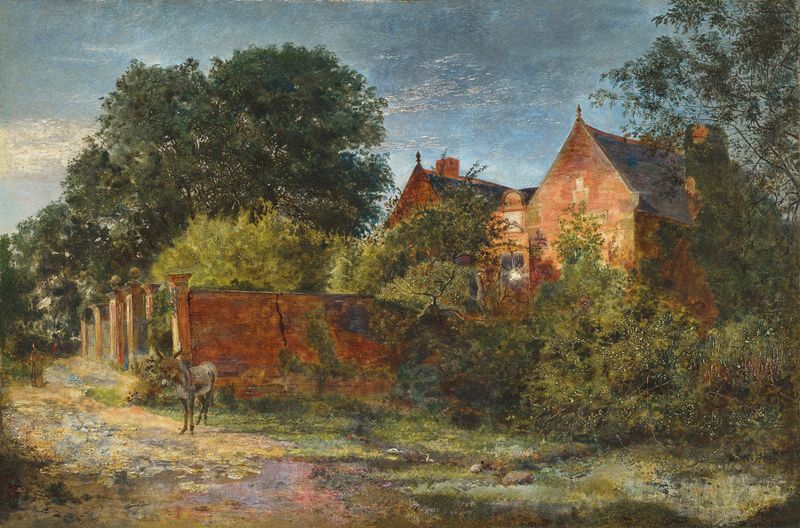
Where does light end, and longing begin? In the soft illumination of a distant landscape, the viewer is caught in a silent dialogue between earth and sky, reflecting on the vastness that lies before them. Focus on the foreground, where lush greenery spills into the scene, inviting the eye to trace its vibrant strokes. The horizon is a gentle gradient, where cerulean skies melt into soft golds and muted grays, hinting at the day’s end. Notice how the light delicately bathes the rolling hills, accentuating their contours and casting elongated shadows that breathe life into the canvas.
This interplay of color and technique draws you deeper, enveloping you in the gentle embrace of nature’s beauty. Yet within this serene vista lies a tension between reality and aspiration. The hills, though inviting, seem to pull away, suggesting the unattainable nature of dreams. The meticulously rendered clouds, both ethereal and heavy, evoke a sense of transience, symbolizing fleeting moments of clarity amidst life’s uncertainties.
Each brushstroke captures a stillness that hints at both peace and yearning, reflecting the artist’s own internal landscape. In the mid-19th century, while residing in his native England, the artist was immersed in a period of growing Impressionism, yet View from Bidston Hill firmly stands as a testament to Romantic ideals. Painted between 1856 and 1865, a time of personal exploration and burgeoning artistic identity, this work encapsulates the era’s fascination with nature and the human experience—both serene and fragmented.