At the Bazaar, Cairo — History & Facts
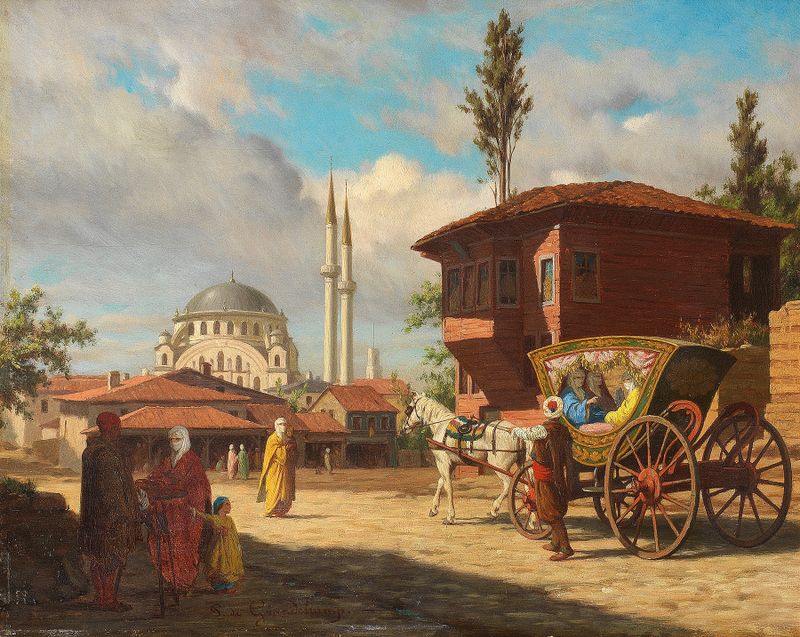
Is this a mirror — or a memory? In At the Bazaar, Cairo, vivid colors and bustling forms blend into a tapestry of life, drawing us into a moment that feels both fleeting and eternal. Here, we find a revelatory glimpse into the heart of a vibrant marketplace, where each detail echoes the pulse of the crowd and the whispers of commerce. Look to the left at the rich tapestry of textiles displayed on the tables, their intricate patterns alive with color. Notice how the light dances across the vibrant fabrics, illuminating the deep blues and fiery reds that suggest both warmth and allure.
The composition invites the viewer's eye to wander, guiding us through a labyrinth of faces and hands, each engaged in their own story. The artist deftly uses a loose brush technique that evokes movement and spontaneity, making the viewer feel like an unseen participant in this bustling bazaar. Amidst the chaos, a subtle harmony emerges. The juxtaposition of the vendors' animated gestures against the calm demeanor of a solitary figure in the background speaks to the contrasts present in daily life — the fervor of trade versus the tranquility of contemplation.
A carefully positioned shadow hints at the complexities of cultural exchange and the interplay between the old and the new. Each face tells a story, and the viewer is compelled to question the relationships and histories interwoven within this marketplace. Painted during a time of exploration and fascination with Eastern cultures, At the Bazaar, Cairo reflects an era when Europe was captivated by the exotic. De Grandchamp created this piece amidst a rich artistic landscape where Orientalism flourished, revealing his deep engagement with the vibrancy and diversity of Cairo's life.
The work stands as a window into not only the artist's experience but also a broader understanding of cross-cultural interactions during the 19th century.