At the Edge of the Forest — History & Facts
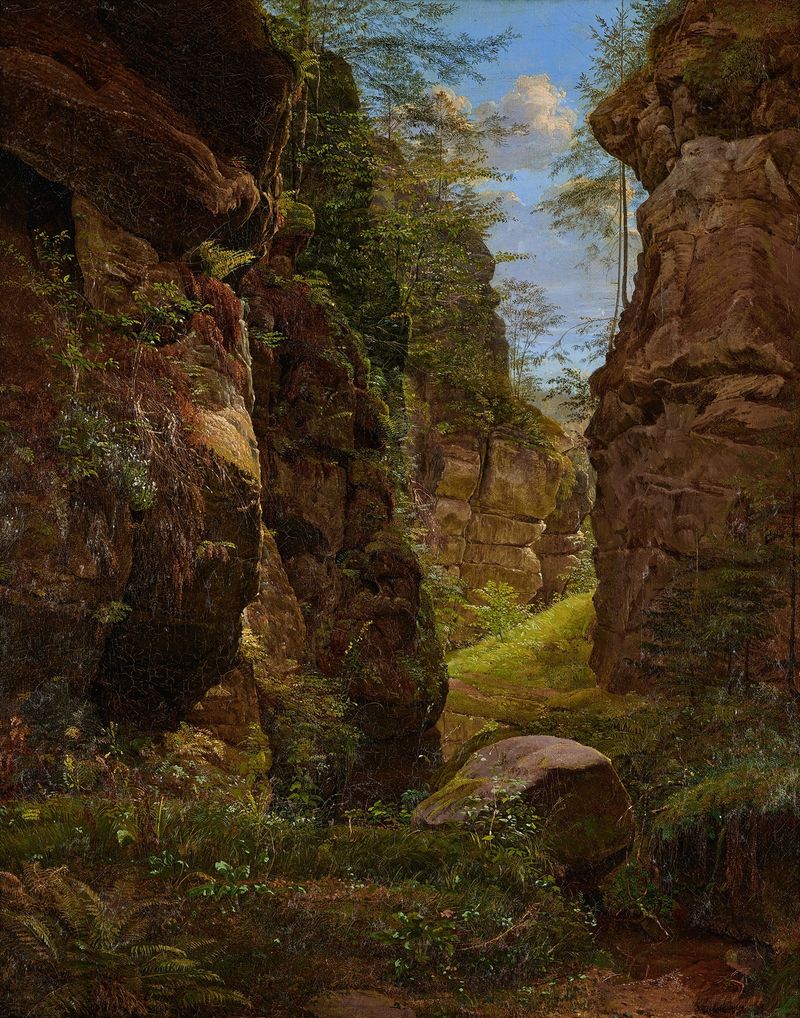
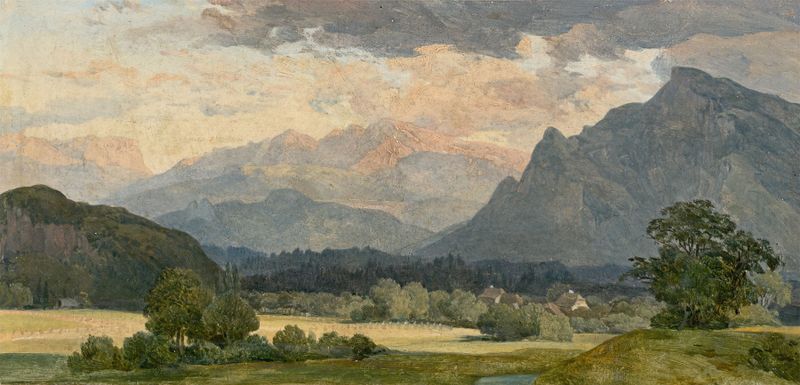
Who listens when art speaks of silence? In At the Edge of the Forest, the stillness of a moment becomes an invitation, a whisper of ecstasy captured in time. Look to the left at the delicate interplay of light and shadow. Here, the sun filters through the dense canopy, casting dappled patterns on the forest floor. The artist employs a rich palette of greens and earthy browns, evoking the serene yet vibrant life of nature.
Notice how the brushstrokes vary — smooth and fluid in the foliage, contrasted by the textured, almost tactile depiction of the undergrowth. This meticulous attention to detail feels like a breath caught between anticipation and reflection. Beneath the surface lies a tension between stillness and potential movement. The forest edge, a liminal space, symbolizes both safety and uncertainty.
The vibrant colors suggest life teeming just beyond the frame, while the quiet, shadowed areas hint at the mysteries and untold stories lurking within. This duality invites viewers to consider their own experiences of ecstasy and trepidation, urging them to confront the spaces that exist between the known and the unknown. In 1820, August Heinrich crafted this work during a period of personal and artistic exploration. Living in Germany, he was influenced by the Romantic movement, which sought to evoke emotional resonance through nature.
This painting reflects the artist's deep connection to the natural world, a response to the societal changes of his time and an embrace of the sublime experience that art can evoke.