The Watzmann seen from the North-East, and Some Sketches of a Mountain — History & Facts
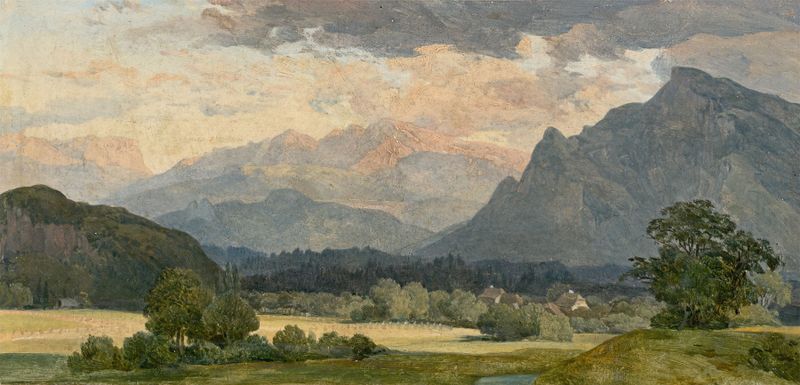
Who listens when art speaks of silence? The essence of melancholy permeates the canvas, inviting the viewer to linger in a state of reflection. Look to the foreground, where rugged peaks rise like ancient sentinels against a backdrop of muted skies. The artist employs a palette of deep greens and somber grays, accentuating the weight of the clouds that loom overhead. Notice how the light, barely breaking through the dense atmosphere, casts long shadows over the mountain slopes, creating a profound sense of solitude.
Sketches flit around the periphery, suggesting the artist’s intimate connection to the landscape, each one a whispered thought captured on the page. In this landscape, contrasts abound: the immensity of the Watzmann looms over delicate lines of human endeavor, hinting at both the beauty and the isolation inherent in nature. The sketches offer insight into fleeting moments, suggesting a transient relationship with the sublime, while the mountains remain steadfast, emblematic of eternal melancholy. The viewer feels a certain yearning, a longing for the whispers of untold stories hidden within the weighty silence of the scene. August Heinrich created this artwork between 1820 and 1822, capturing the grandeur of the Bavarian Alps during a time of romantic exploration in the arts.
His work reflects the emerging appreciation for nature’s sublime beauty and the introspective sentiments that shaped the Romantic movement. This was a period when artists began to question humanity's relationship with nature, and Heinrich’s portrayal of the Watzmann encapsulates that profound, silent dialogue.