
At the mouth of the River Tagus — History & Facts
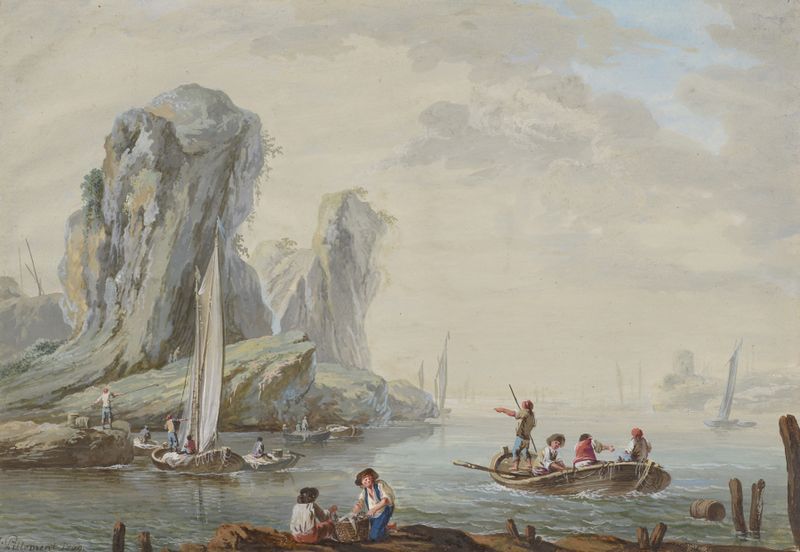
In At the mouth of the River Tagus, we are invited into a realm where memories and aspirations intertwine, invoking a profound sense of yearning for moments that slip away like water through fingers. Focus your gaze on the expansive river that stretches across the canvas, its gentle curves guiding your eye towards the horizon. Notice how the soft blues and greens of the water harmonize with the warm, golden hues of the setting sun, creating a tranquil atmosphere. Each brushstroke evokes the shimmering surface, reflecting both light and the fleeting nature of time itself.
The meticulously rendered boats, with their sails catching the evening breeze, add a sense of movement and life, creating a stark contrast to the serene backdrop. As you explore further, pay attention to the figures in the foreground, seemingly engaged in quiet conversation. Their postures and expressions hint at stories untold, relationships built on shared experiences. This interplay between the lively river and the stillness of the human presence captures an emotional tension—an acknowledgment of both connection and solitude.
The distant cliffs, cloaked in mist, serve as silent witnesses to the passage of time, emphasizing the transitory nature of life. Jean-Baptiste Pillement painted this piece in 1789, a time of significant upheaval in Europe, marked by the onset of the French Revolution. Living in Paris, he was influenced by the changing tides of society and politics, while simultaneously dedicating himself to the tranquil beauty of landscapes like the Tagus River. His ability to blend the realities of his world with a longing for peace and nostalgia remains a hallmark of his work.
More Artworks by Jean-Baptiste Pillement
Browse all →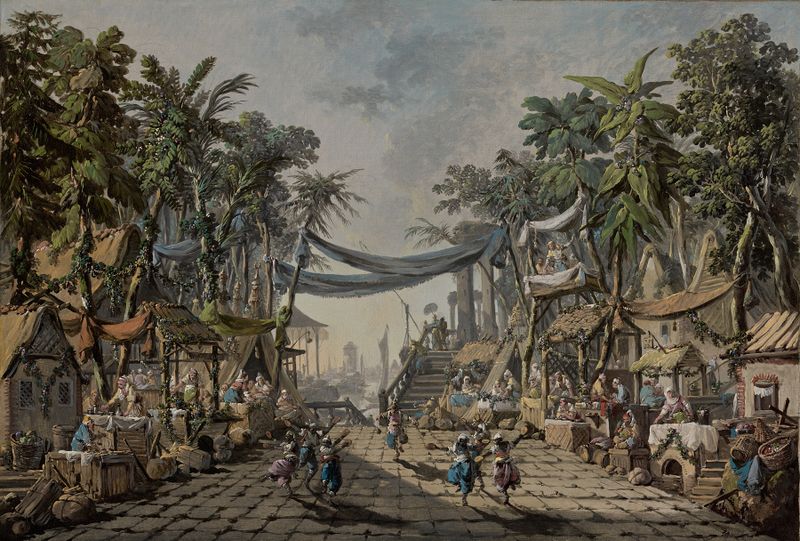
Market Scene in an Imaginary Oriental Port
Jean-Baptiste Pillement
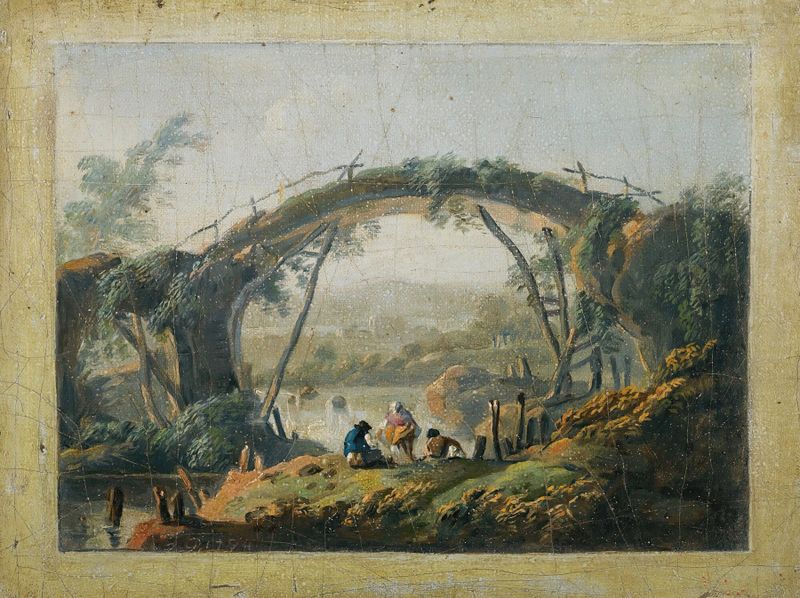
A Pair Of River Landscapes With Figures Approaching A Bridge
Jean-Baptiste Pillement
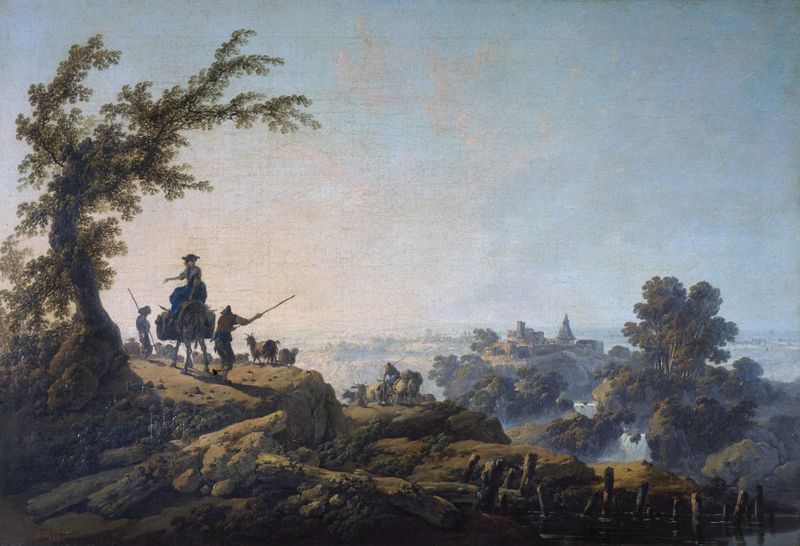
Paysage animé
Jean-Baptiste Pillement
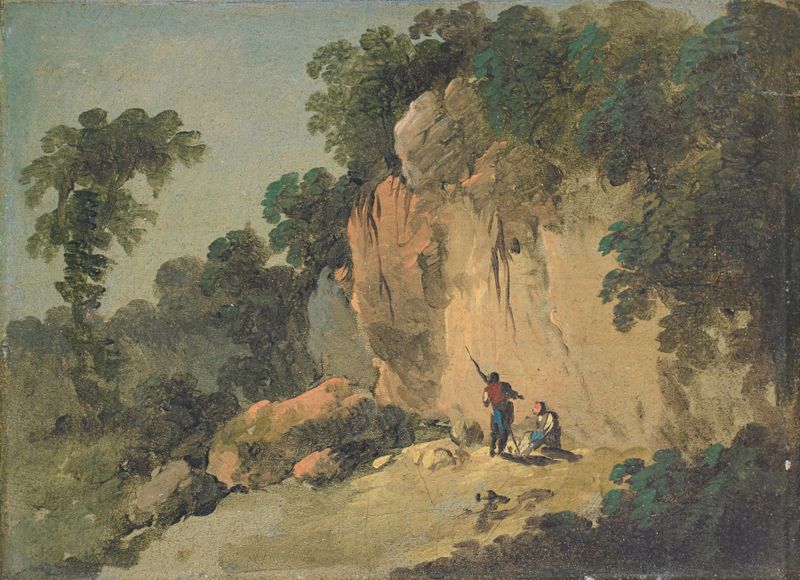
À falaises (Pastoral Landscape).
Jean-Baptiste Pillement
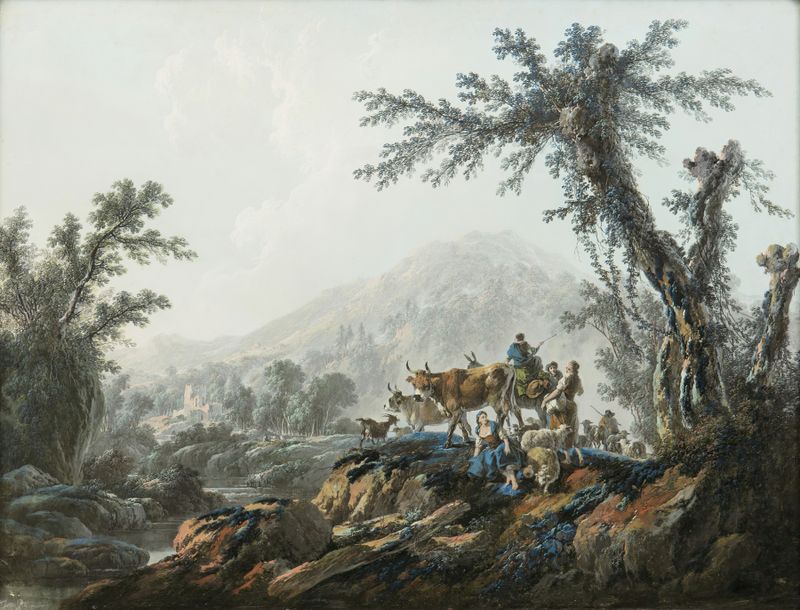
Pastoral Landscape
Jean-Baptiste Pillement
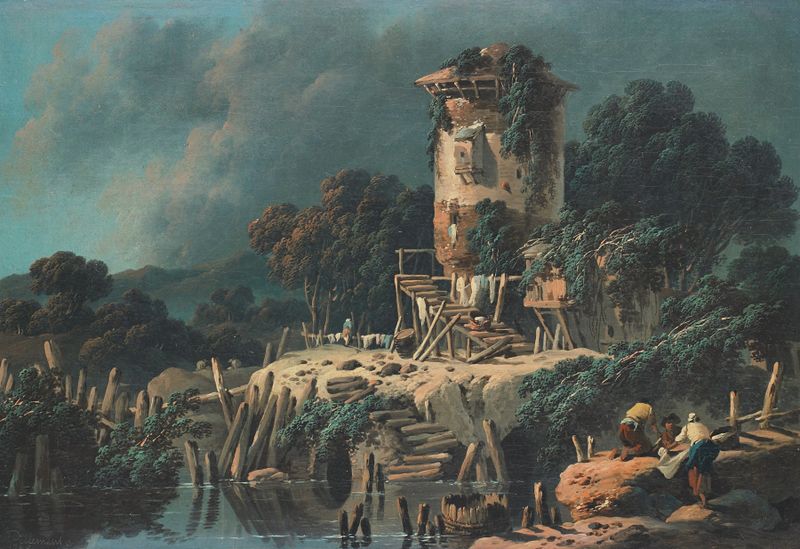
La Vielle Tour (Pastoral Landscape)
Jean-Baptiste Pillement
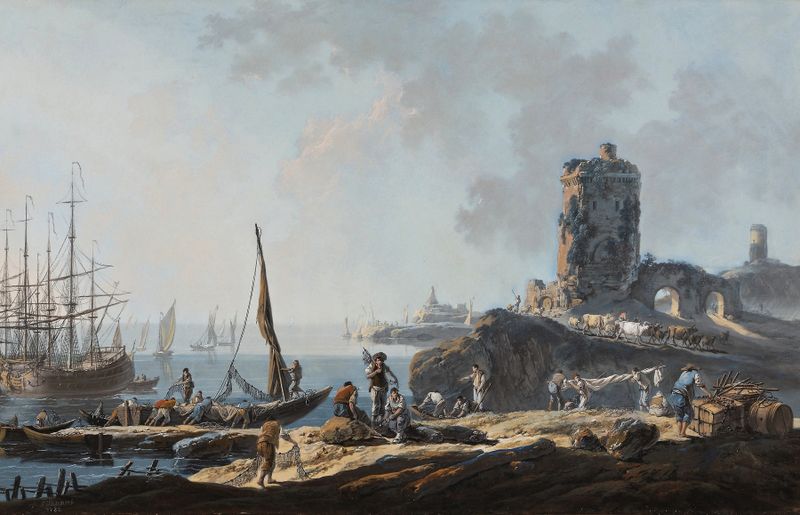
Port Scene in Calm Weather
Jean-Baptiste Pillement
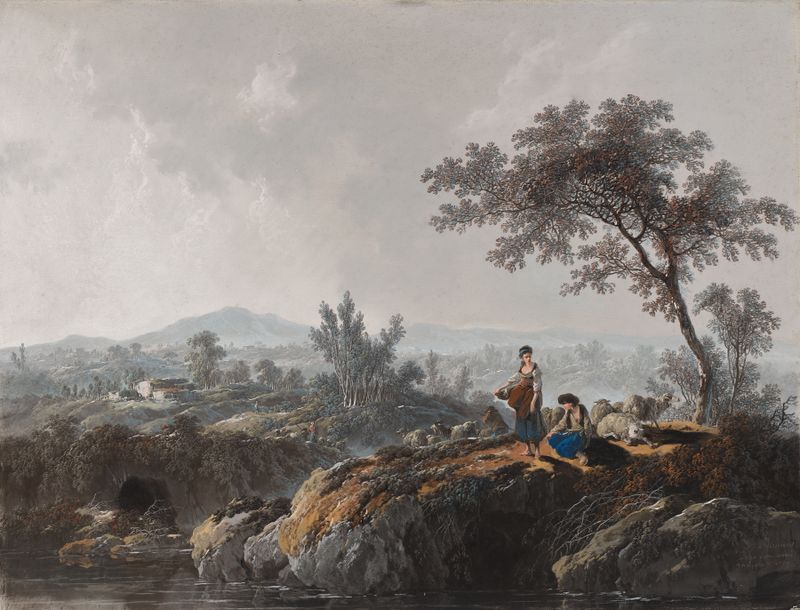
Shepherds in a Landscape
Jean-Baptiste Pillement
Meeresbucht mit großen Felsen links und Fischern
Jean-Baptiste Pillement
Landschap
Jean-Baptiste Pillement





