
At the well — History & Facts
In the stillness of creation, every brushstroke becomes a whisper of existence, reflecting a truth that lingers just beyond the surface. Look closely at the soft, earthy hues that dominate the canvas, grounding the viewer in a moment that feels both timeless and intimate. Notice how the figures are positioned around the well, each one a testament to the quiet labor of daily life. The gentle play of light dances on their faces, illuminating both wear and resilience, inviting us to share in their unspoken stories.
The well, a central symbol, stands as a beacon of sustenance and community, drawing our gaze and echoing with the promise of renewal. Beyond the immediate scene, a deeper narrative unfolds. The juxtaposition of light and shadow hints at underlying tensions—the balance between hope and hardship, the cyclical nature of existence itself. Each figure's expression conveys a myriad of emotions, from determination to weariness, suggesting that while the physical act of drawing water is essential, it also signifies life’s burdens and connections.
The surrounding landscape speaks volumes, embodying both the nurturing embrace of nature and the stark realities faced by those who depend on it. Richard Karlovich Zommer painted this piece in 1910, a time when the world was on the brink of immense change. Living in Russia, he was immersed in a landscape of artistic evolution, where modernism was beginning to challenge traditional forms. The tumult of societal shifts and personal introspection during this period influenced his work, capturing the essence of humanity amid the chaotic backdrop of history.
More Artworks by Richard Karlovich Zommer
Browse all →
Gate of Kashmir
Richard Karlovich Zommer

Bazaar In Samarkand
Richard Karlovich Zommer

Oriental Landscape
Richard Karlovich Zommer

Camp in the Caucasus
Richard Karlovich Zommer
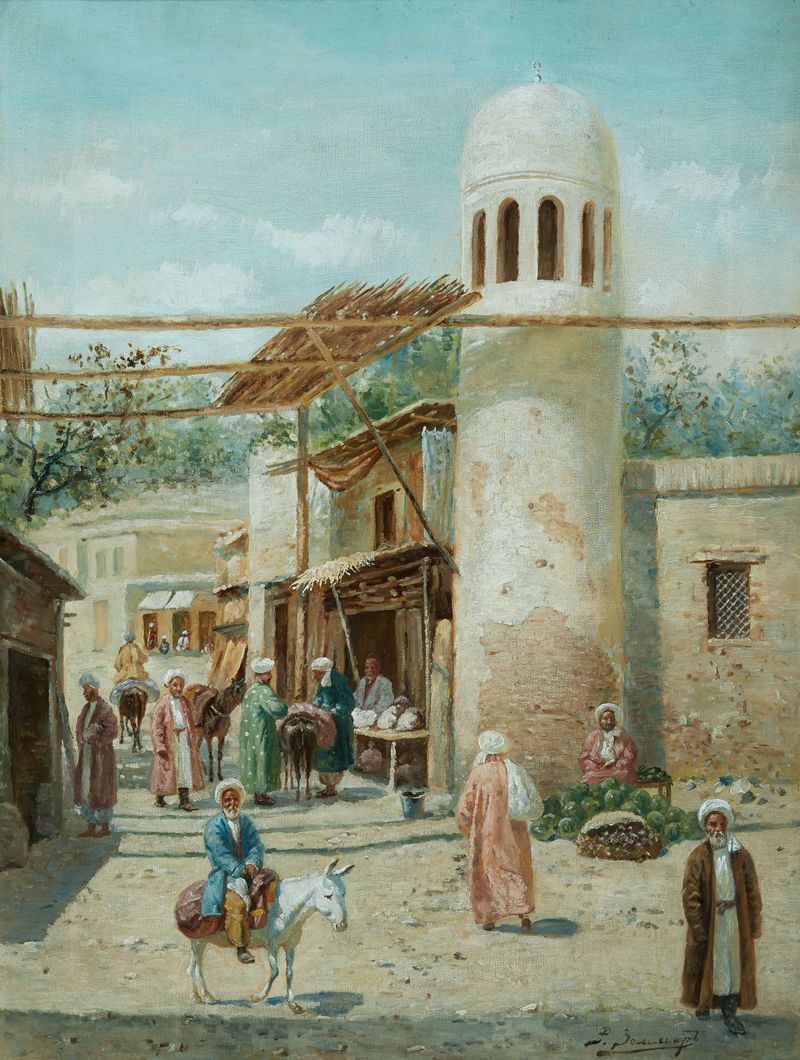
Market square
Richard Karlovich Zommer

At the Well
Richard Karlovich Zommer
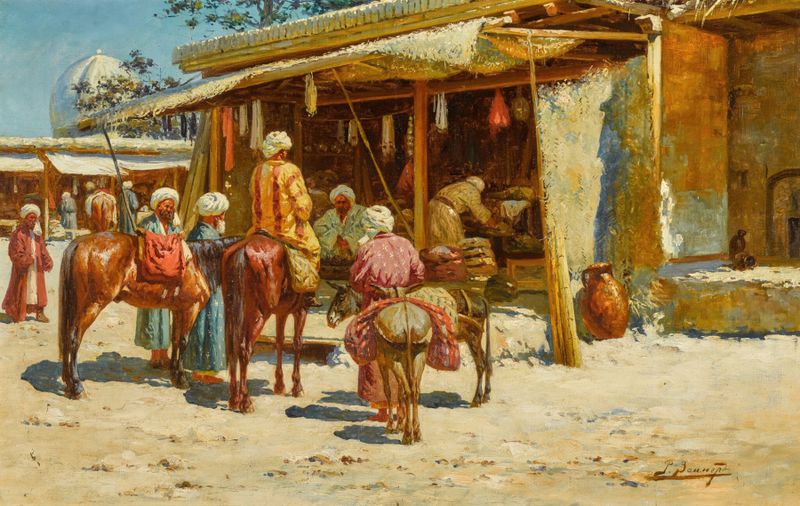
Market in Tashkent
Richard Karlovich Zommer

Shepherd in the Caucasus
Richard Karlovich Zommer
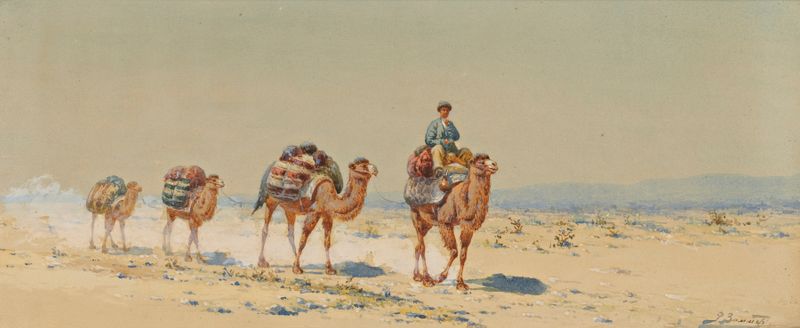
Desert Caravan
Richard Karlovich Zommer

Driving oxen, Mount Ararat
Richard Karlovich Zommer





