Aufsteigender Nebel — History & Facts
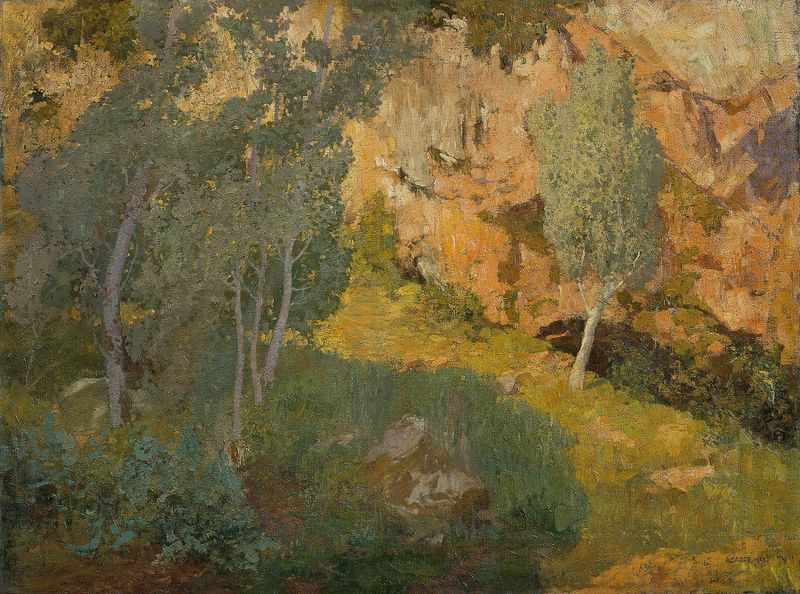
Did the painter know this moment would outlive them? In Aufsteigender Nebel, the ethereal dance of fog captures a fleeting instant of nature's quiet grandeur, suggesting both ephemeral beauty and enduring memory. Look to the lower half of the canvas, where layers of soft, swirling greens and blues blend seamlessly, creating an illusion of depth as the mist rises. The delicate brushwork evokes a sense of movement, as if the atmosphere itself is alive, swirling and shifting with the viewer's gaze. Notice how the lighter hues near the center draw the eye upward, inviting exploration into the obscured heights above — a clever compositional choice that instills a sense of wonder and anticipation. As you observe the painting, a subtle tension emerges between the freedom of the sky and the constriction of the earth below.
The rising fog symbolizes transformation and the transient beauty of moments slipping away. Yet, within this calm shroud lies the potential for revelation, suggesting that clarity may eventually break through the haze. The contrast between the solid ground and the fluidity of the mist evokes a sense of longing for what is just beyond reach, whispering secrets that may never fully materialize. In 1903, Adolf Gross created this work during a time when the art world was exploring new expressions of realism and impressionism.
Emerging from a period of industrial change, he was drawn to capturing nature's raw beauty, reflecting a growing fascination with the ephemeral aspects of life. This painting represents not only a personal exploration but also a broader artistic movement that sought to embrace the fleeting moments that define our existence.