
August Macke, Marienkirche, 1907 (cropped) — History & Facts
A single spire rises with quiet certainty above a cluster of red roofs, its ochre walls catching what little sun the pale sky offers. The eye is drawn upward, following the sharp ascent of the church tower, which stands as the painting’s anchor—a silent witness to the slow rhythms of village life. The brushwork is loose, almost hesitant in places, lending the scene a sense of memory rather than documentation; the forms are suggested, not declared, and the colors shift gently from warm to cool as they move from building to sky.
The large, dark shape in the foreground acts as a stage curtain, pushing us to focus on the geometry and light above. Painted in 1907, this work by August Macke belongs to a world on the cusp of modernity, yet still rooted in the traditions of landscape and townscape painting that shaped late nineteenth-century Germany. Such scenes were often painted quickly, en plein air, as artists sought to capture the fleeting effects of light and atmosphere rather than precise architectural detail. This was a period when young painters like Macke were absorbing the lessons of Impressionism and Post-Impressionism, experimenting with color and form before moving toward the bold abstraction that would define their later careers.
The painting’s origins are humble—self-photographed, its medium unrecorded, its journey through history largely unchronicled. Yet the quiet dignity of the church and its setting invite us to linger, searching for the stories that might have unfolded beneath that steadfast spire.
More Artworks by August Macke
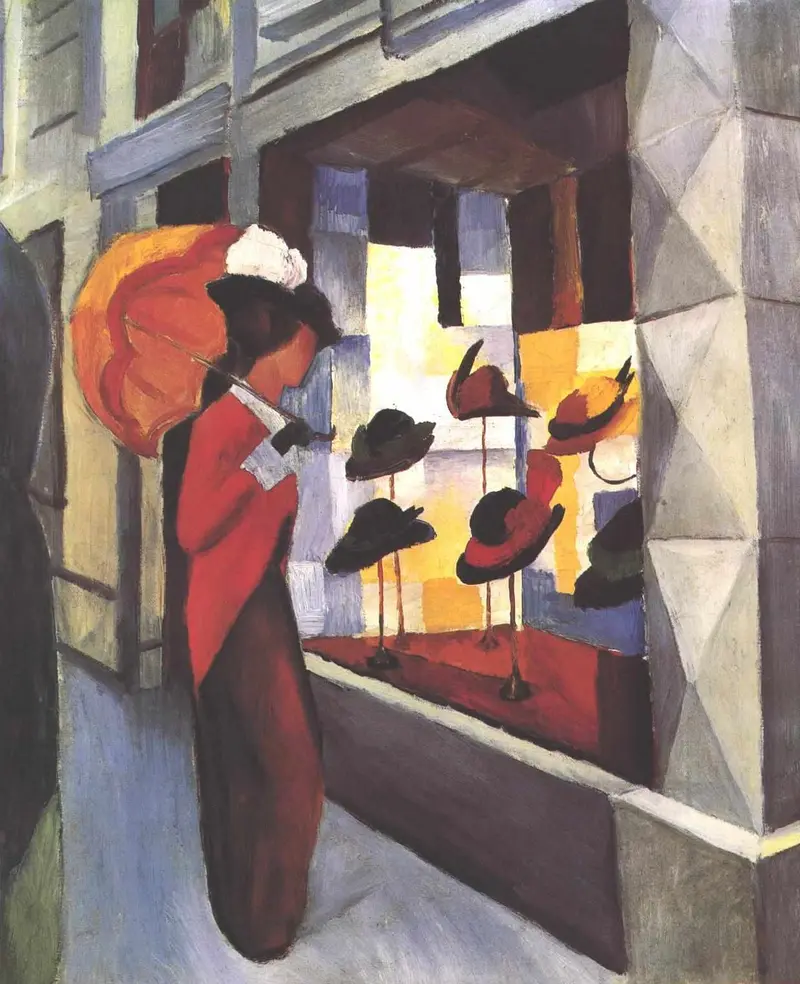
Woman with a Parasol in Front of a Hat Shop
August Macke

Street with Church in Kandern
August Macke
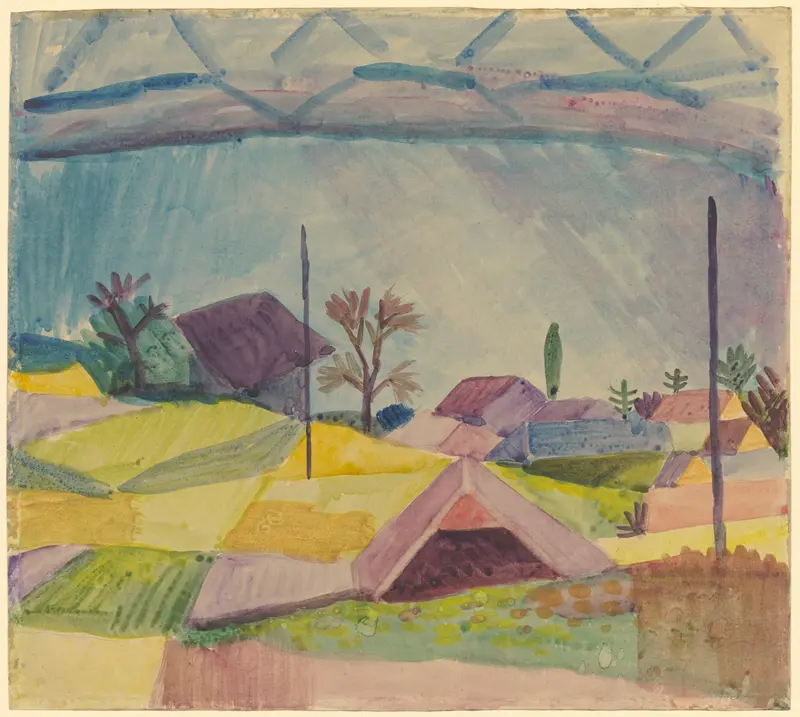
View of Hilterfingen
August Macke

Paar im Nachen
August Macke
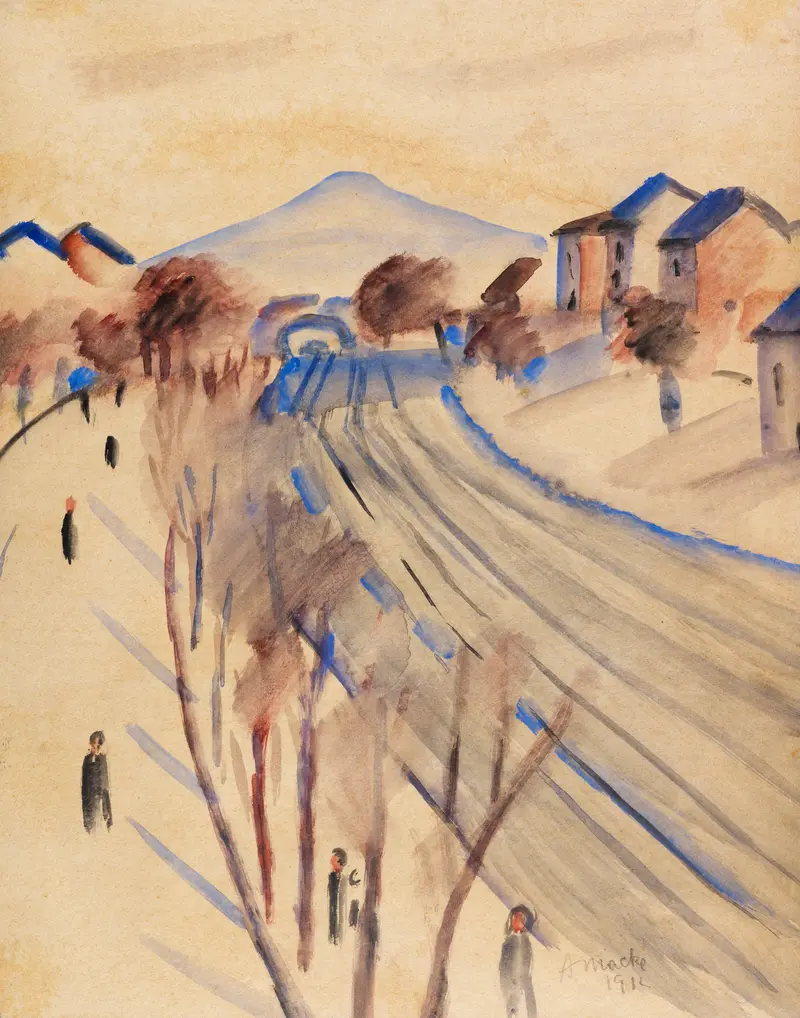
Ölberg mit Bahngleisen II
August Macke
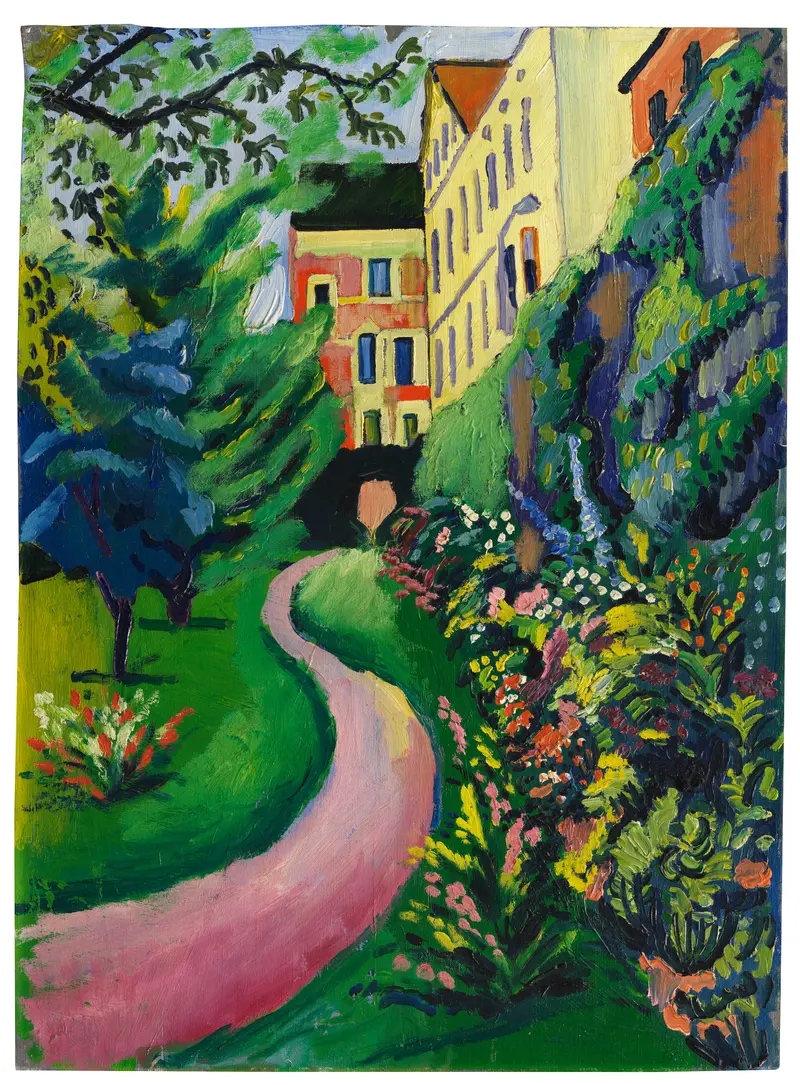
Unser Garten mit blühenden Rabatten
August Macke
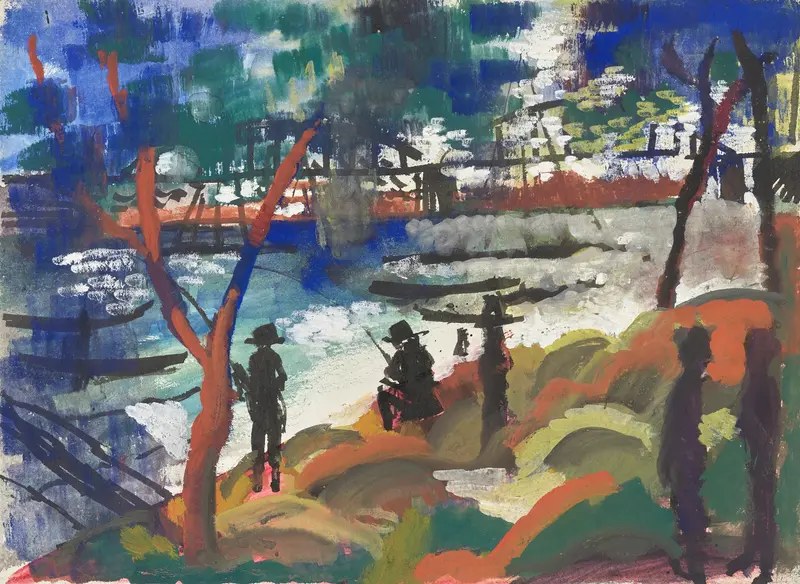
Angler am Fluss
August Macke
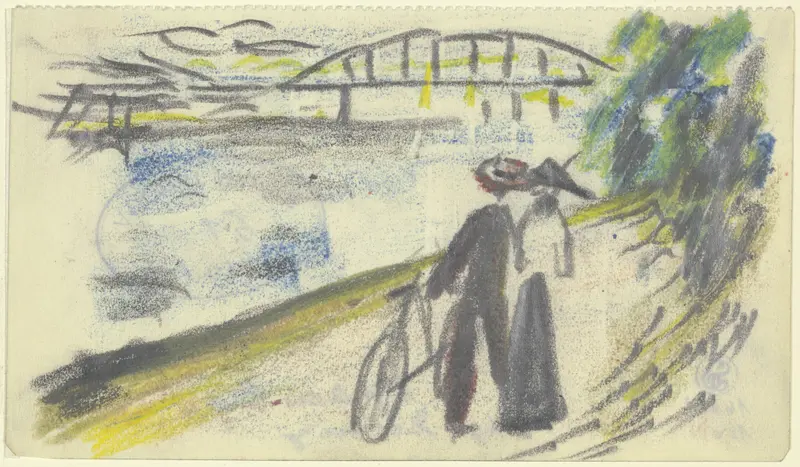
Path at the Rhine
August Macke
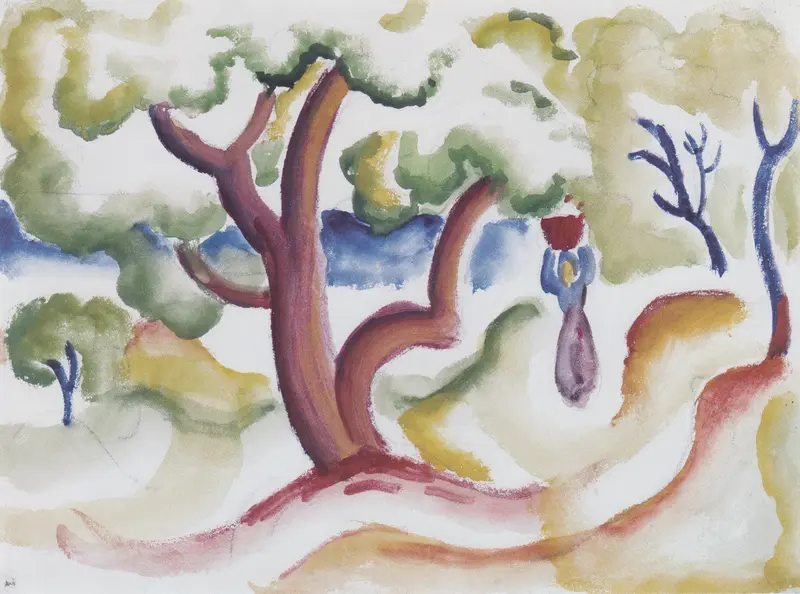
Frau mit Krug unter Bäumen
August Macke
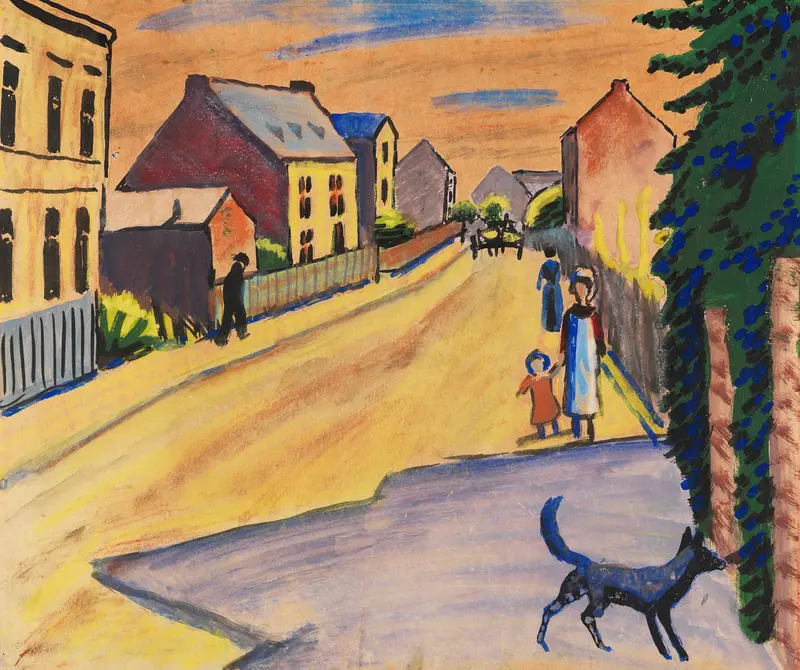
Sonnige Straße mit Hund
August Macke





