Badende in Landschaft — History & Facts
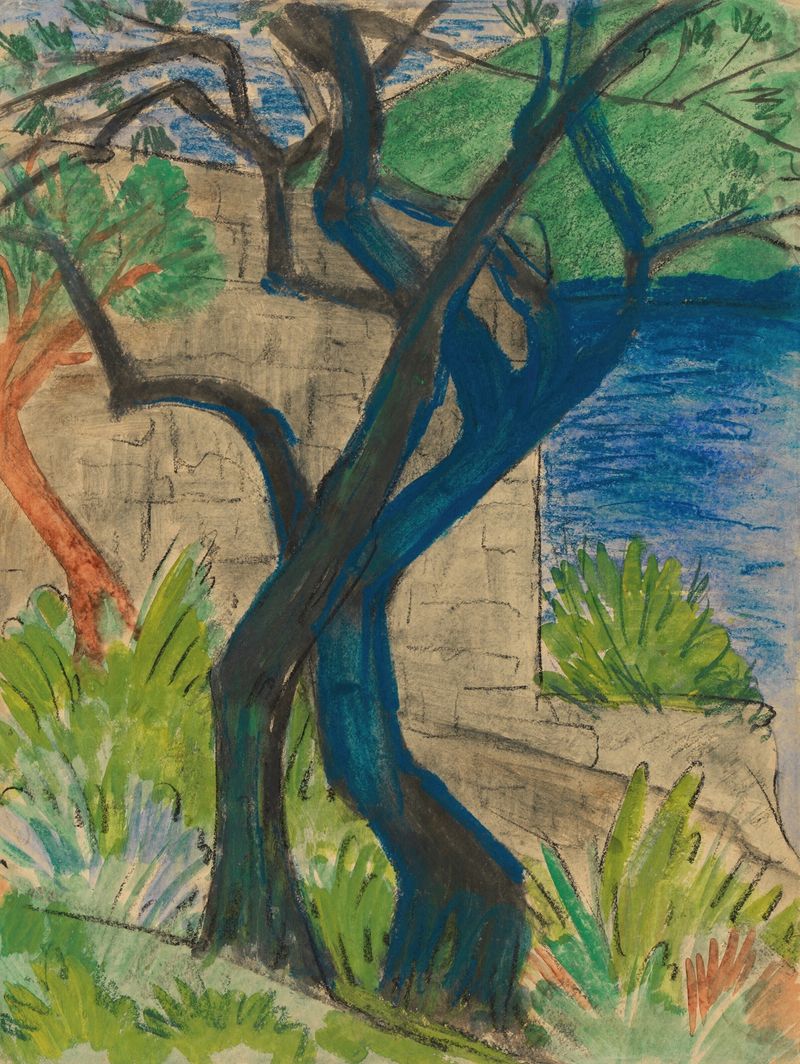
Can beauty exist without sorrow? In the silence of Badende in Landschaft, Otto Mueller captures a moment where tranquility intertwines with an undercurrent of longing, inviting us to ponder the deeper themes of existence. Look to the left at the serene figure reclining in the lush green grass, her body partially submerged in a small pool, gently reflecting the dappled sunlight. Notice the soft, warm tones of the landscape, harmonizing with the figure, as if the artist used color to breathe life into the scene. The fluid brushstrokes evoke a sense of movement, with the delicate contours of the woman's form seamlessly blending into the surrounding nature, creating an almost dreamlike quality that draws the eye. As you explore further, consider the contrast between the idyllic scenery and the figure’s languid posture.
While she embodies peace, there is a palpable sense of solitude that infuses the work with emotional depth. The untouched beauty of the landscape serves as both a refuge and a reminder of the isolation that can accompany such stillness, evoking reflections on the interplay of joy and melancholy inherent in human experience. During the summer of 1920, in Germany, Mueller painted this piece amidst a period of significant social and artistic upheaval following World War I. The art world was shifting towards expressionism, and Mueller, known for his exploration of the human form and emotional depth, was drawn to depict the interplay of nature and the human spirit as a means to convey complex feelings of longing and peace in a world still recovering from turmoil.