Waldlandschaft — History & Facts
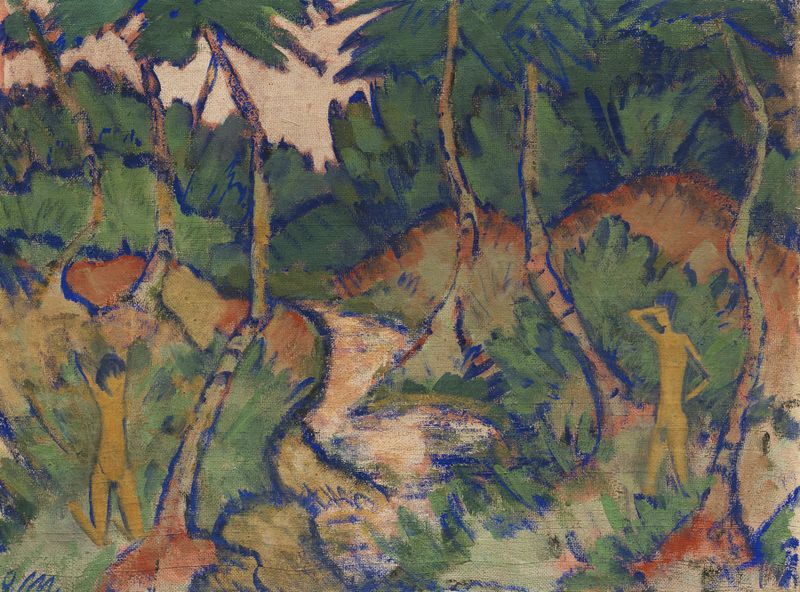
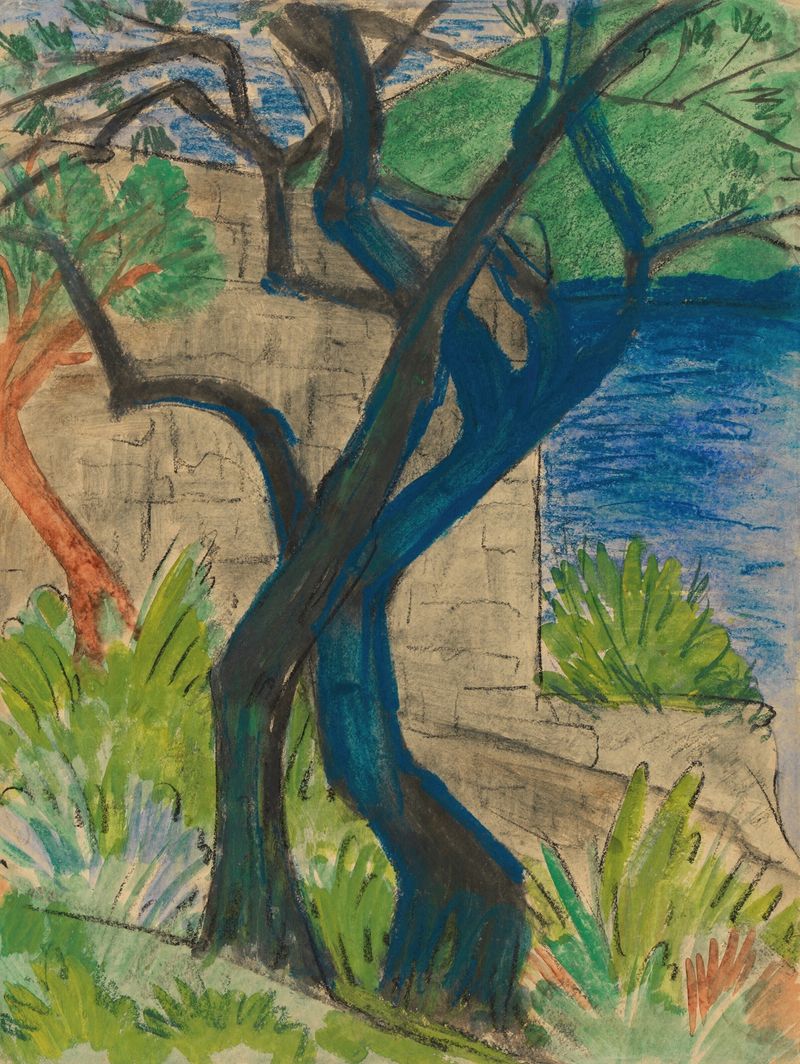
Where does light end, and longing begin? In Waldlandschaft, Otto Mueller invites us into an ethereal interplay of nature and absence, evoking an emotional void found in tranquil wilderness. Focus on the soft gradients of green that dominate the canvas, drawing your eyes toward a distant horizon. Notice how light filters through the trees, creating a gentle chiaroscuro that captures the interplay of shadow and illumination. The brushwork is fluid yet intentional, allowing the colors to blend harmoniously, while subtle textures suggest the rustle of leaves and the whisper of wind—nudging the viewer toward an intimate connection with this serene landscape. As you explore the details, contrasting elements emerge: the vitality of the lush foliage juxtaposed against the uncertainty of the open space.
The trees stand stoic, almost sentinel-like, grounding the viewer in the present while simultaneously hinting at the vast emptiness beyond. This tension between tangible beauty and an elusive, undefined absence sparks a deeper contemplation about nature's role in human emotion and the voids we often navigate in life. In 1924, during a time when the art world was reeling from the aftermath of World War I, Mueller painted this work in Germany. The country found itself in a state of recovery and reflection, mirroring the artist's own journey through personal and societal upheaval.
As a member of the expressionist movement, he sought to convey emotional truth through his art, and Waldlandschaft stands as a testament to this quest—a serene landscape laced with an undercurrent of longing.