Landscape — History & Facts
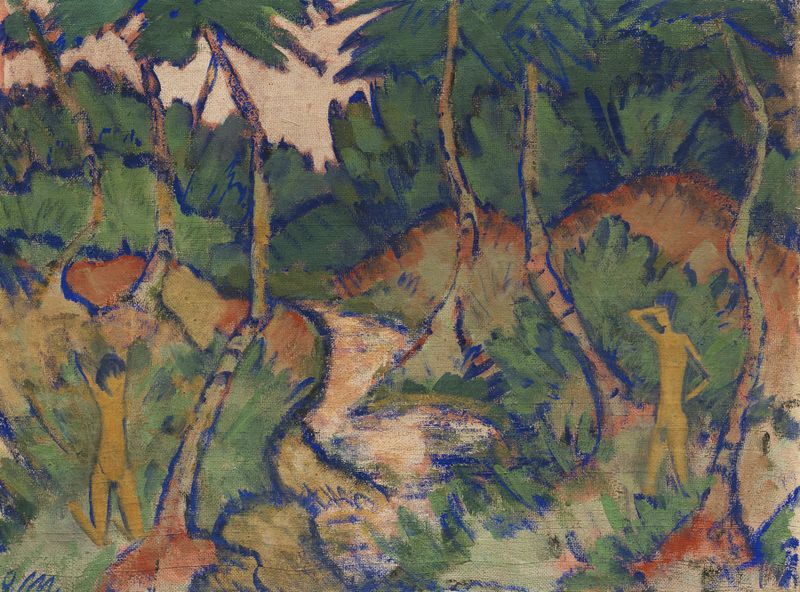
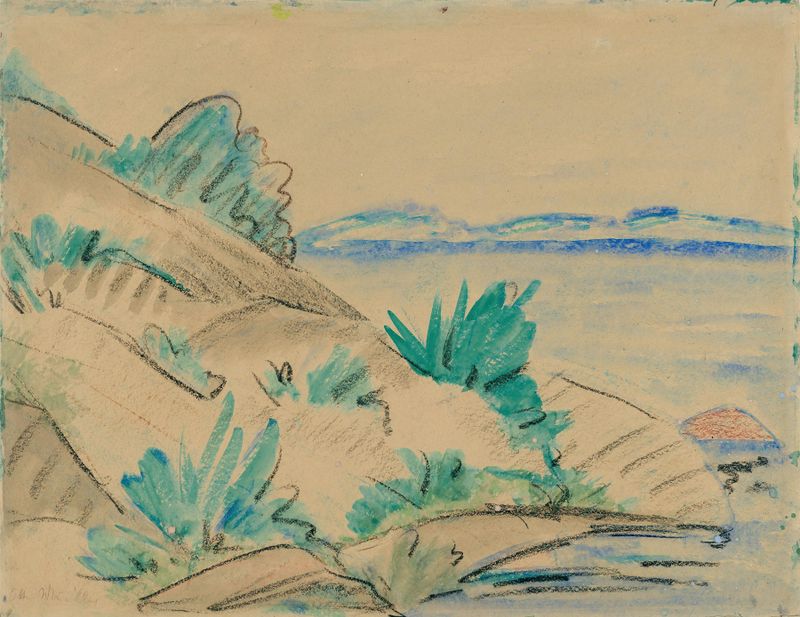
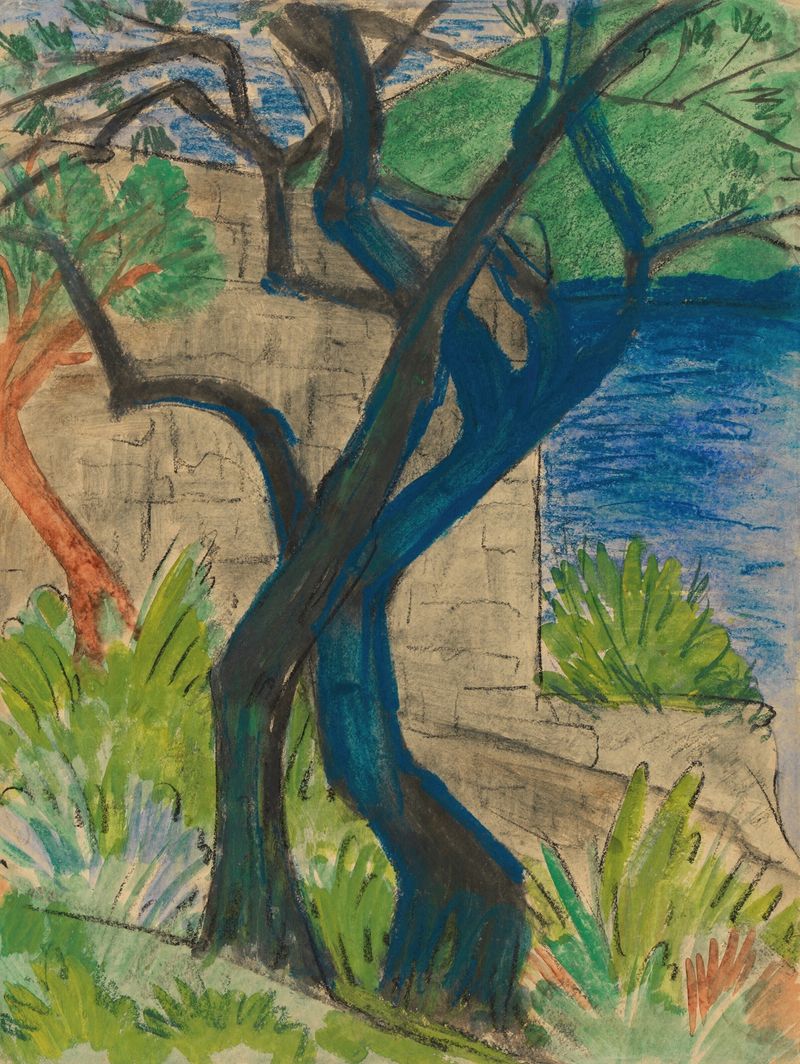
In the depths of emotion, fear often emerges from the shadows of vibrant landscapes. It whispers through the palette, lingering just beneath the brushstrokes that dance across the canvas. Look to the lower left, where soft greens and browns coalesce, revealing a serene yet foreboding land. The gentle curves of the hills lead the eye upward, where the horizon flares with a striking orange hue—suggesting both sunrise and impending storm.
The muted tones of the foreground contrast dramatically with the lively burst of color above, illustrating a world poised on the brink of change. Each brushstroke conveys a sense of motion, as if nature holds its breath, waiting for the inevitable. The emotional tension here lies in the delicate balance of tranquility and dread. The serene landscape, while beautiful, hints at an underlying anxiety—a fear of the unknown that lurks in the vibrant skies.
This duality speaks to the human experience and echoes the conflict of longing for peace amidst uncertainty. Small details, like the jagged edges of the clouds, suggest tension, while the expansive sky evokes a longing for freedom that may never fully be realized. In 1926, Otto Mueller created this artwork during a time of profound transformation in Germany, as the nation grappled with the aftermath of World War I. The expressionist movement, of which he was a part, sought to convey deep emotional truths, navigating fear and loss through bold color and form.
This piece reflects not only his artistic evolution but also the broader currents of anxiety that marked the era, capturing a moment where beauty and trepidation coexist.