Bamboo in Autumn — History & Facts
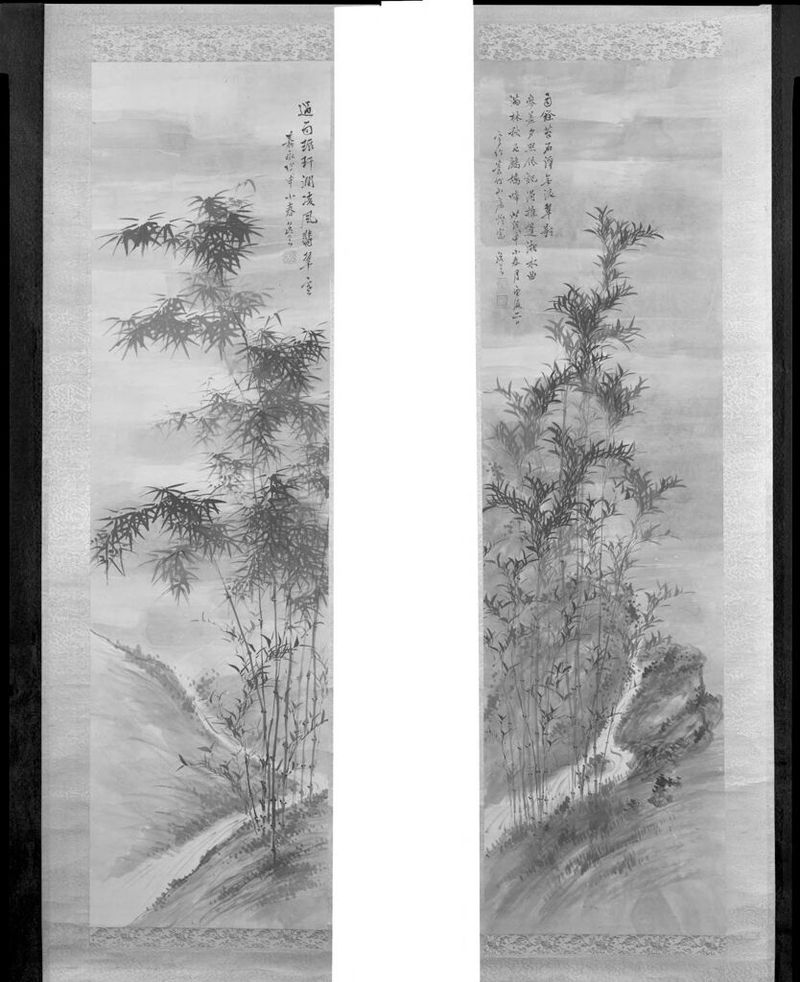
In the stillness of autumn, whispers of legacy weave through the delicate forms of bamboo, capturing a moment of serene contemplation that transcends time. Look closely at the left side; there, the slender stalks rise gracefully, their vibrant green turned to golden hues kissed by the season’s chill. The brushwork is fluid, a juxtaposition of tranquility and movement, as each stroke conveys the gentle sway of the leaves. Notice how the soft, muted background allows the bamboo to emerge as the focal point, its elegance emphasized by the subtle interplay of light and shadow. The artwork reveals deeper layers of meaning: the bamboo itself symbolizes resilience and adaptability, standing tall despite life’s inevitable changes.
This piece reflects not only the beauty of nature but also the passage of time as autumn signifies the cycle of life. The interplay of colors hints at transformation, inviting the viewer to ponder their own journey amidst the sweet melancholy of fading brightness. Kinoshita Itsu'un created this work in 1848 during Japan’s Late Edo period, a time characterized by a flourishing of art and culture. As a master of the Edo style, Itsu'un sought to capture the essence of nature in a way that spoke to both personal and communal experiences.
His legacy is rooted in this period’s emphasis on the harmony between the natural world and human emotion, making his artworks timeless reflections of the spirit.