
Art style · 17th–19th century · Edo (Tokyo), Japan
Ukiyo-e: Japanese Woodblock Prints and Paintings
Ukiyo-e is a style of Japanese art, mostly woodblock prints but also paintings, that grew up in the city of Edo (now Tokyo) during the Edo period, 1615–1868. Its name means “pictures of the floating world”: the pleasure quarters and kabuki theaters of Edo, their courtesans and actors and, later, famous landscape views. Its best-known artists include Katsushika Hokusai, Utagawa Hiroshige, Kitagawa Utamaro, Suzuki Harunobu and Tsukioka Yoshitoshi.
Each print was the work of four people: a publisher who organized and sold it, the artist who drew the design, a carver who cut it into woodblocks, on average ten to sixteen of them, and a printer who printed each color on handmade paper. The prints were cheap: an actor print cost about as much as a bowl of noodles. Hokusai's The Great Wave off Kanagawa, of about 1830–32, is the most famous image of his Thirty-six Views of Mount Fuji, the Art Institute of Chicago says.
Browse 2,164 ukiyo-e prints and paintings below, all public domain and free to download.
Selected and written by Pavel MazuelasUpdated November 5, 2026
Part of Art Movements and Painting StylesRelated: Japanese Painting, Chinese Painting, Famous Landscape Paintings
All ukiyo-e prints and artworks
Landscapes and famous views, scenes of everyday life, birds and animals, history and legend, and portraits of beauties and actors. All public domain, free to download.


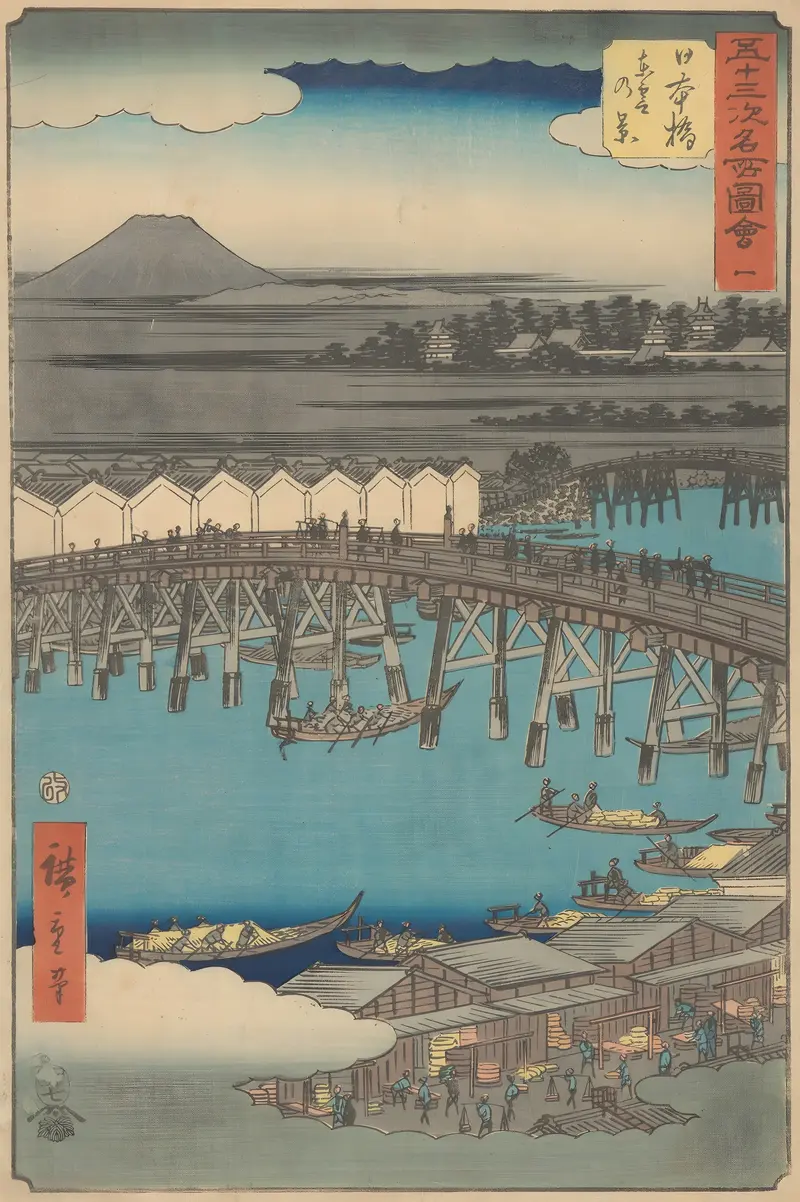
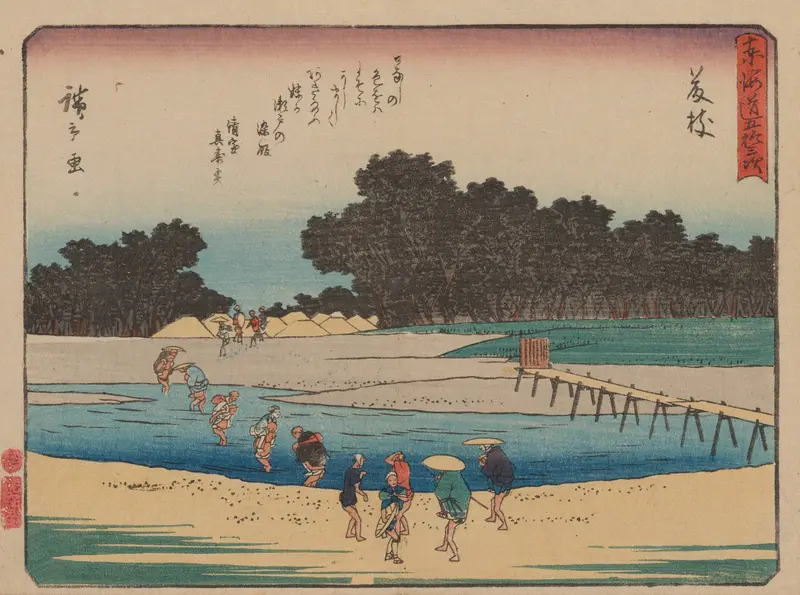
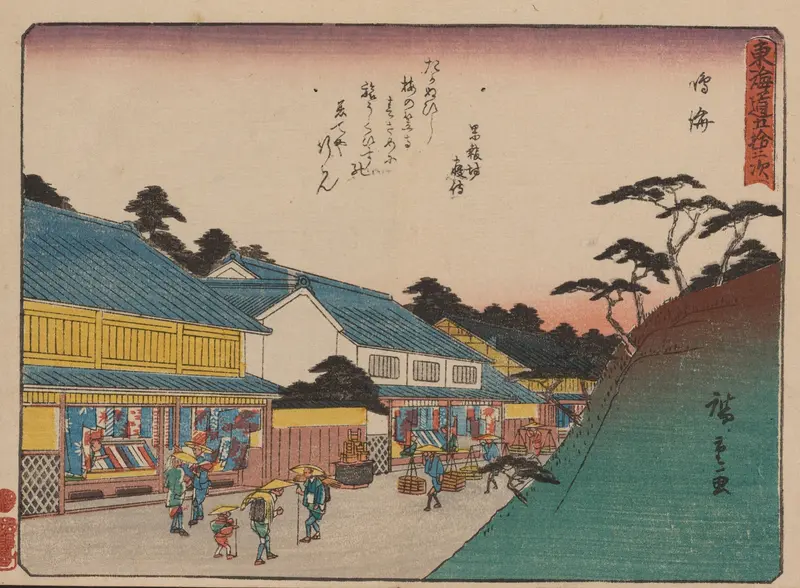
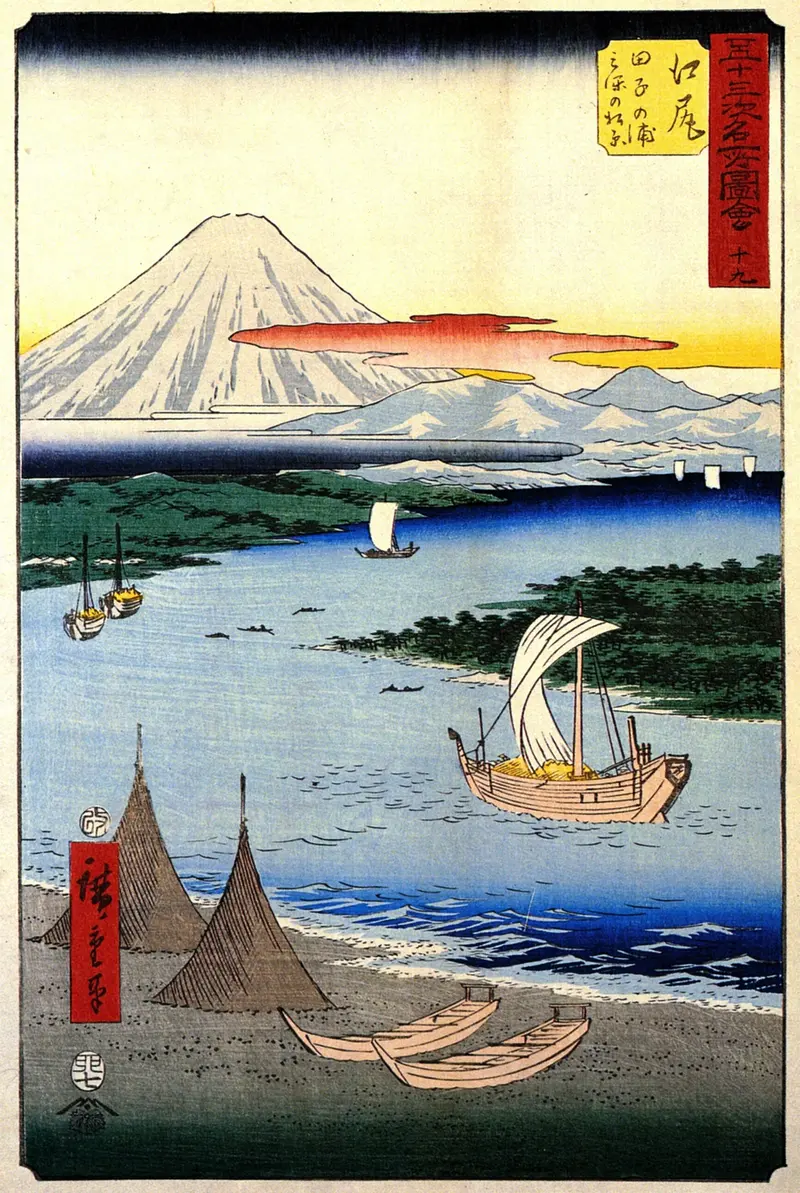
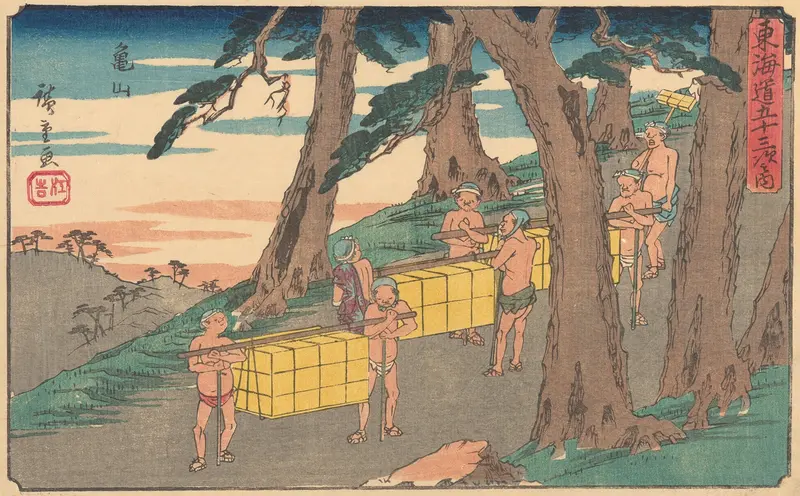
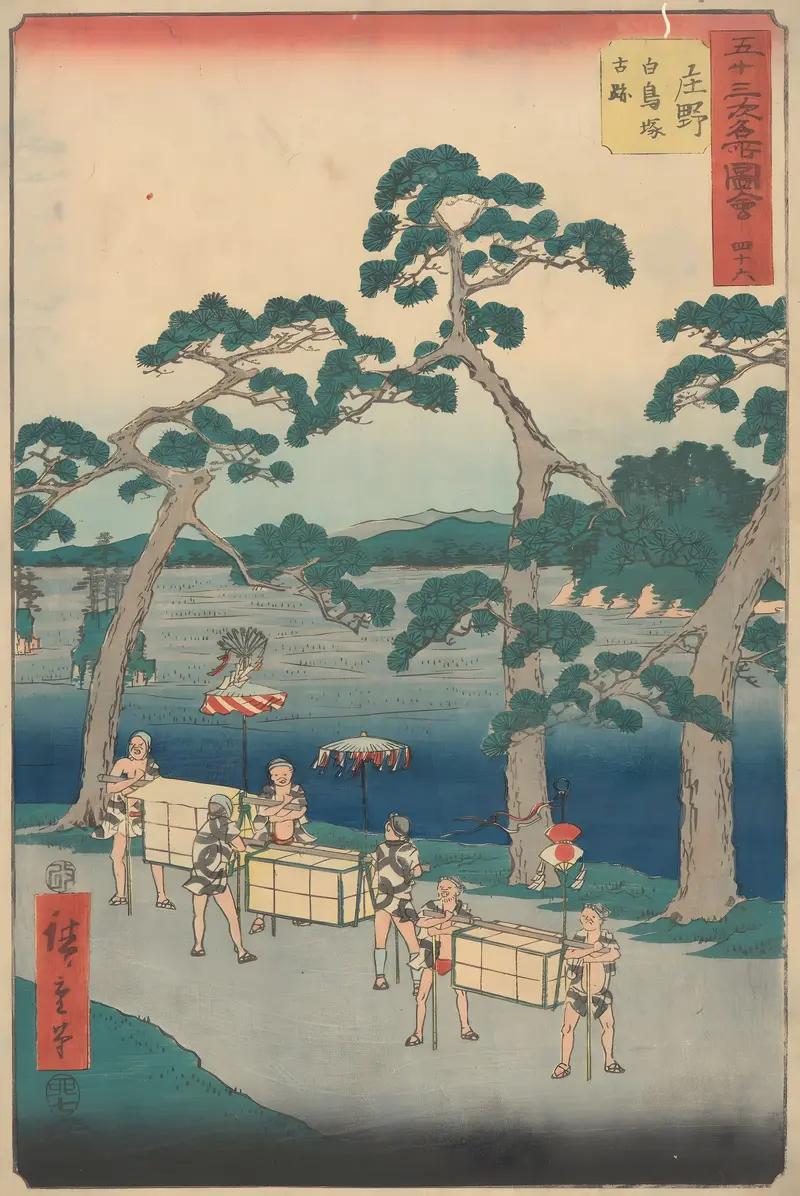

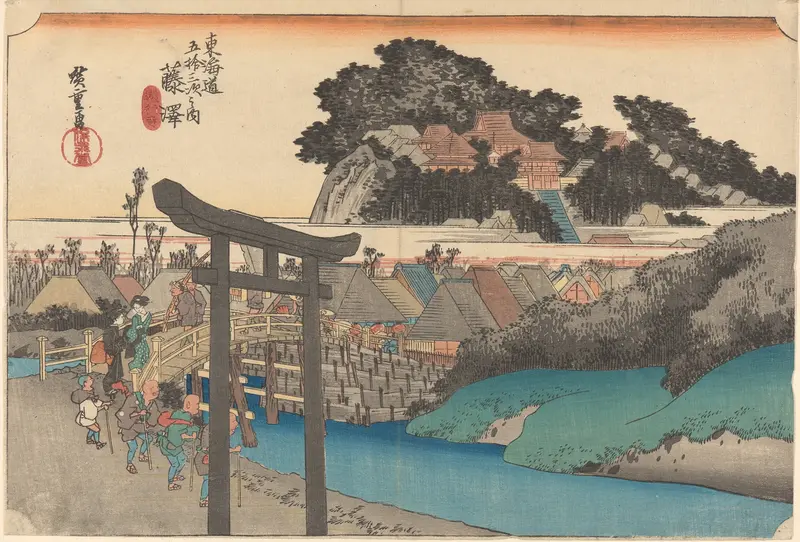
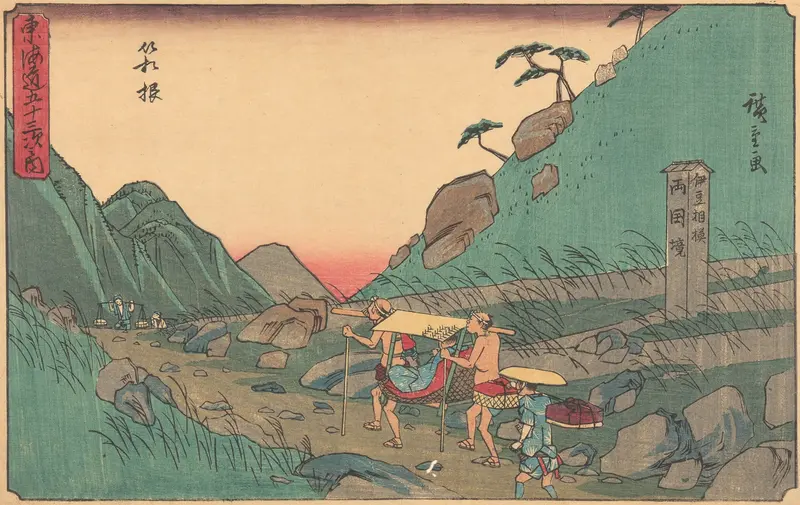
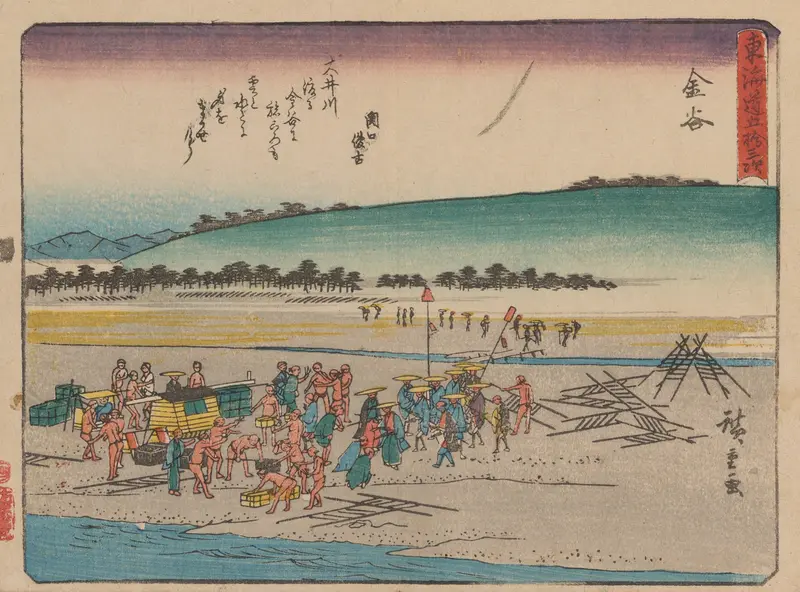
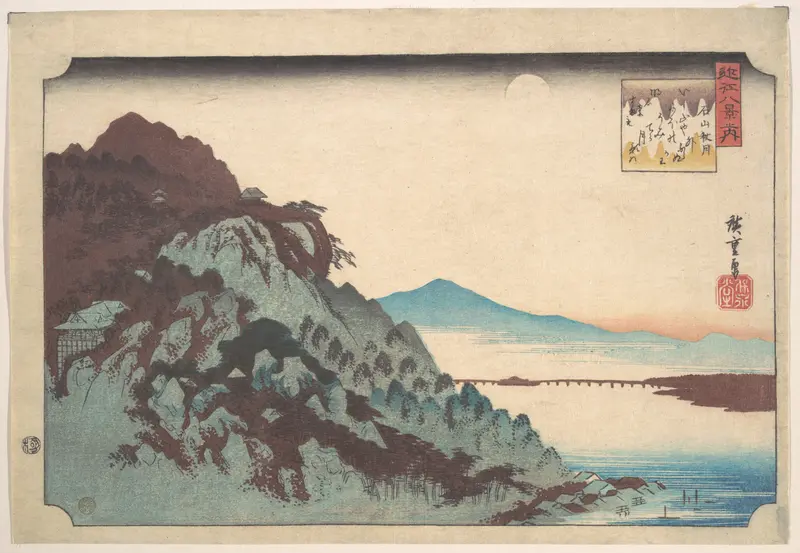
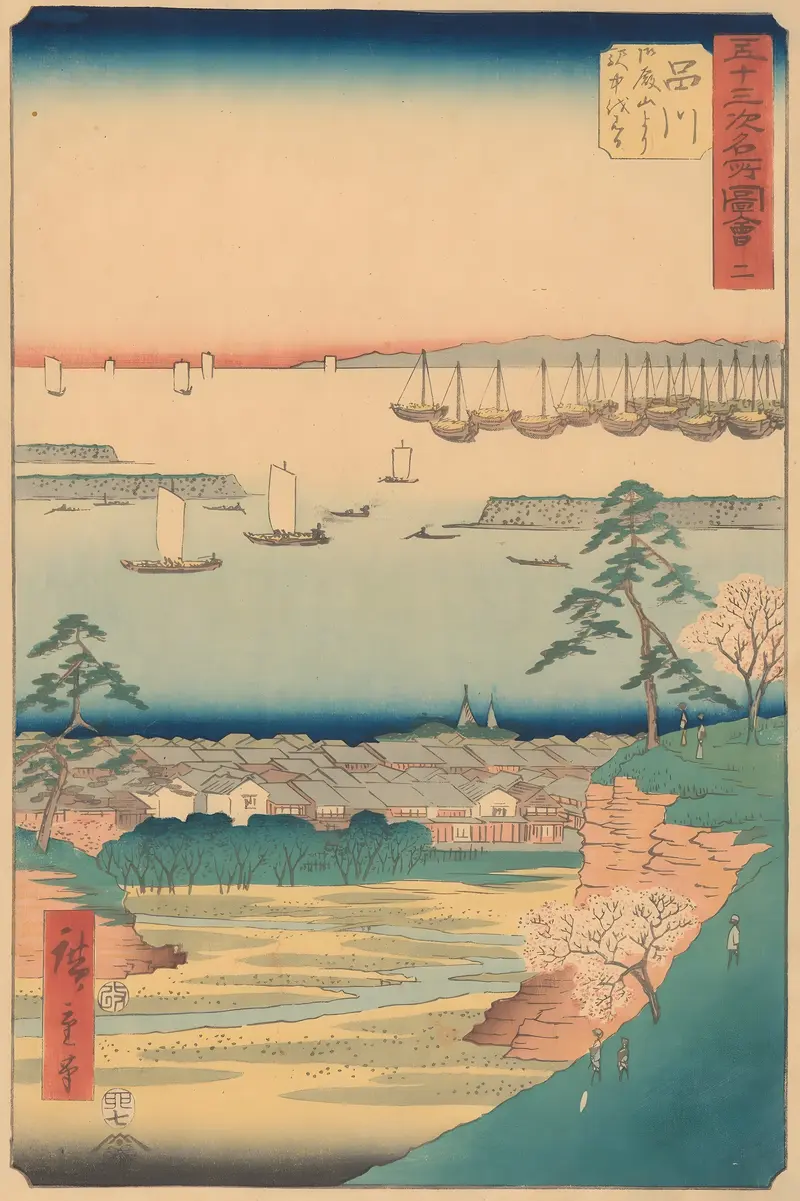
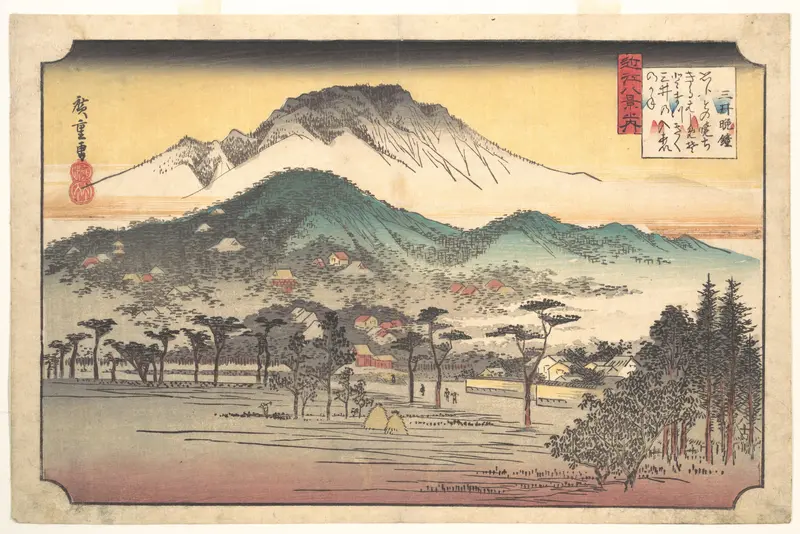
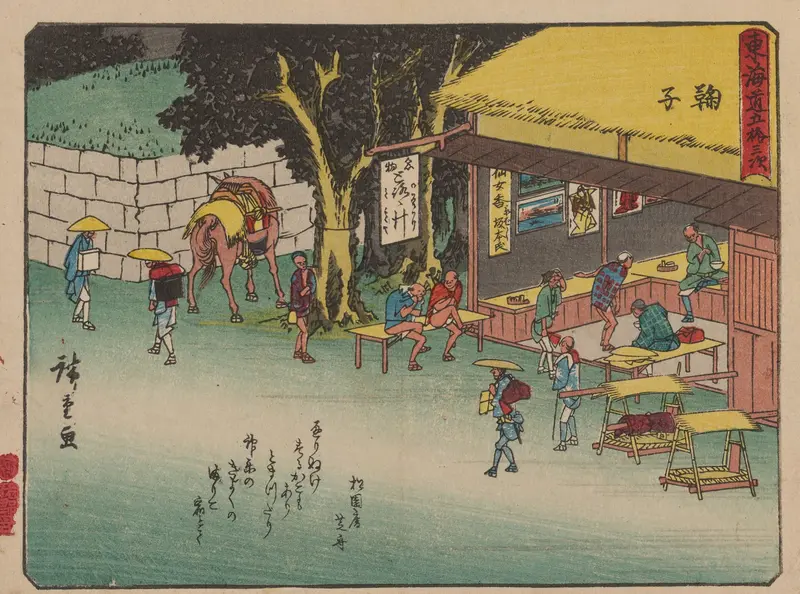
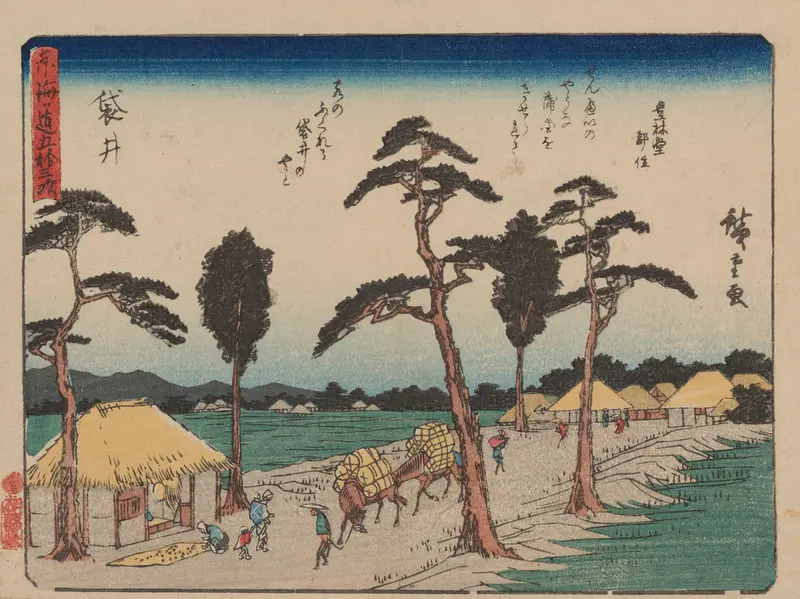

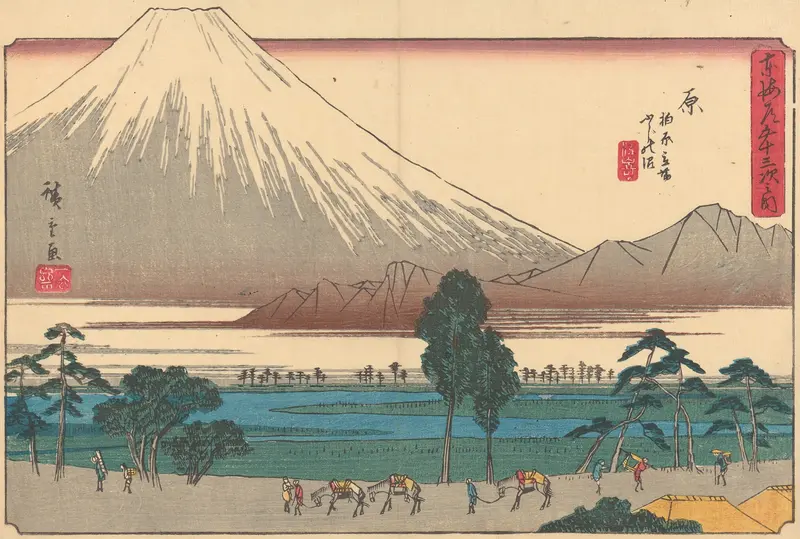
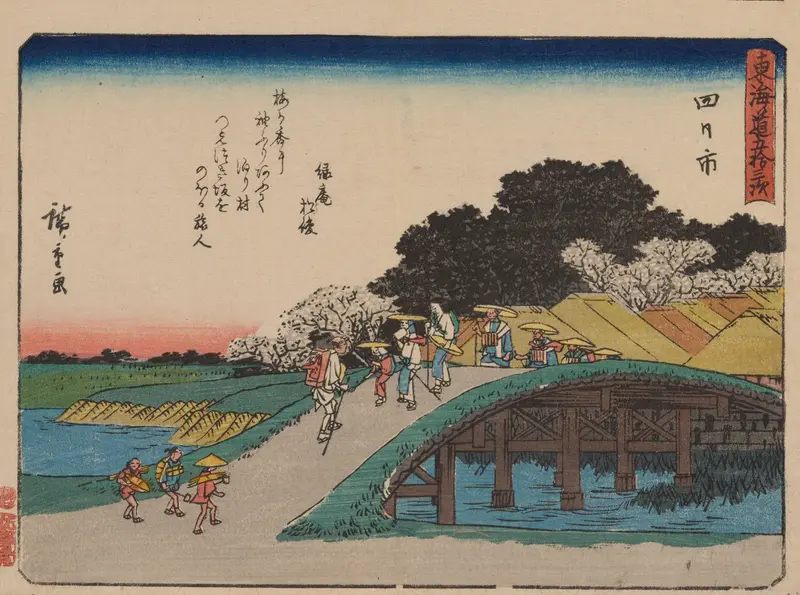
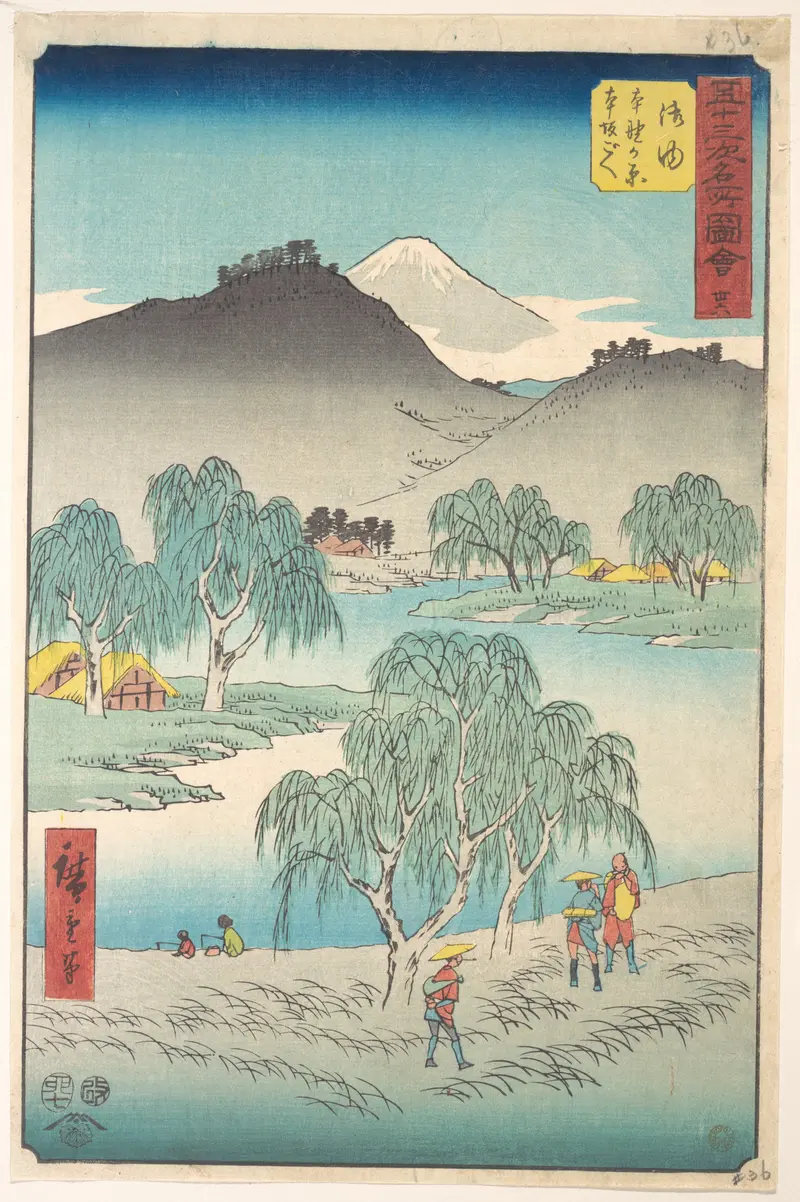
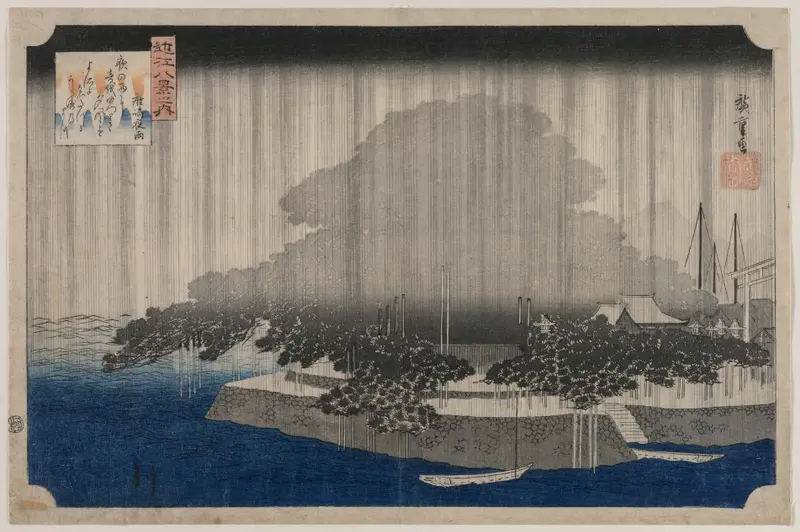
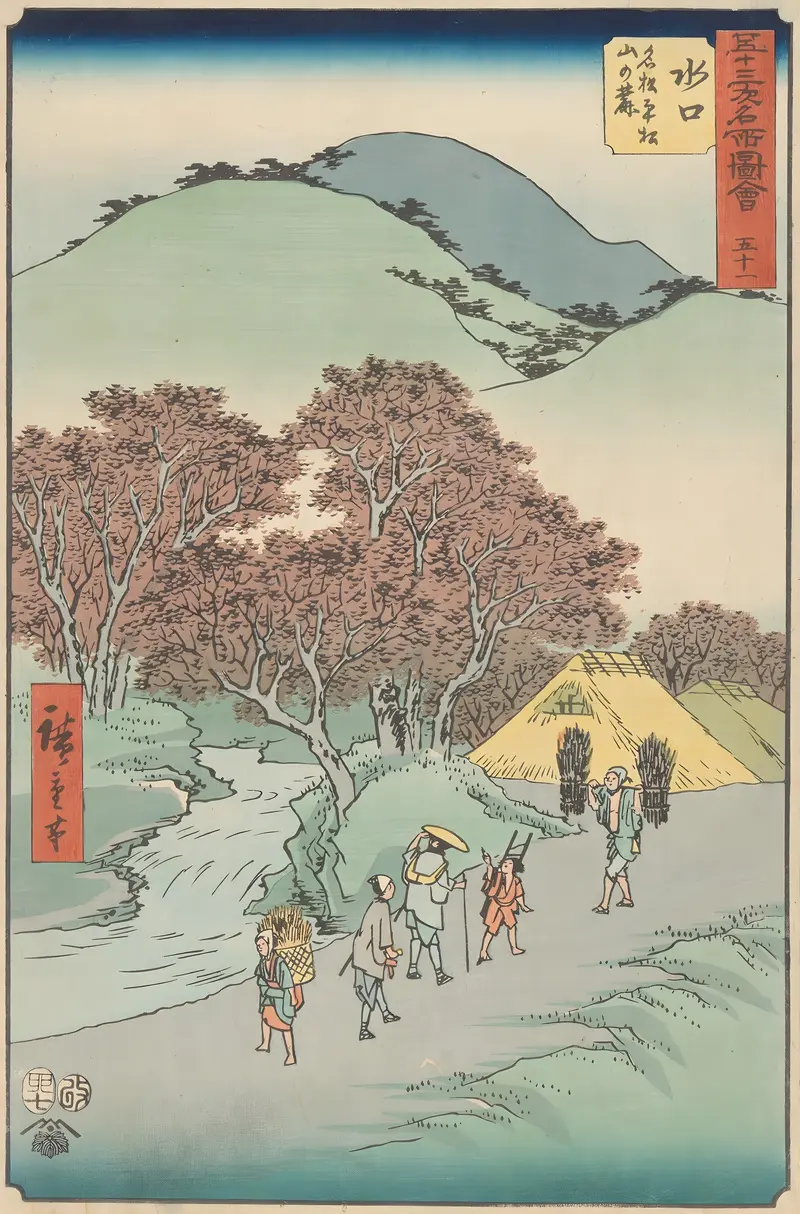
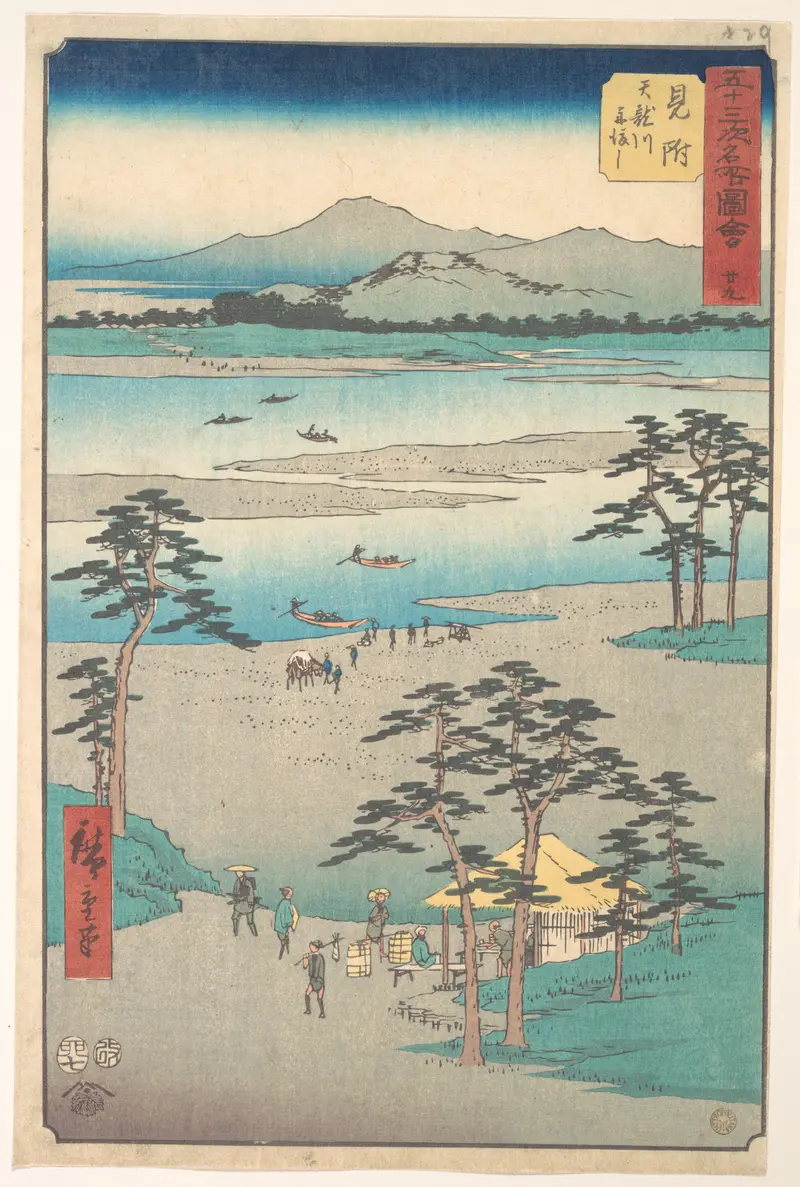
Famous ukiyo-e prints
The best-known Japanese woodblock prints, from Hokusai's Great Wave to Hiroshige's rain. Click any print to see it up close and download it free.
 The Great Wave off KanagawaKatsushika Hokusai
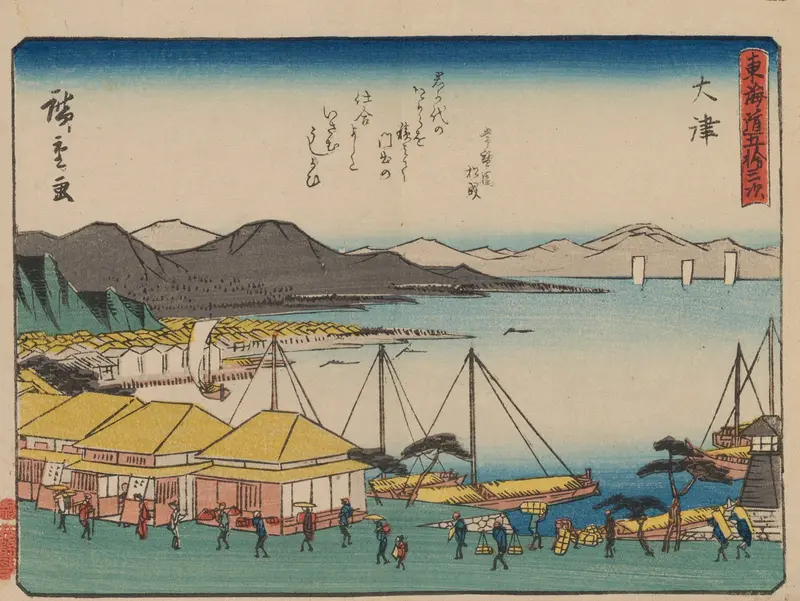
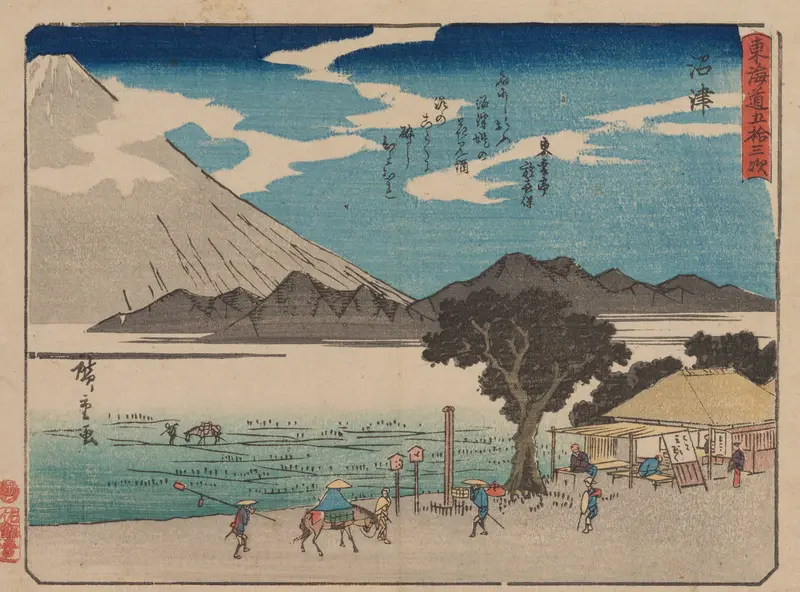
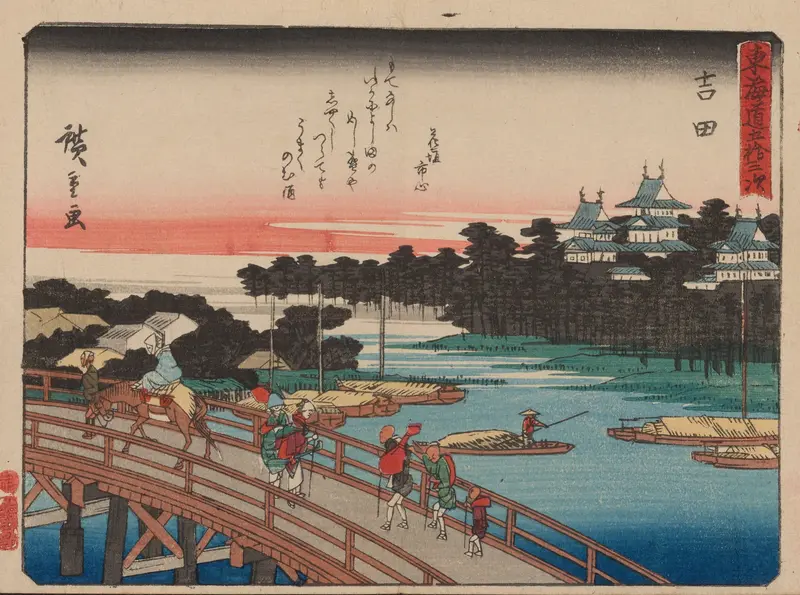
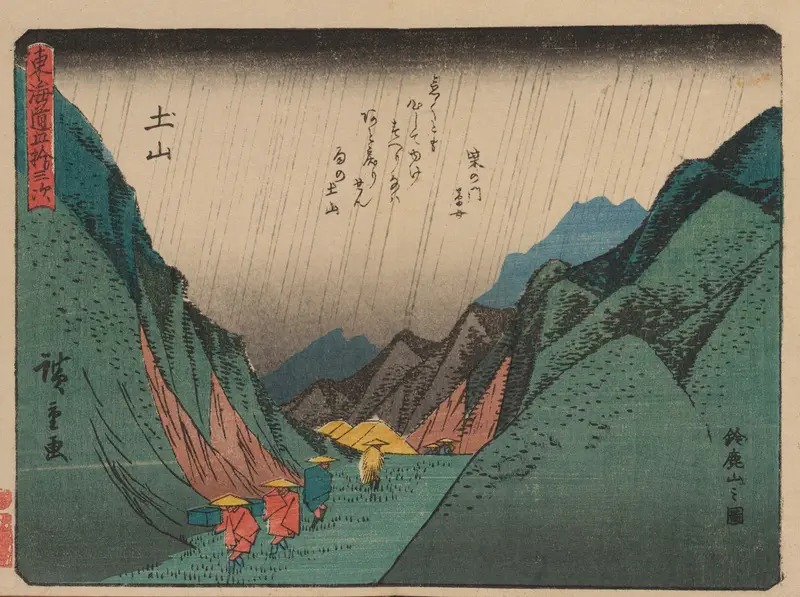
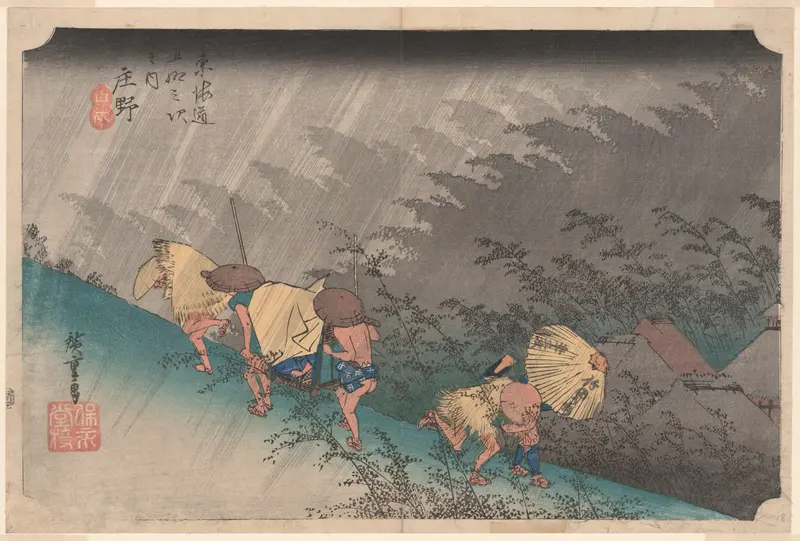 The Fifty-three Stations of the Tōkaidō (series; Shōno: Driving Rain shown)Utagawa Hiroshige
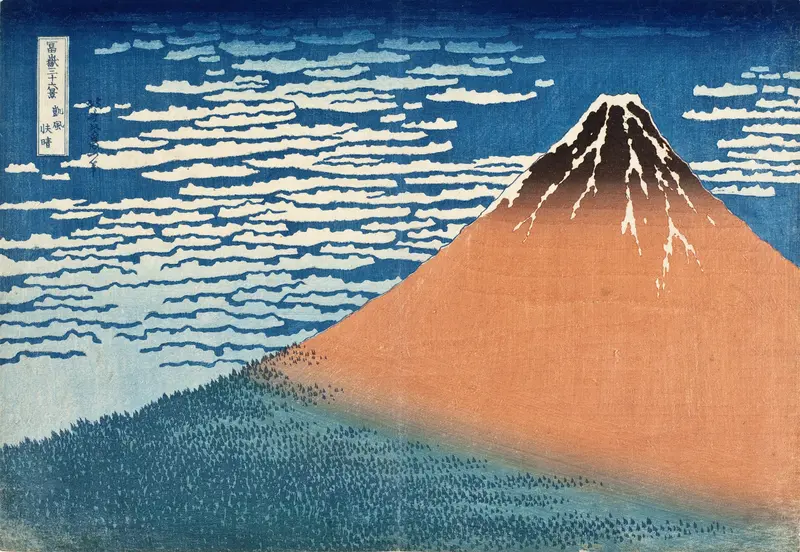
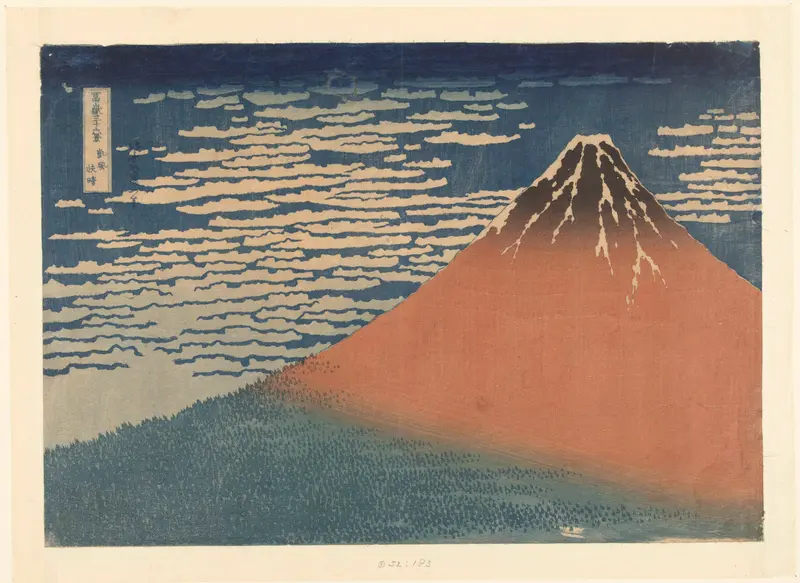
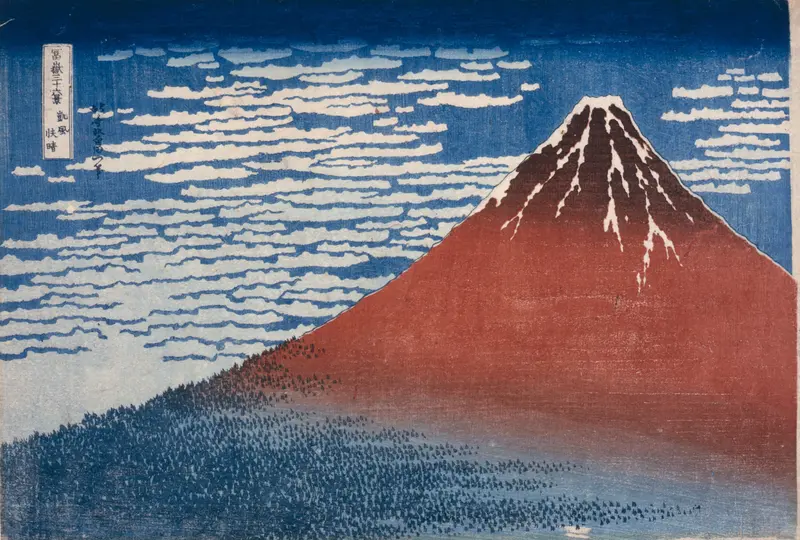 Fine Wind, Clear Morning (Red Fuji)Katsushika Hokusai
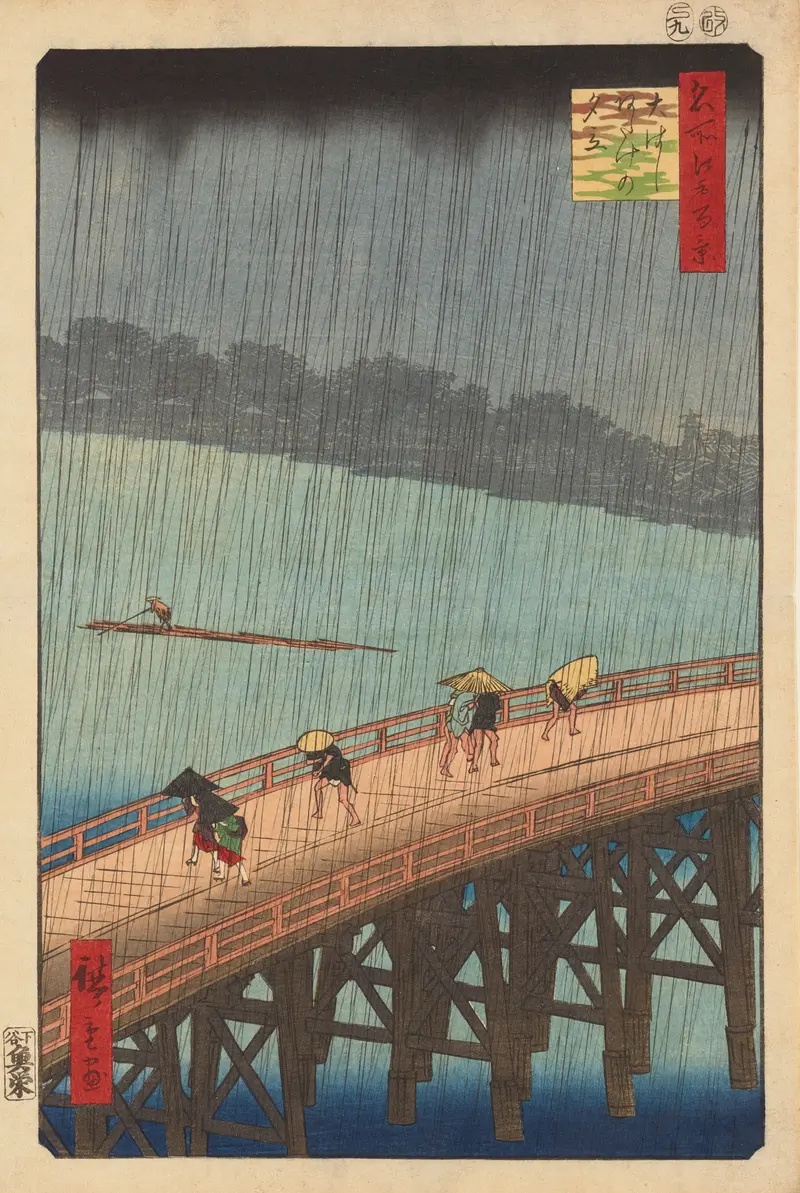
 Sudden Shower over Shin-Ōhashi Bridge and AtakeUtagawa Hiroshige
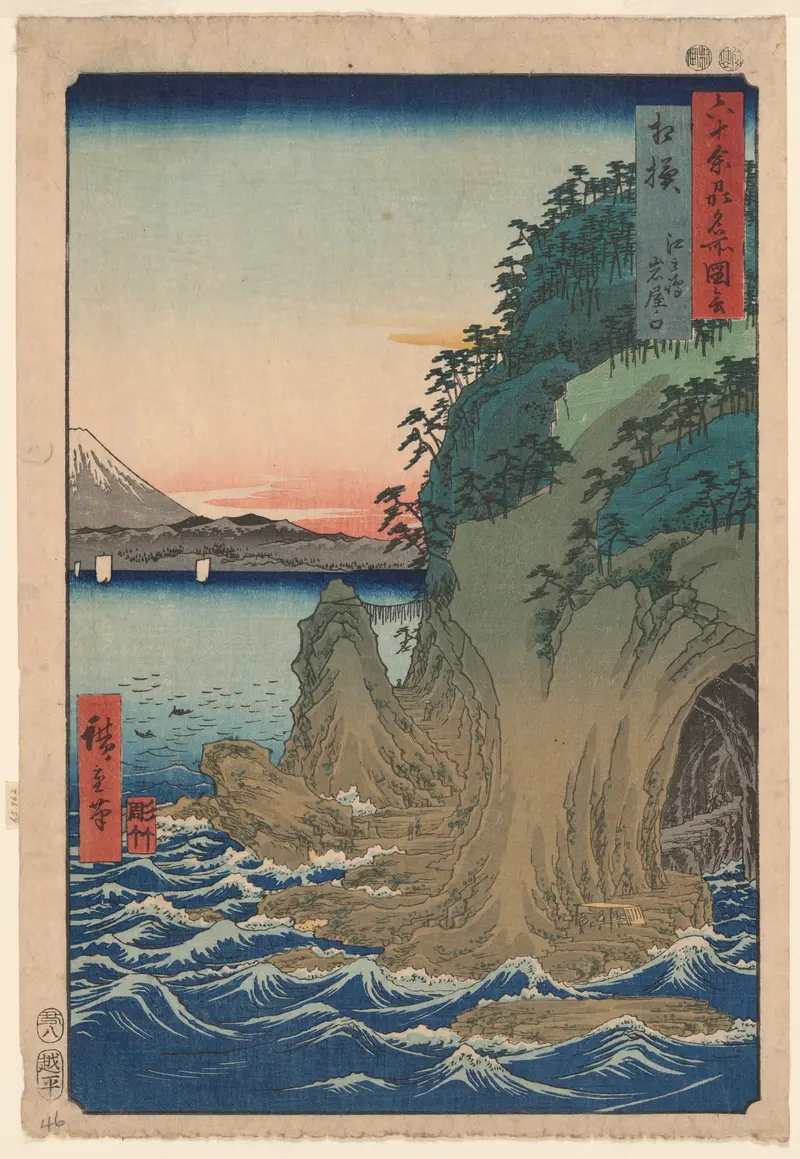 Famous Places in the Sixty-odd Provinces (series; Sagami: Entrance to the Caves at Enoshima shown)Utagawa Hiroshige
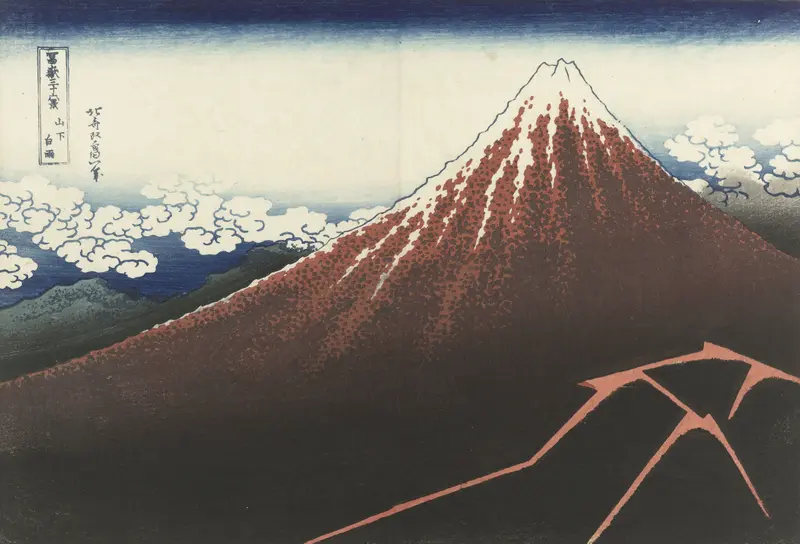 Rainstorm Beneath the Summit (Sanka hakuu)Katsushika Hokusai
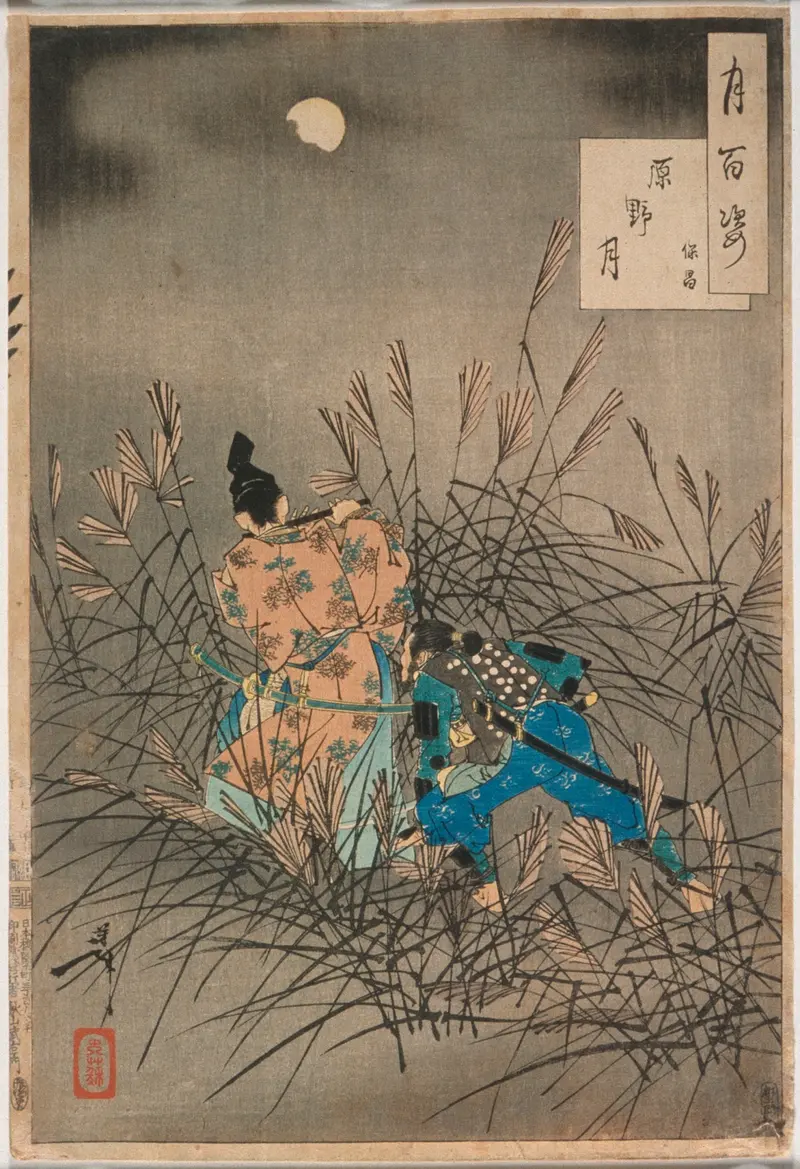 One Hundred Aspects of the Moon (series; Fujiwara no Yasumasa Playing the Flute by Moonlight shown)Tsukioka Yoshitoshi
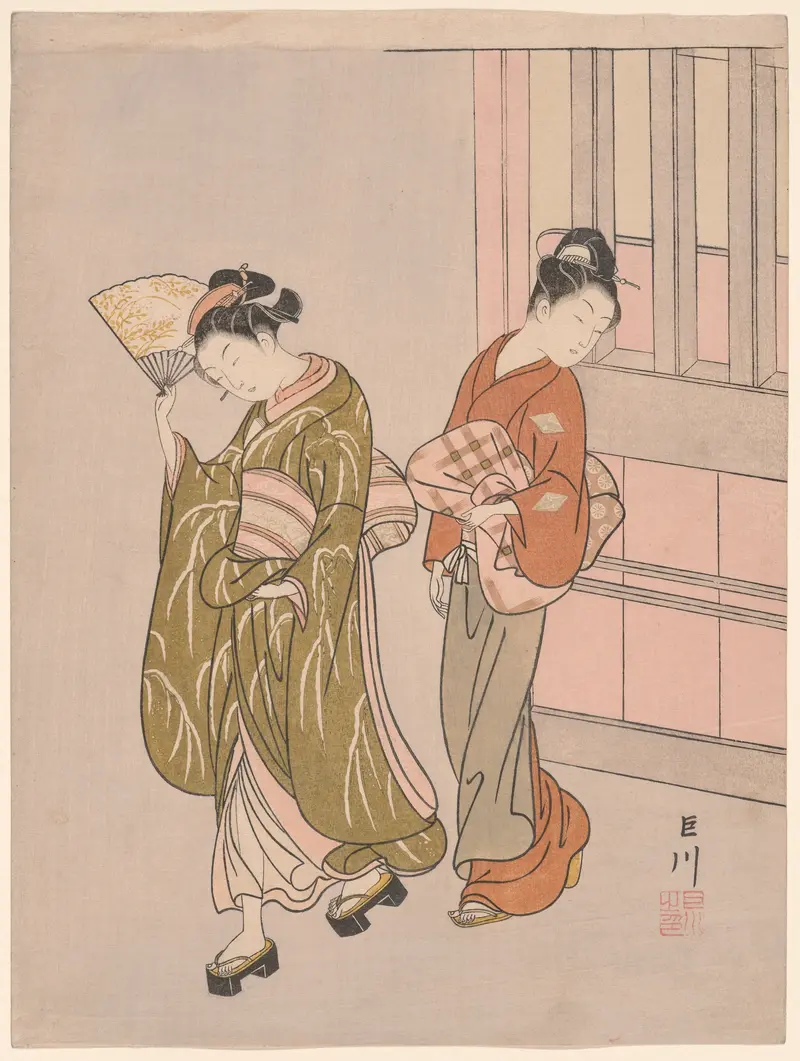 Eight Parlor Views (series; A Folding Fan: Clear Day shown)Suzuki Harunobu
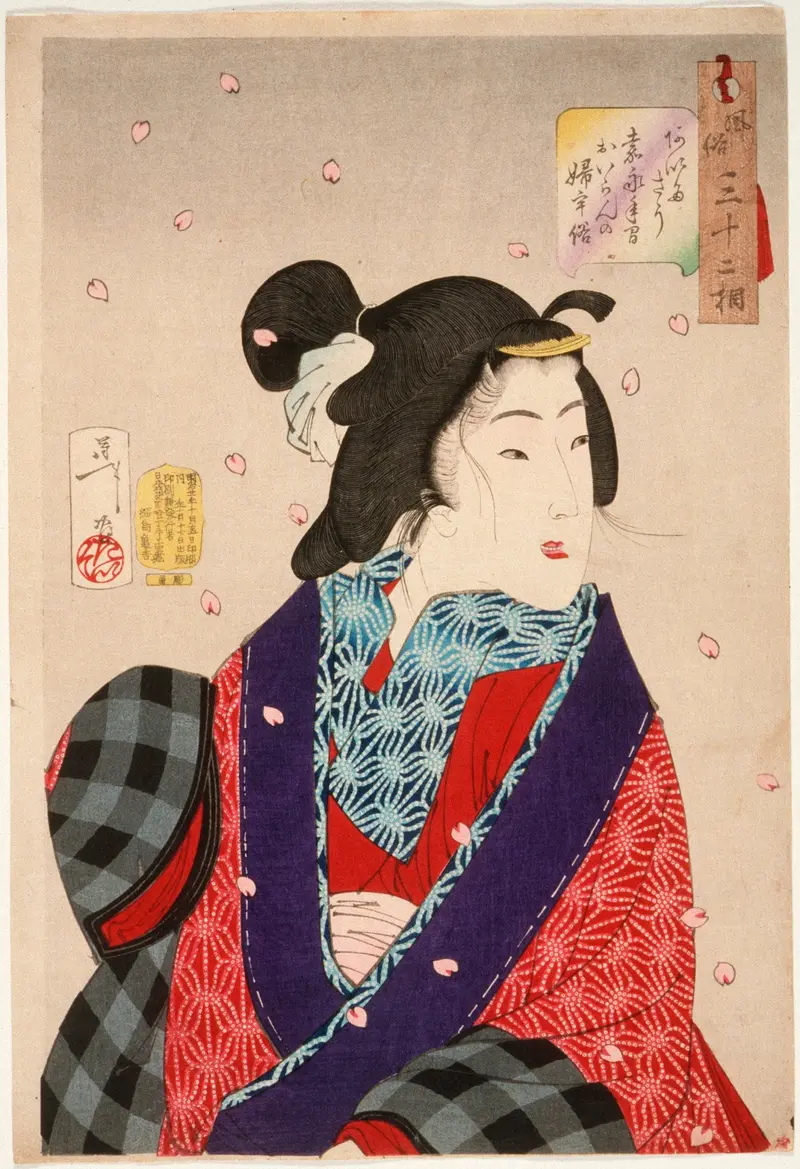 Thirty-two Aspects of Customs and Manners (series; Wanting to Meet Someone shown)Tsukioka Yoshitoshi
 Drying and Stretching ClothKitagawa Utamaro
 Beauty and Attendant on New Year's DayKitagawa Utamaro
 Southern TeahouseKitagawa Utamaro
Famous ukiyo-e artists
Nine masters of the Japanese print, from Harunobu's first full-color prints to Hokusai, Hiroshige and Yoshitoshi, and Ohara Koson of the new prints. Each link opens all their works.
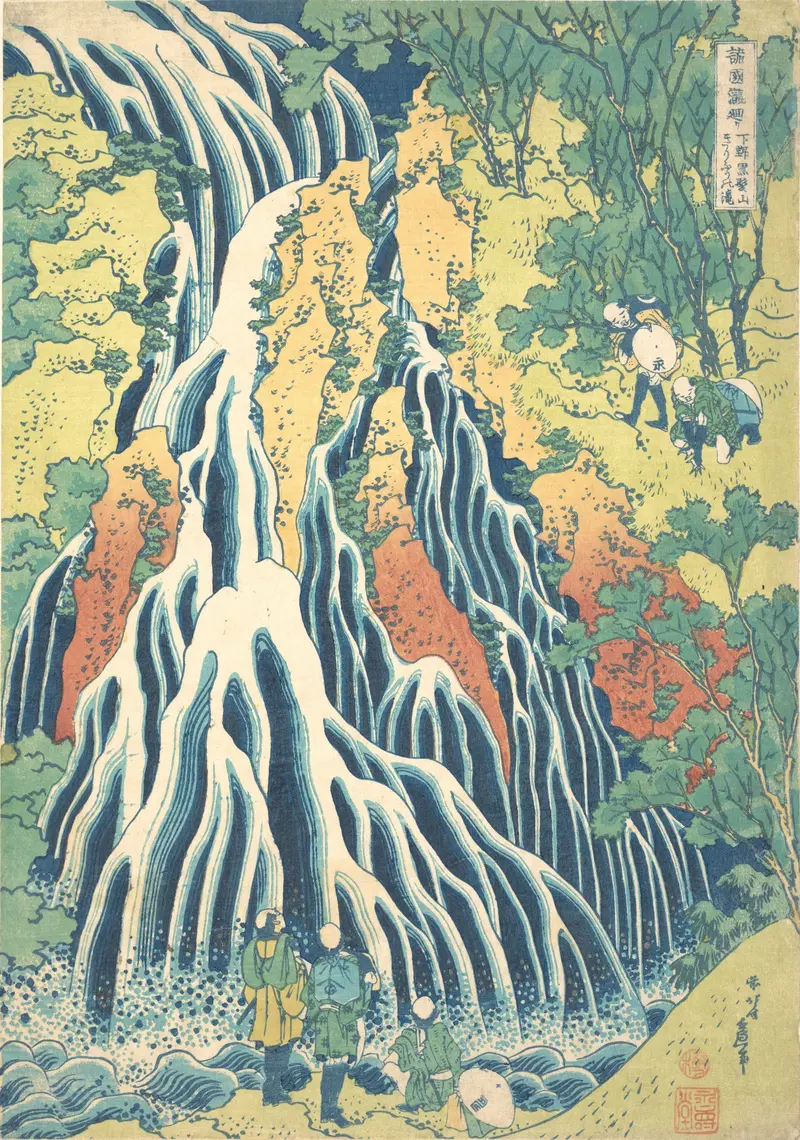 Katsushika Hokusai1760–1849. Began his Thirty-six Views of Mount Fuji at 70; the Art Institute of Chicago counts him among the greatest artists in Japanese history. His sketchbooks, the Hokusai Manga, filled fifteen volumes.
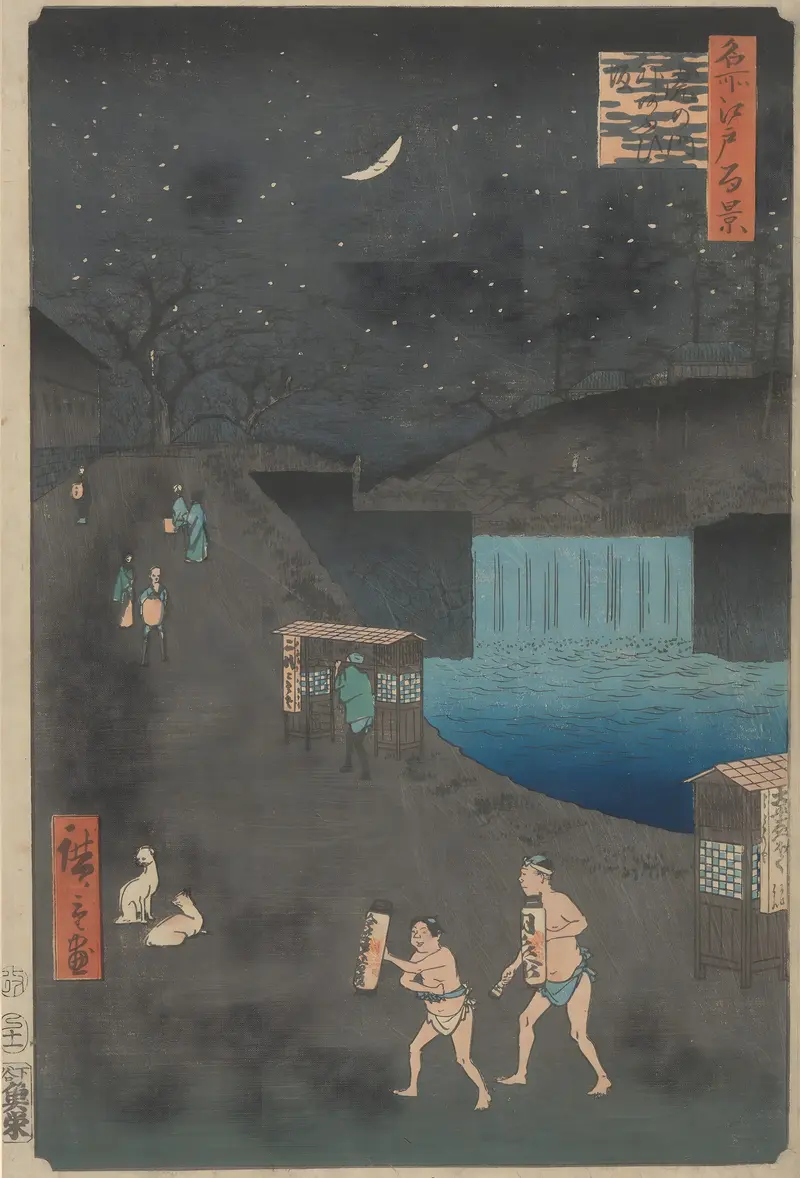
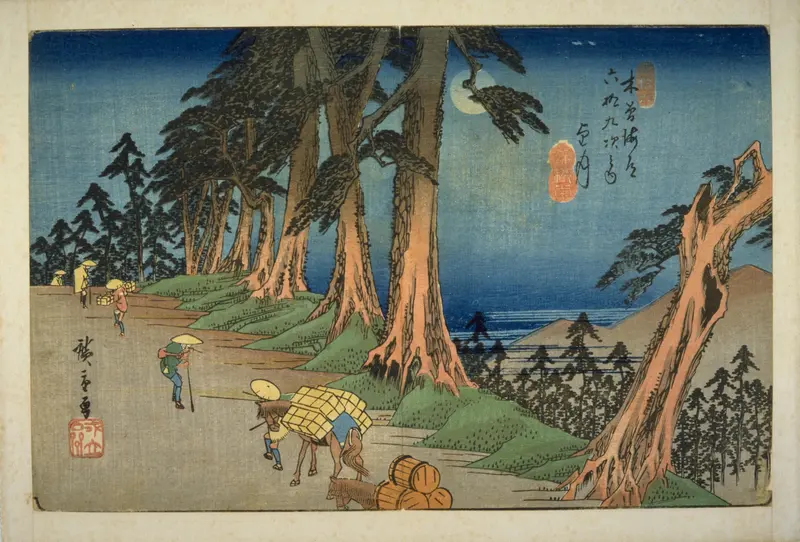 Utagawa Hiroshige1797–1858. World renowned, the Library of Congress says, for the Fifty-three Stations of the Tōkaidō and One Hundred Famous Views of Edo; Van Gogh copied two of his Edo prints in oil.
- Kitagawa Utamaroc. 1753–1806. Known above all for close-up portraits of beauties, bijinga, which Edo women bought to follow the latest fashions, the Cleveland Museum of Art says.
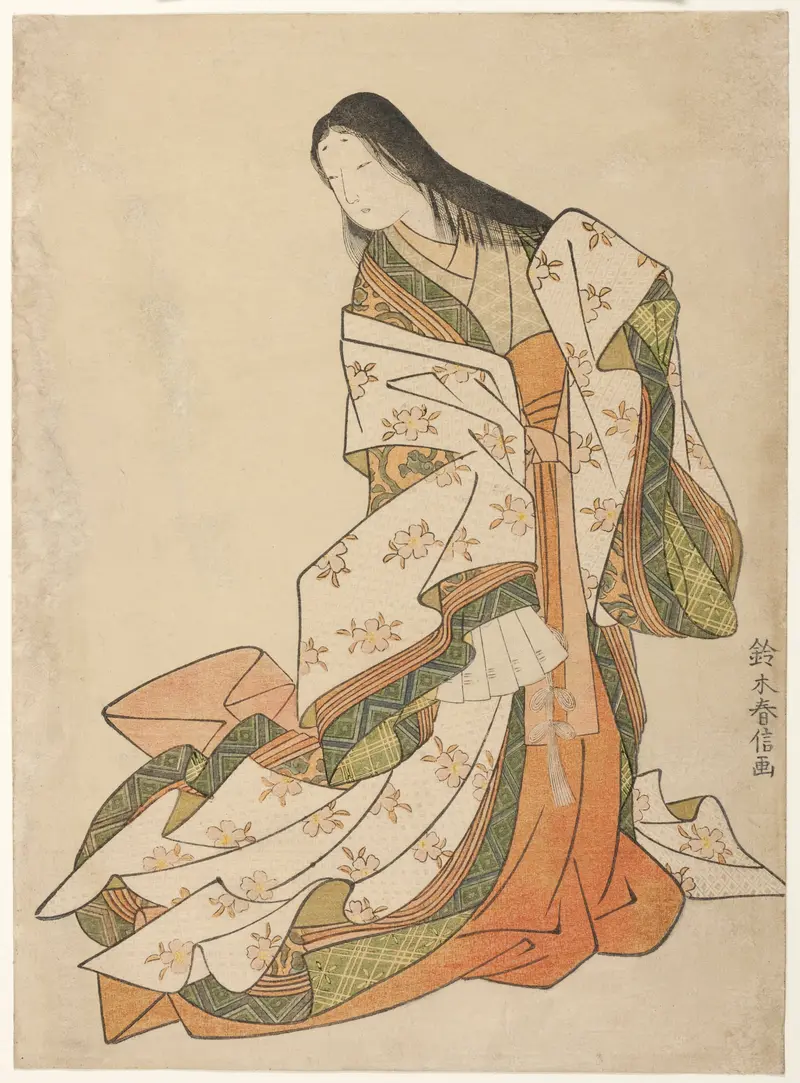 Suzuki Harunobu1725?–1770. Widely recognized as the first Japanese printmaker to print each color from its own block, creating the full-color nishiki-e, or brocade pictures.
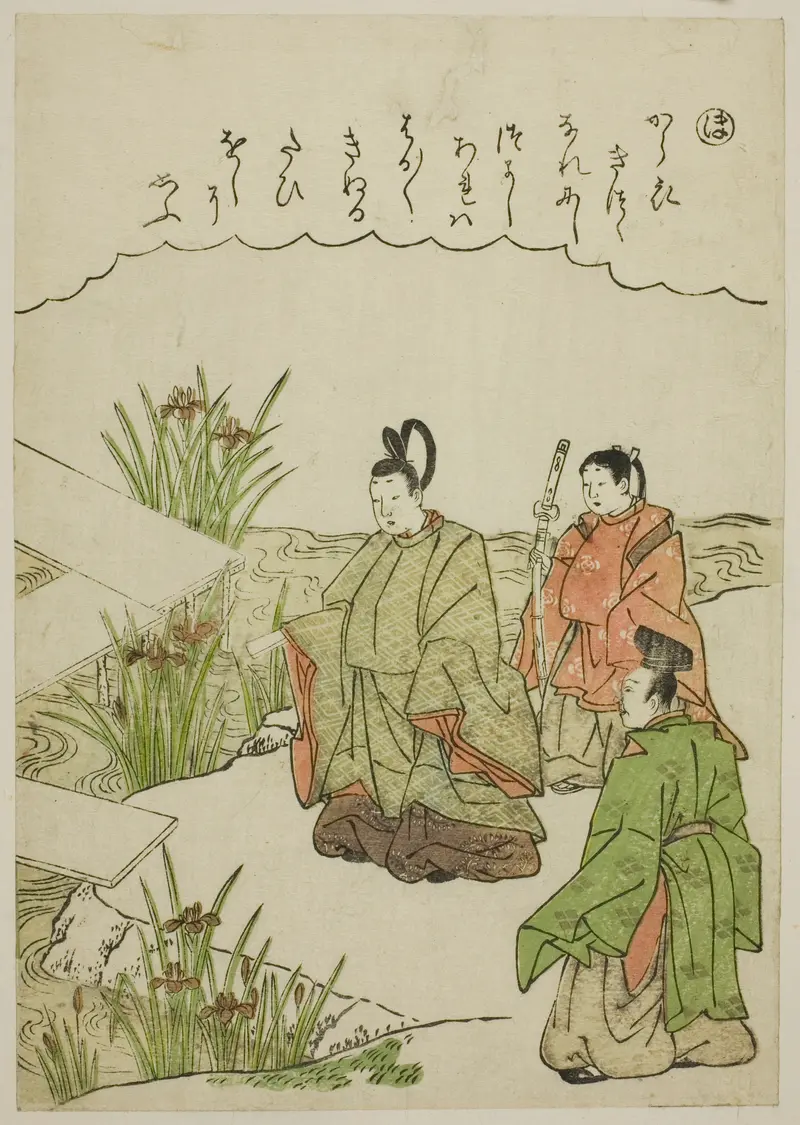 Katsukawa Shunshō1726–1793. Painter and printmaker who dominated the actor print in Edo, the Cleveland Museum of Art says, and an important teacher of the next generation, among them Shunkō, Shunzan and Shun'ei.
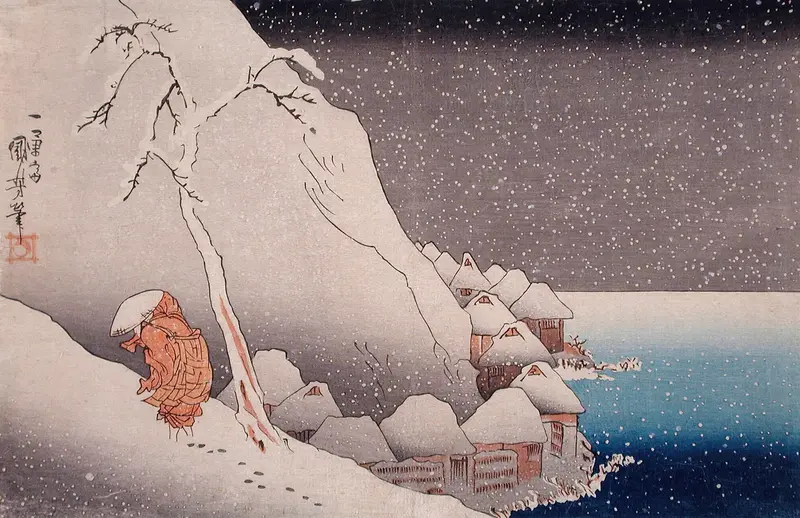 Utagawa Kuniyoshi1798–1861. Designed scenes of legendary heroes such as the Chinese general Guan Yu, the Library of Congress notes; in his views of Edo he used Western-style shadows, the Cleveland Museum of Art points out.
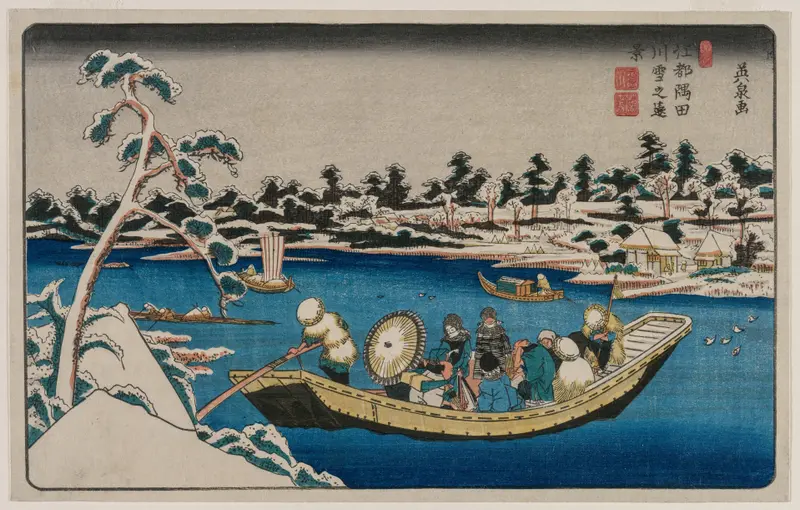 Keisai Eisen1790–1848. Shared the Sixty-nine Stations of the Kisokaidō with Hiroshige, the Cleveland Museum of Art notes; his snowy view of the Sumida River is on our list.
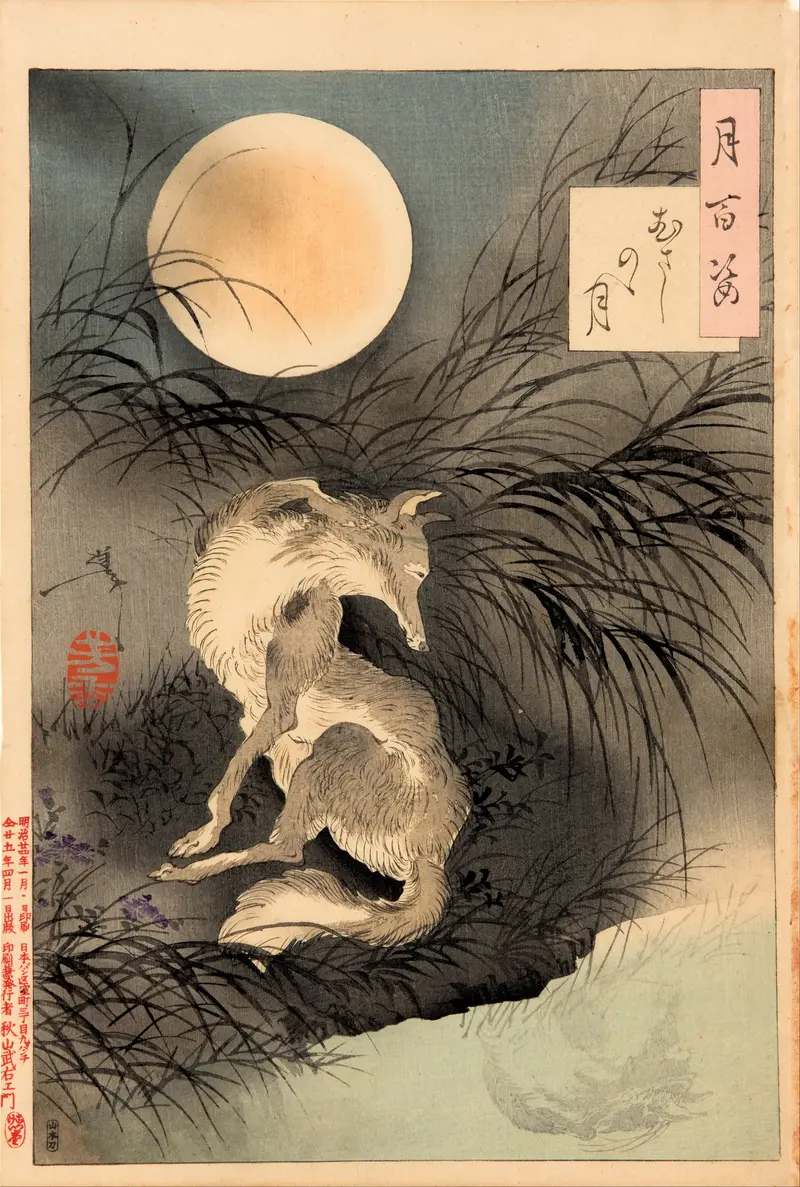 Tsukioka Yoshitoshi1839–1892. Published One Hundred Aspects of the Moon from 1885 to 1892; LACMA owns a complete album of the series. He also painted, as his Kenshin scroll on this page shows.
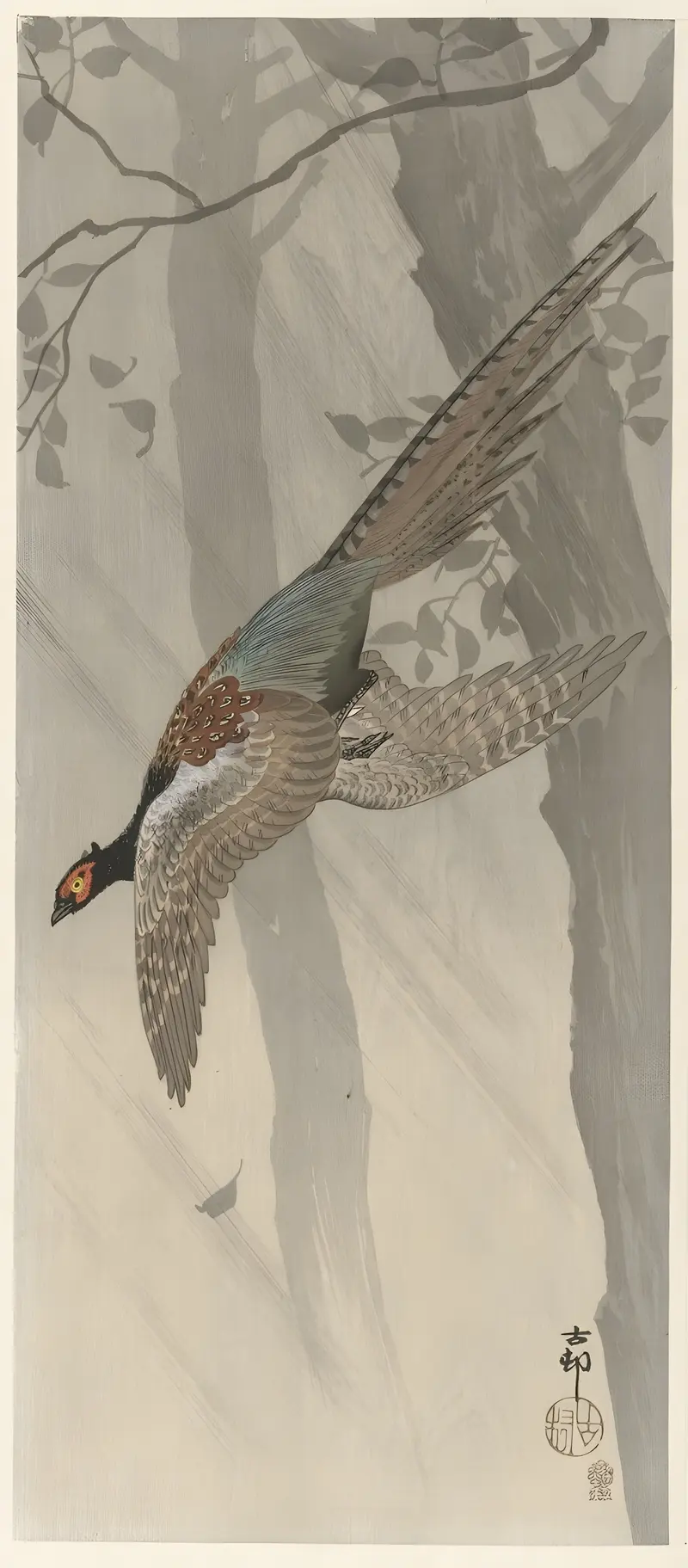 Ohara Koson1877–1945. Named by the Art & History Museum in Brussels among the artists of shin hanga, the early 20th-century revival of ukiyo-e. Most of his prints in our collection are birds and flowers.
Hokusai's Thirty-six Views of Mount Fuji
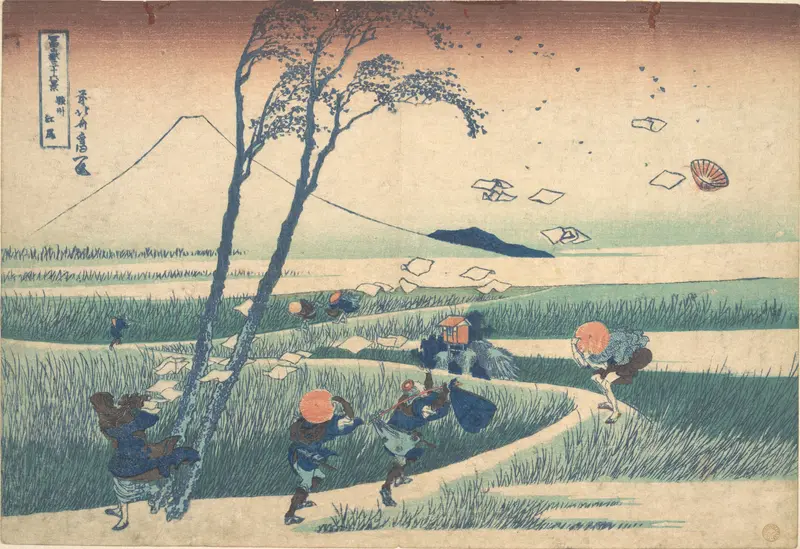
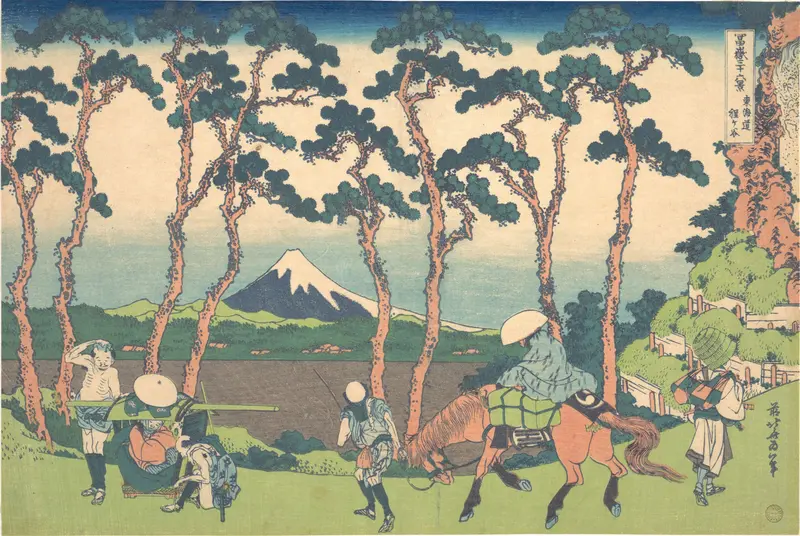
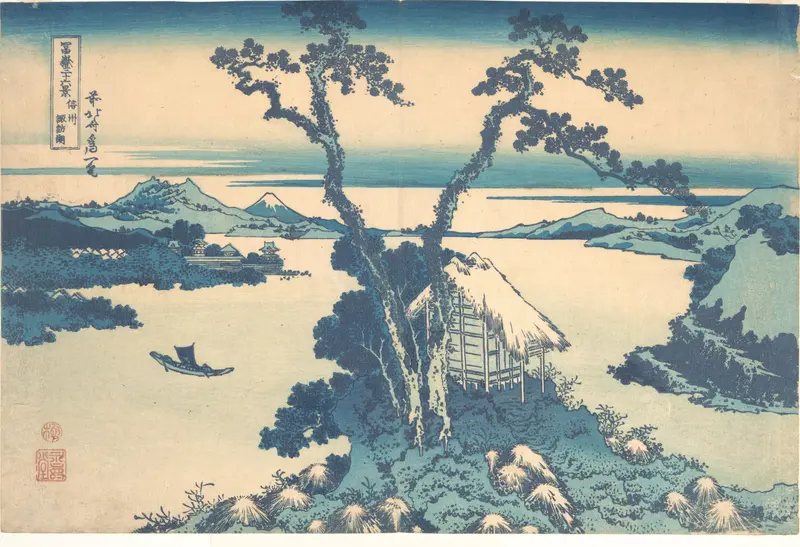
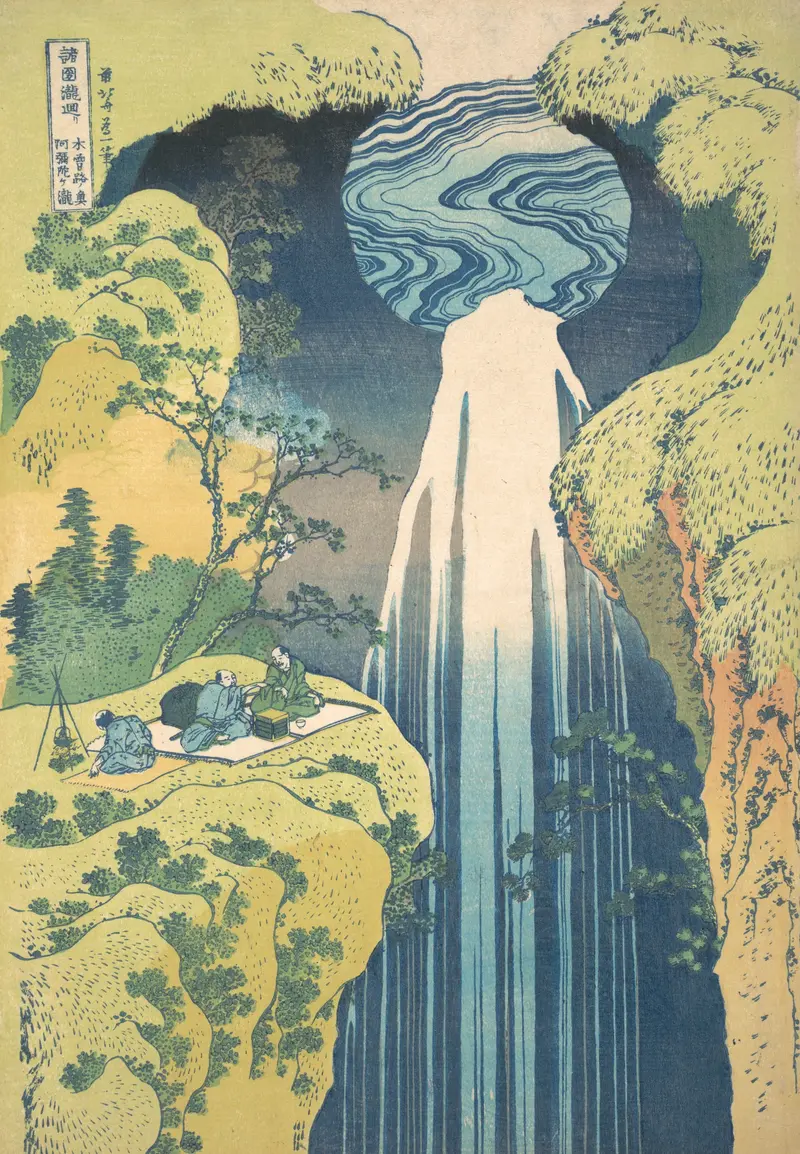
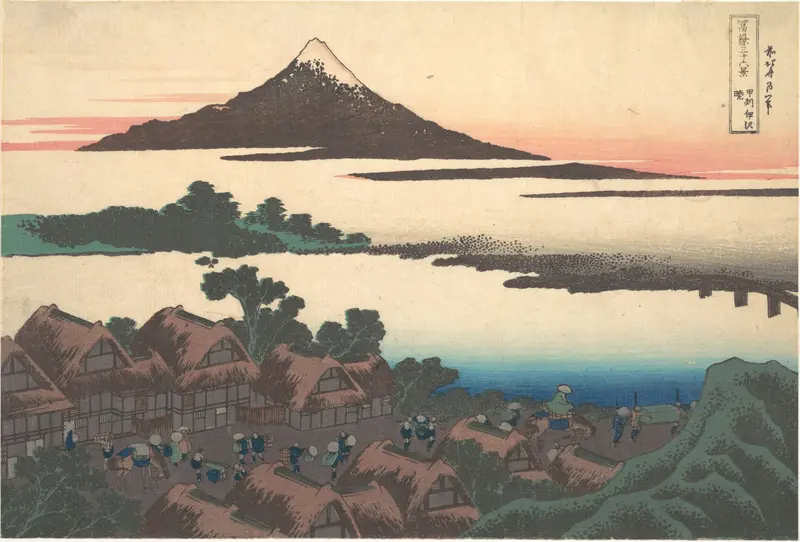
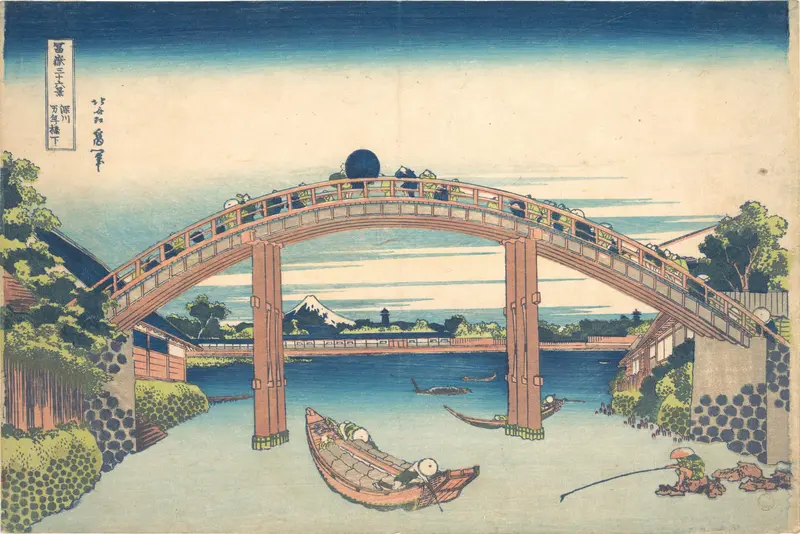
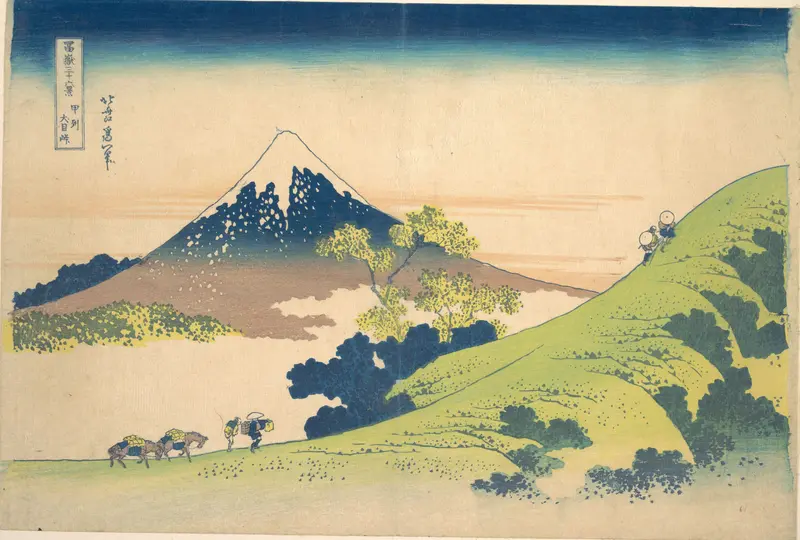
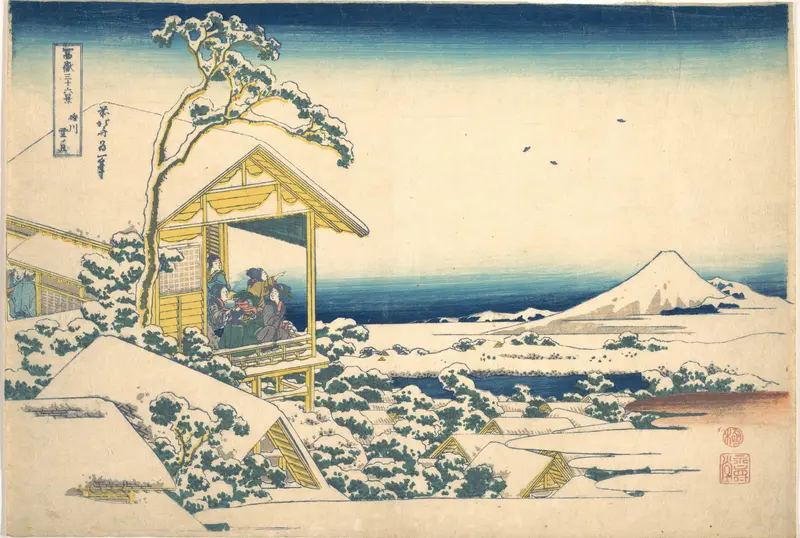
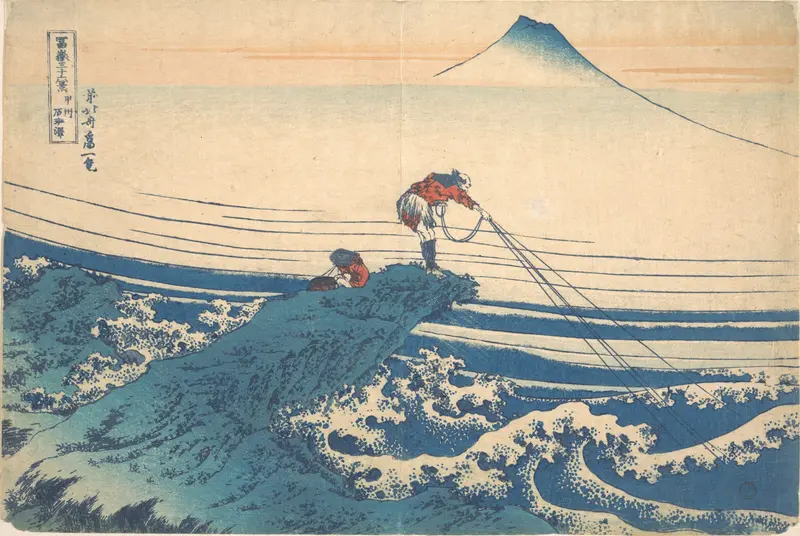
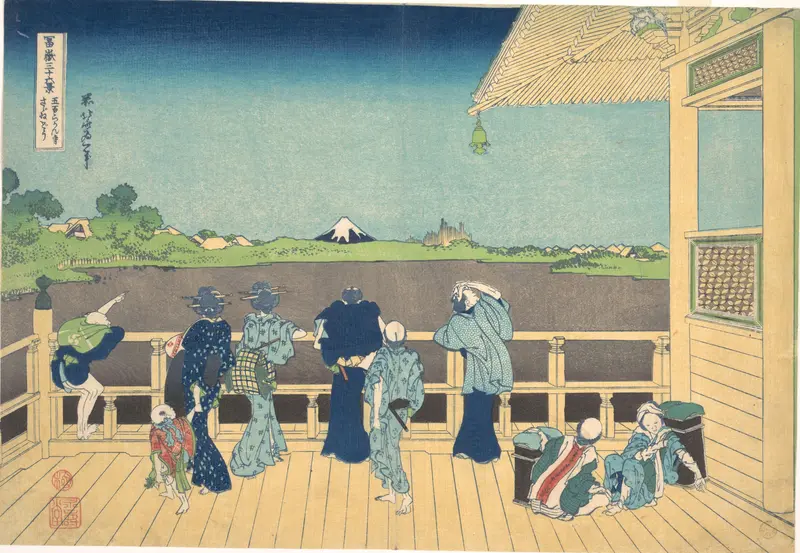
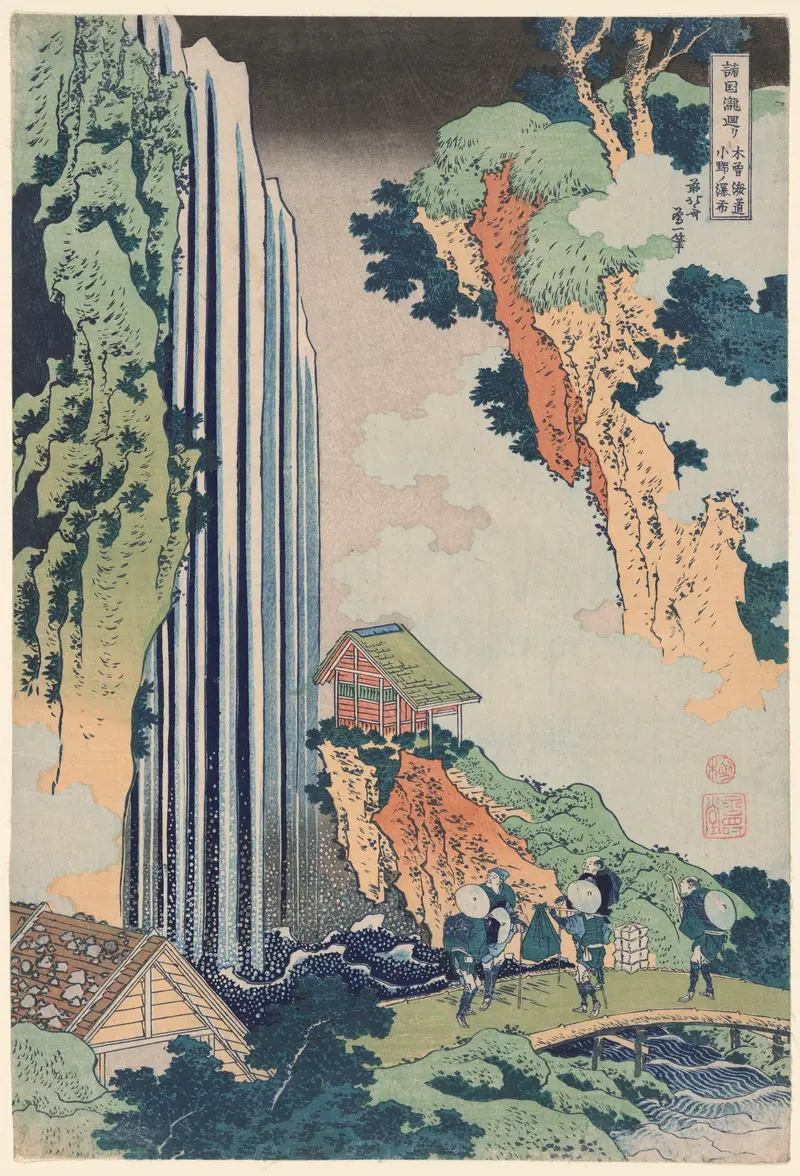
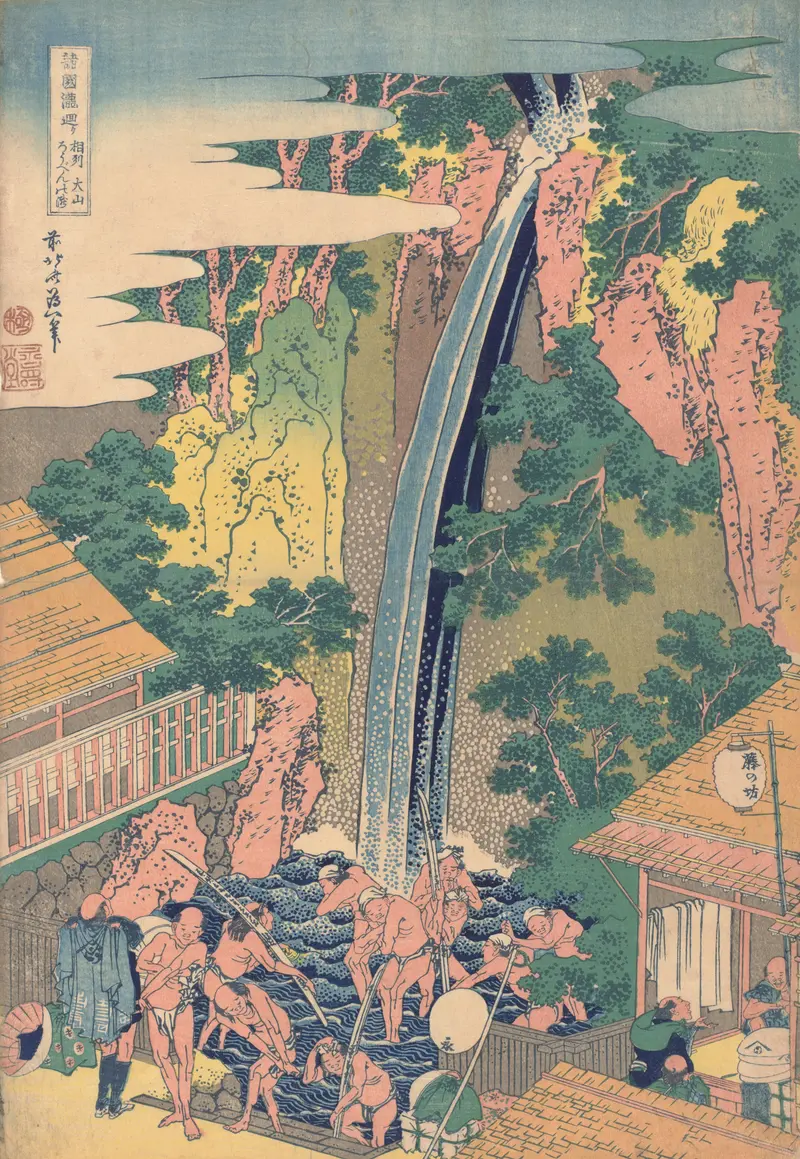
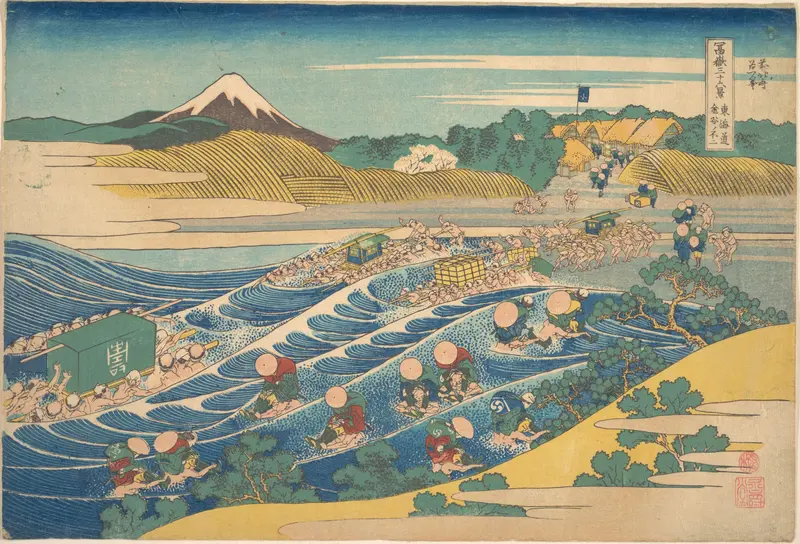
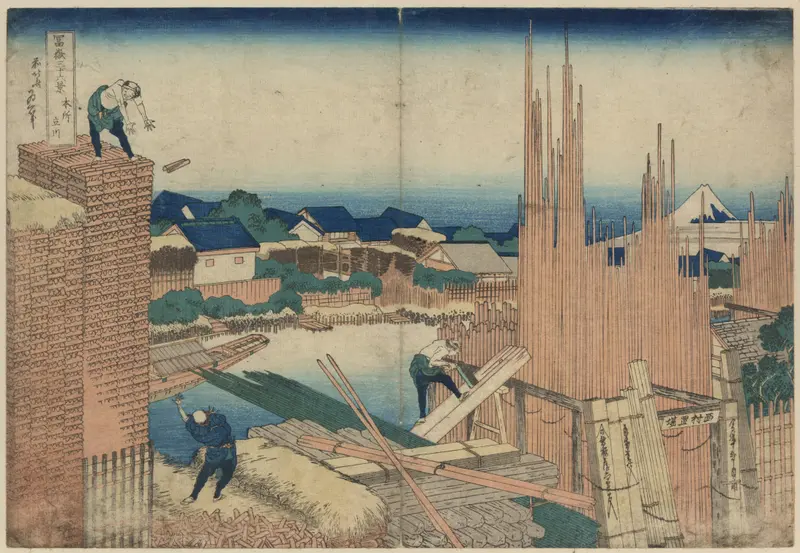
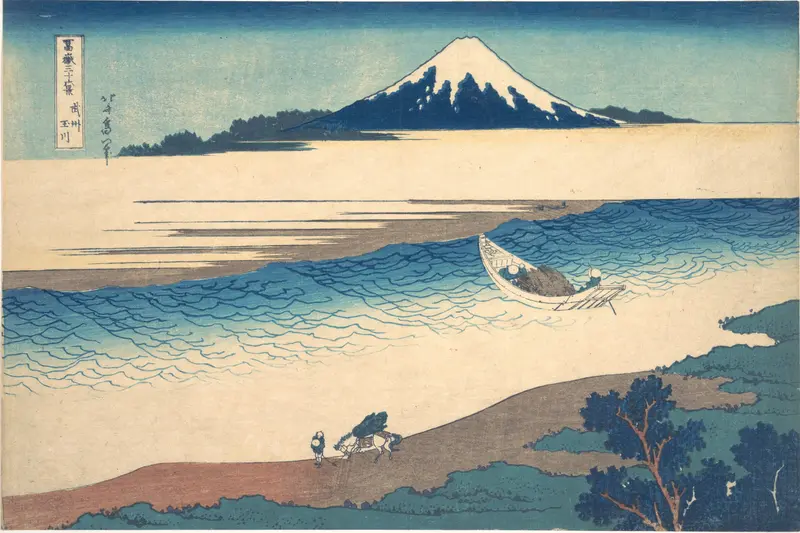
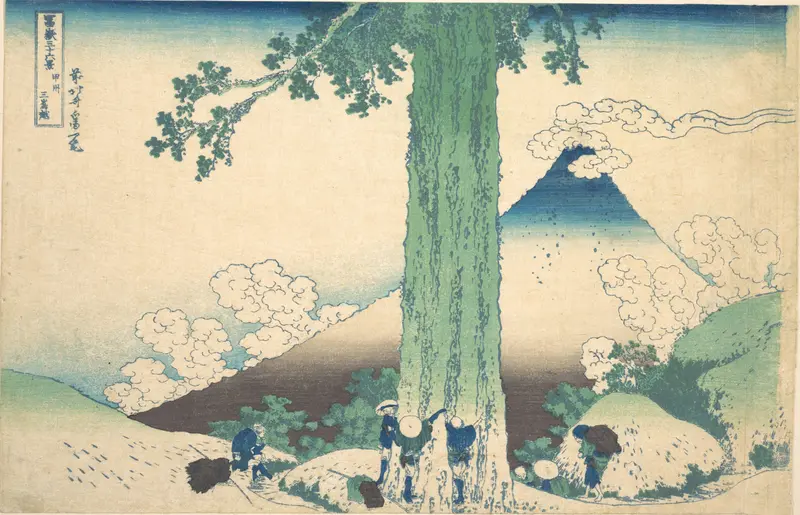
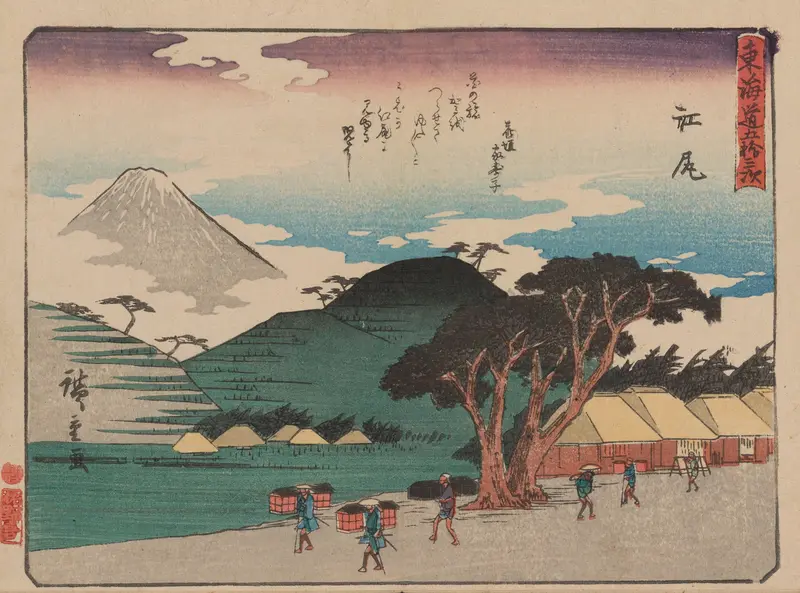
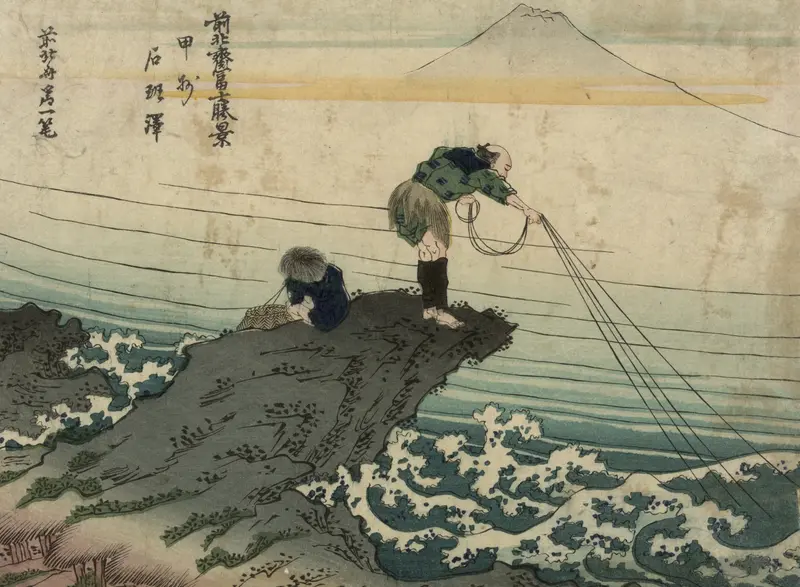
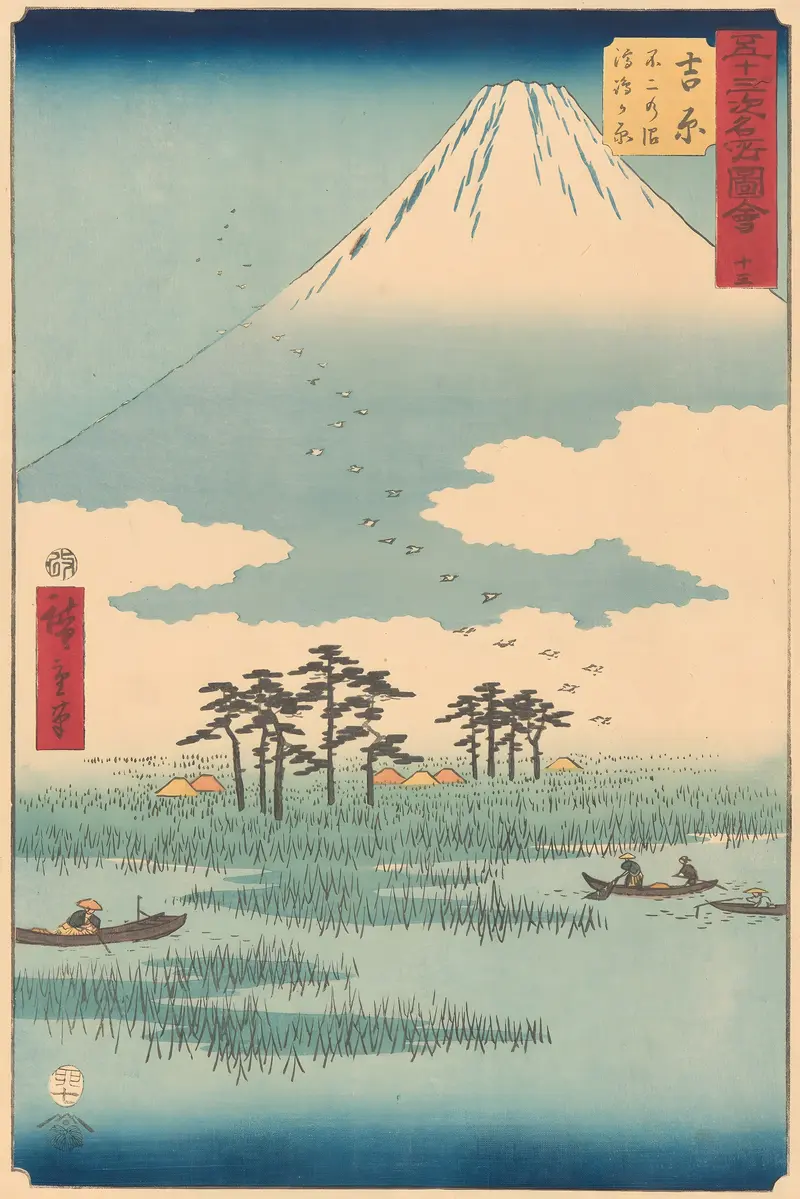
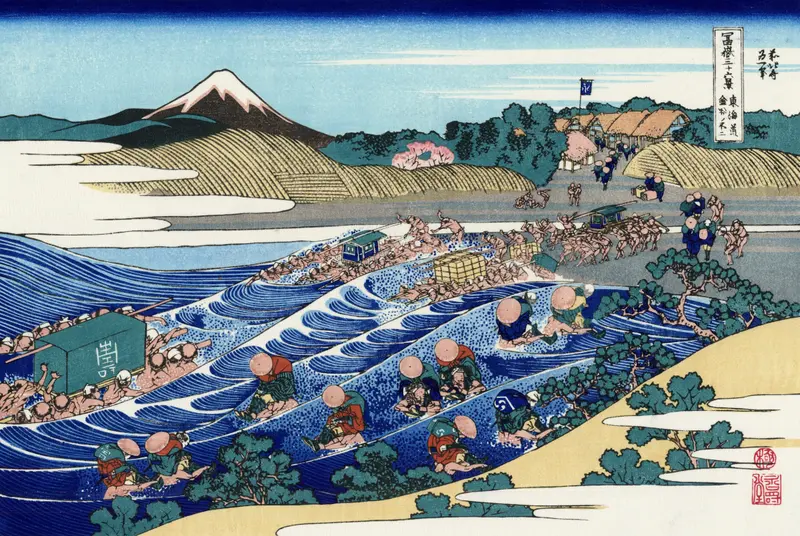
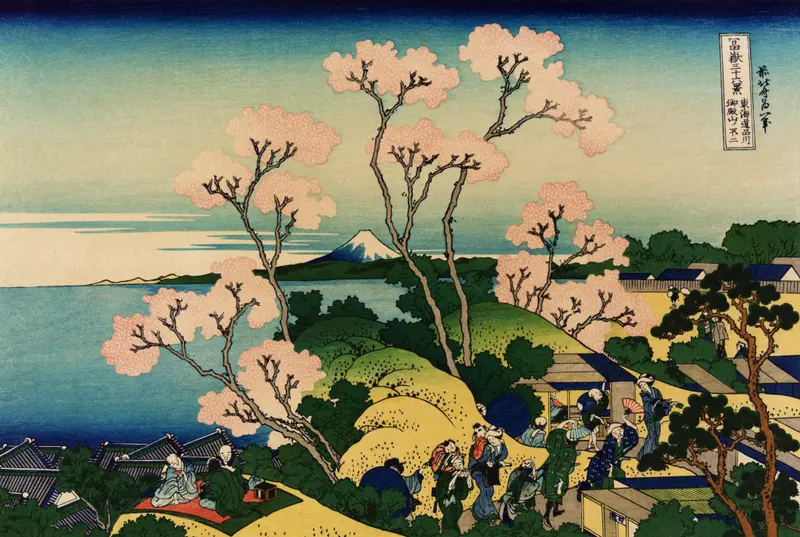
Hokusai began the series in 1830, at the age of 70, and it grew to forty-six prints; in each one, the Art Institute of Chicago says, Mount Fuji is the protagonist, seen near and far, in every season and weather. Here are six more of its views, from the fisherman above the surf at Kajikazawa to the travelers caught by the wind at Ejiri.
Hiroshige's One Hundred Famous Views of Edo
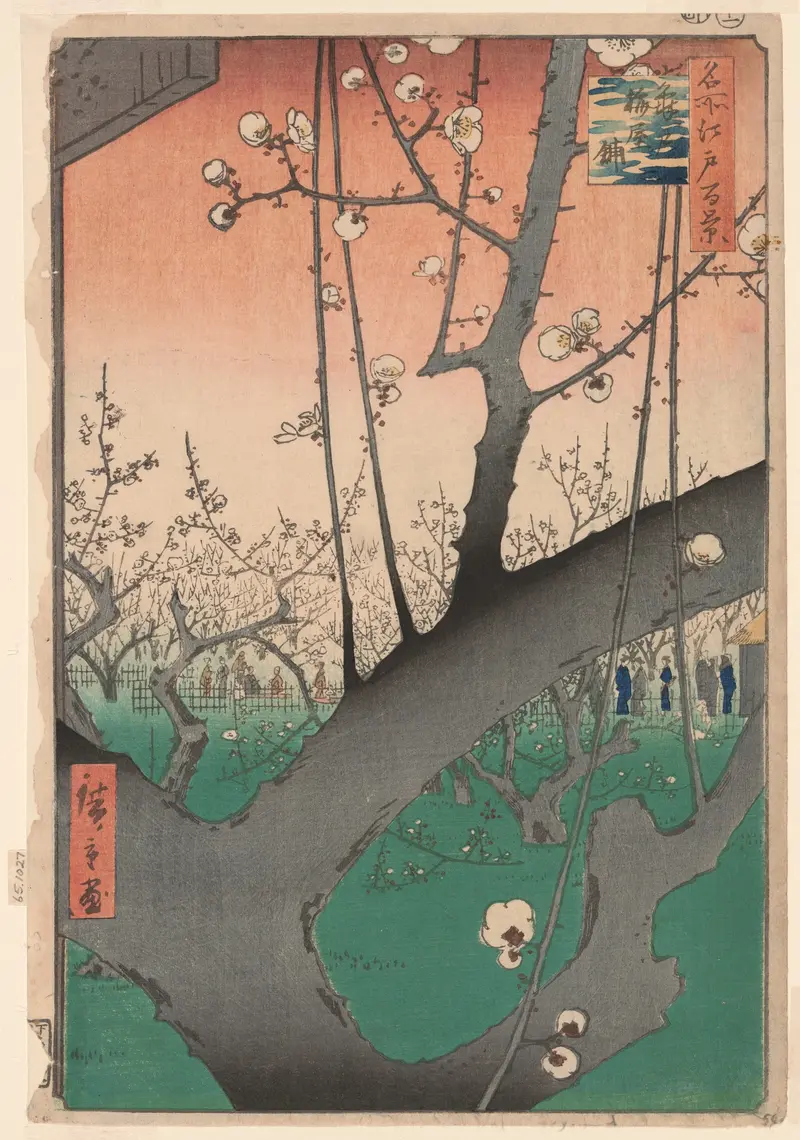
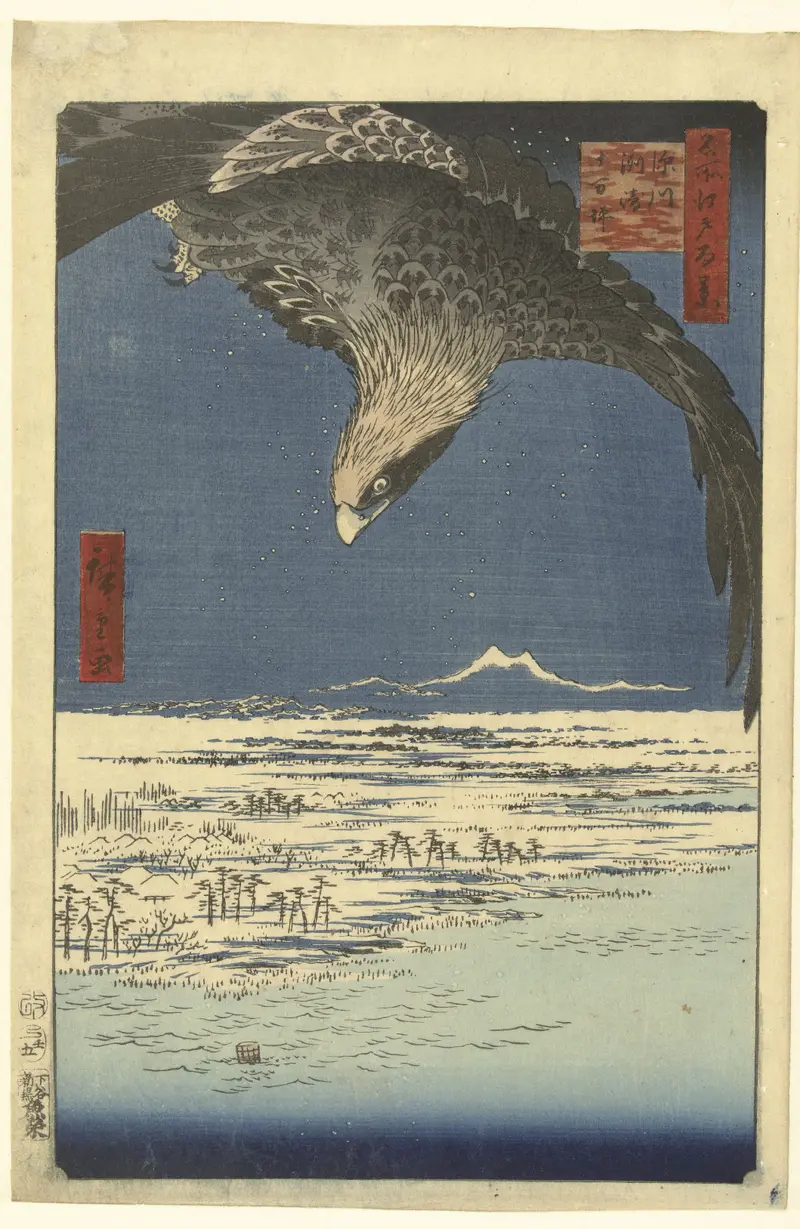
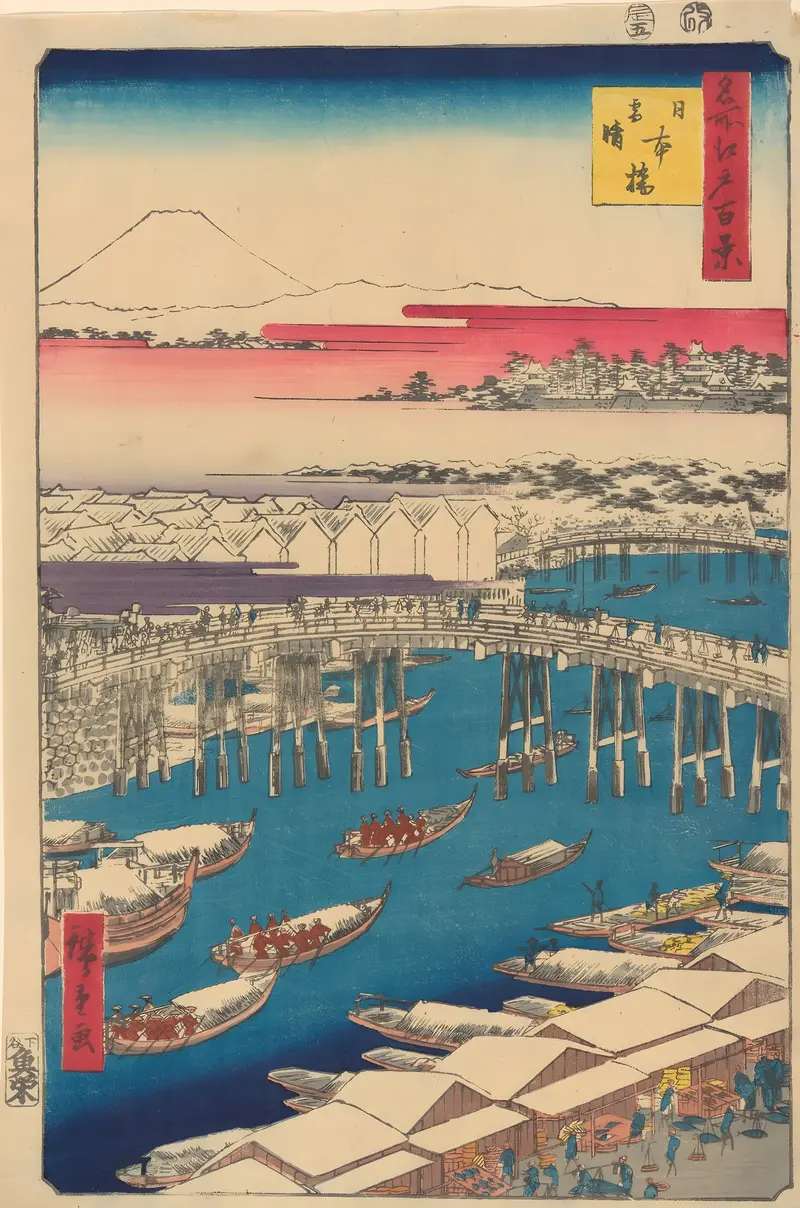
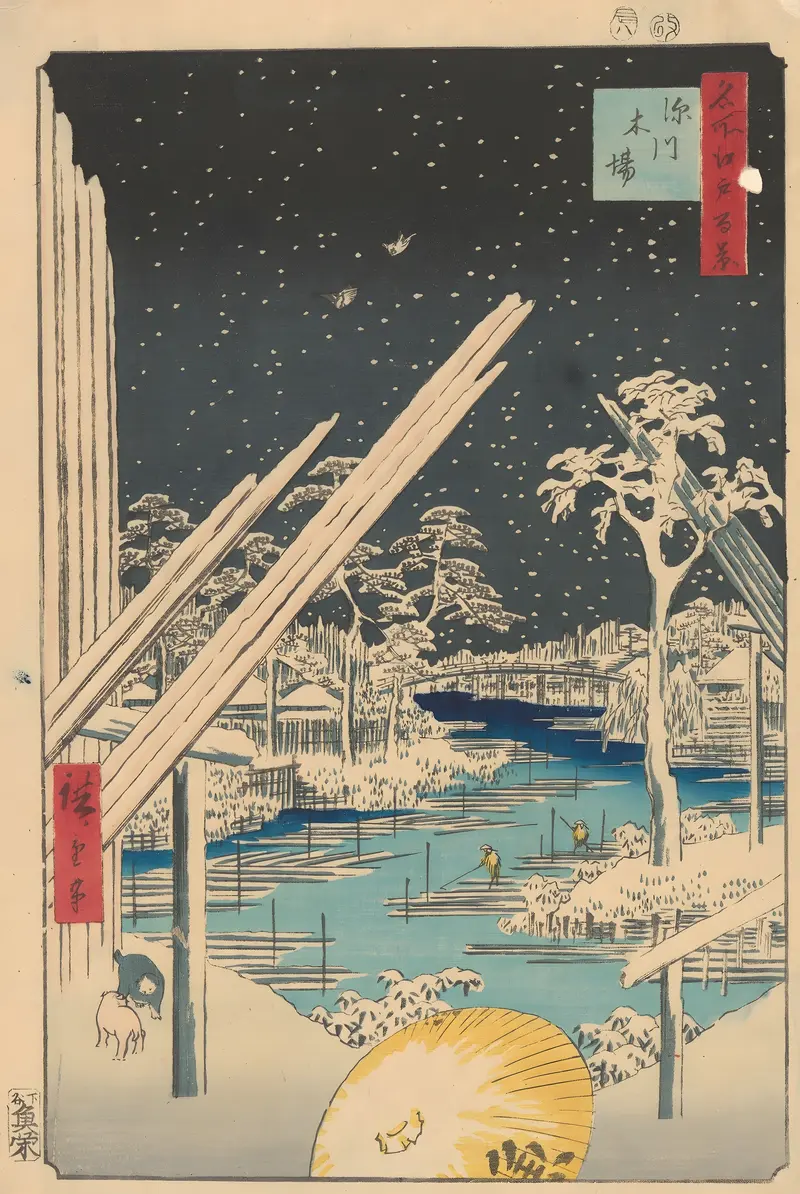
Hiroshige's views of Edo (now Tokyo) through the seasons are dated 1856 to 1858 in museum records. The Art Institute of Chicago calls Plum Garden at Kameido one of his most recognizable designs, famously copied by Van Gogh in 1887, and the eagle swooping over the snowy shore at Fukagawa one of the most popular in the series.
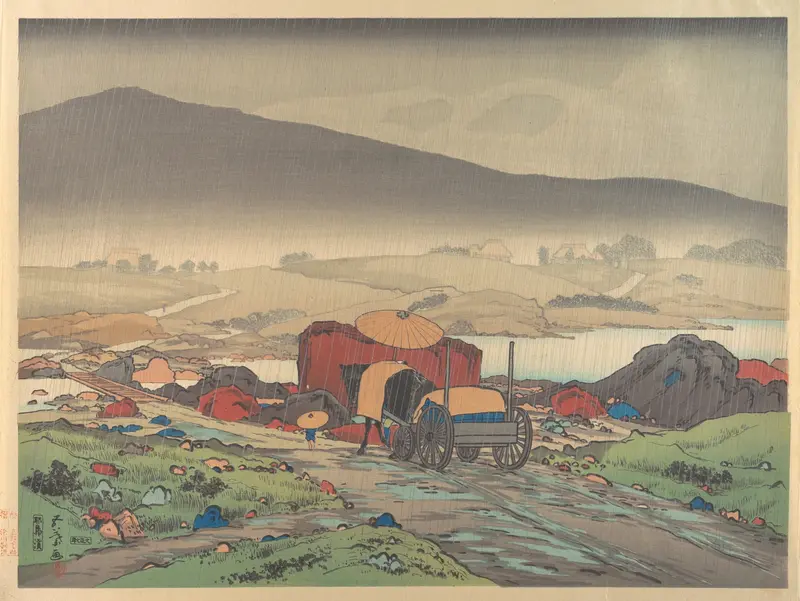
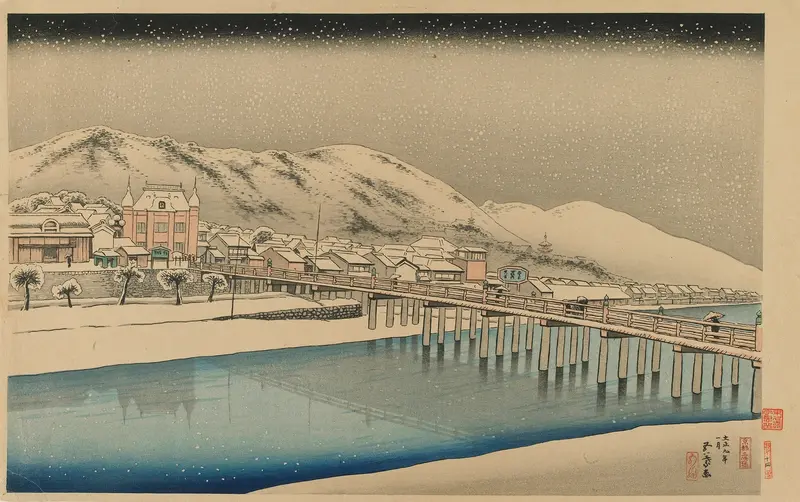
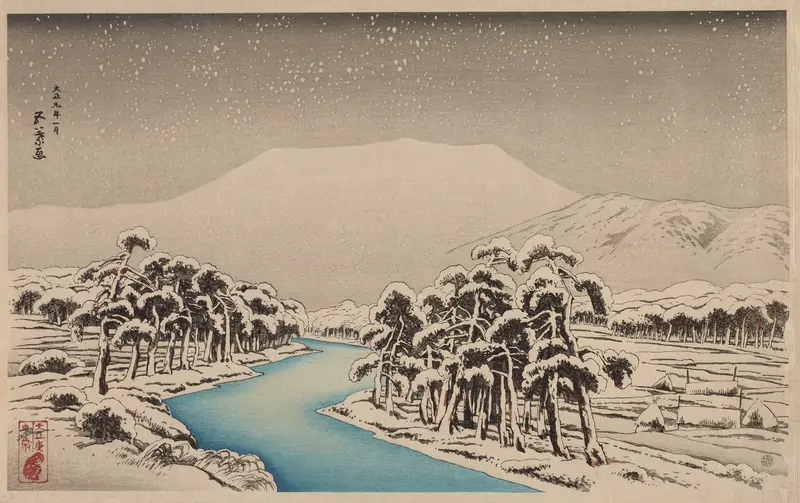
Shin hanga: the new prints
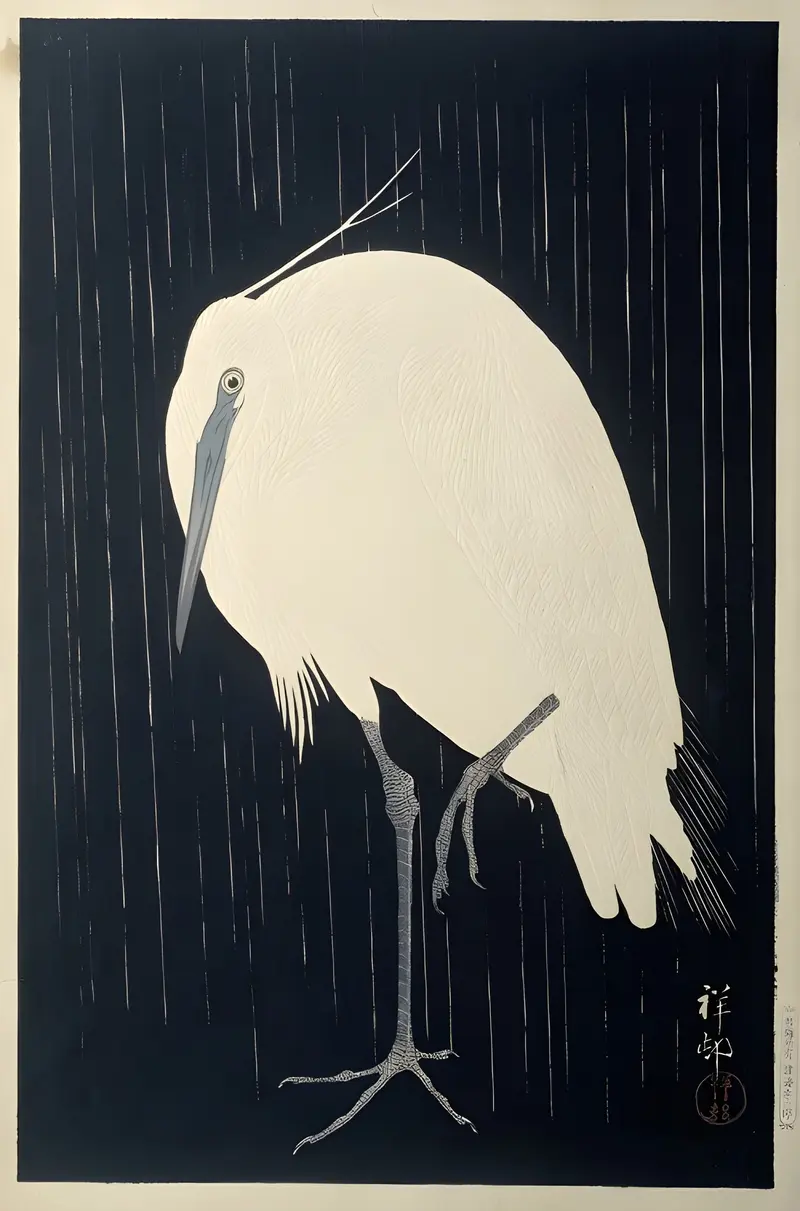
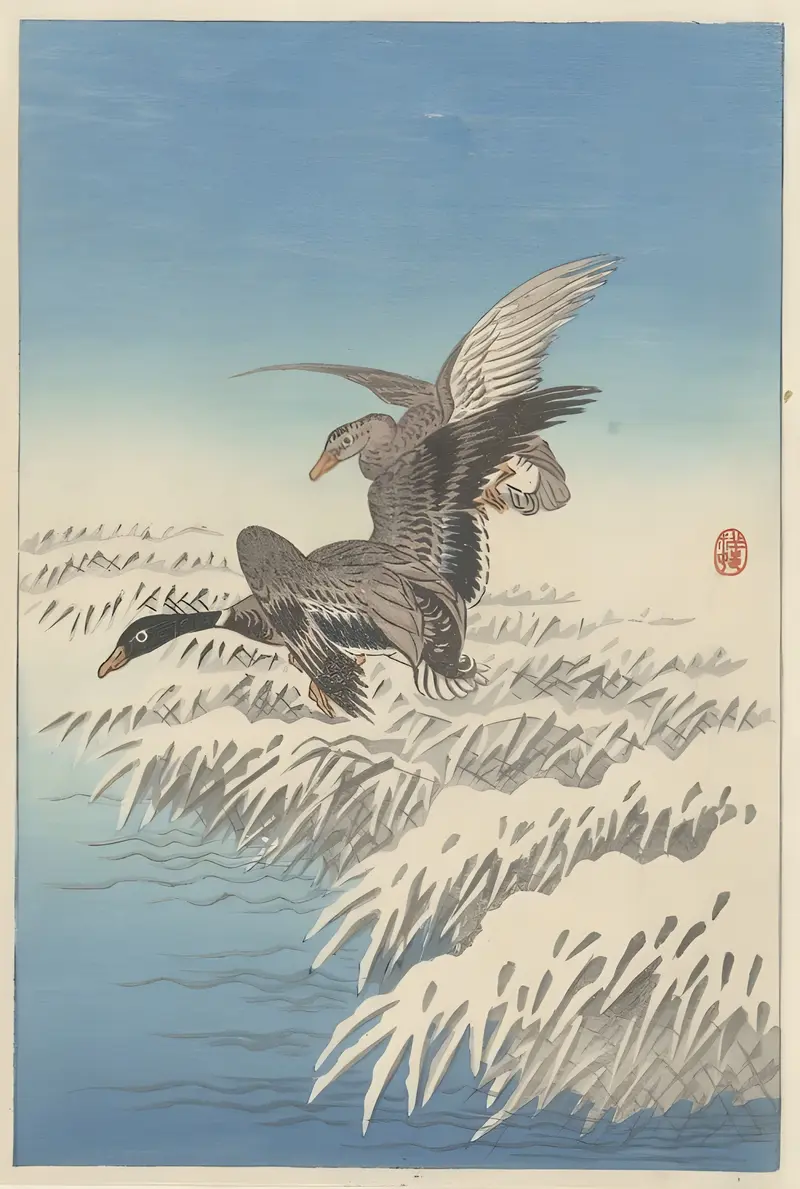
In the early 1900s the publisher Watanabe Shōzaburō led a revival of ukiyo-e printmaking, the Art & History Museum in Brussels says, keeping its landscapes, beauties and birds and flowers. The Museum of East Asian Art in Cologne finds the new landscapes more impressionistic than their Edo precursors, built from subtle nuances of color. Here are Hashiguchi Goyō's views and Ohara Koson's birds.

Characteristics of ukiyo-e: how to recognize it
One block for every color
Each color in this print came from its own carved block, printed one after another so that they line up. The Cleveland Museum of Art credits Harunobu as the first Japanese printmaker to work this way, and the Art Institute of Chicago dates this series to the years when full-color prints emerged; they were called nishiki-e, brocade pictures.
A Folding Fan-A Clear Day (Ogi no seiran), from the series Eight Parlor Views (Zashiki hakkei), Suzuki Harunobu
Beauties in the latest fashion
Utamaro cuts the two women off at the waist and fills the sheet with their faces, hair and robes. Close-up portraits of beauties were his specialty, the Cleveland Museum of Art says, and Edo women bought them to follow the latest hairstyles, much as people buy fashion magazines today.
Beauty and Attendant on New Year’s Day, from the series “Pleasures for Beauties on the Five Festival Days" ("Bijin gosetsu no asobi"), Kitagawa Utamaro
Mount Fuji, again and again
Here the mountain is everything; in the Great Wave it is a speck in the distance. In Hokusai's Thirty-six Views, the Art Institute of Chicago notes, Fuji is the protagonist of every scene, seen near and far, from all directions, in different weather and seasons.
Fine Wind, Clear Morning (Red Fuji), Katsushika Hokusai
Berlin blue
The deep blue of the wave is Berlin, or Prussian, blue, a pigment that had just become affordable when Hokusai made the series. He used it freely for sky and water throughout the Thirty-six Views, the Art Institute of Chicago says.
The Great Wave off Kanagawa, Katsushika Hokusai
Weather you can feel
Hiroshige's skill at capturing weather shows in his views, the Cleveland Museum of Art says. For this storm, three separate blocks printed three shades of gray, so the bamboo seems to fade back into the rain.
Shono: Driving Rain (Shono hakuu), from the series "Fifty-three Stations of the Tokaido (Tokaido gojusan tsugi no uchi)," also known as the Hoeido Tokaido, Utagawa Hiroshige
Flat color, bold design
Strong outlines, flat areas of bright color and a steep, cropped view of the bridge. Tate lists the flatness, brilliant color and stylization of Japanese woodcuts among the qualities that changed Western painting from Impressionism on, and Van Gogh copied this very design in 1887.
Sudden Shower over Shin-Ōhashi Bridge and Atake, Utagawa Hiroshige
Before and after ukiyo-e
 Japanese painting10th–19th century
- Ukiyo-e17th–19th century
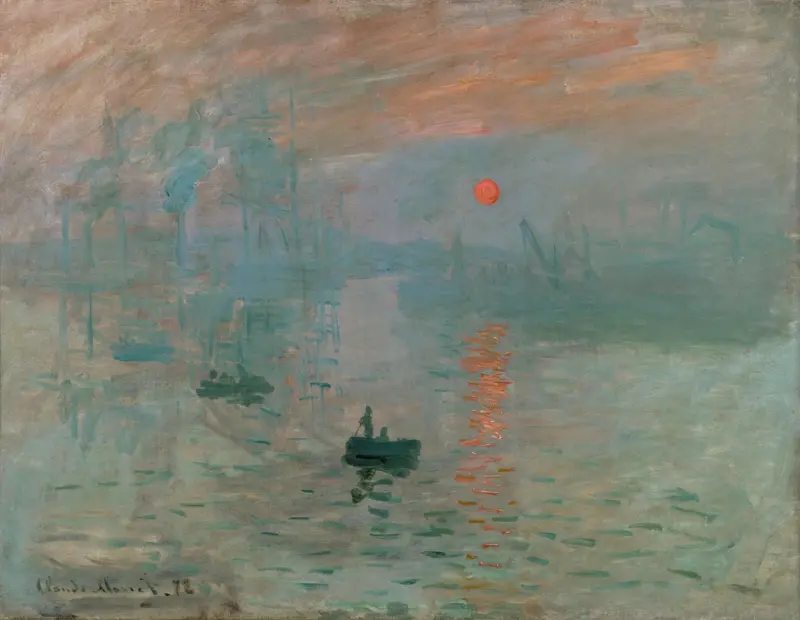 Impressionismc. 1867–1886
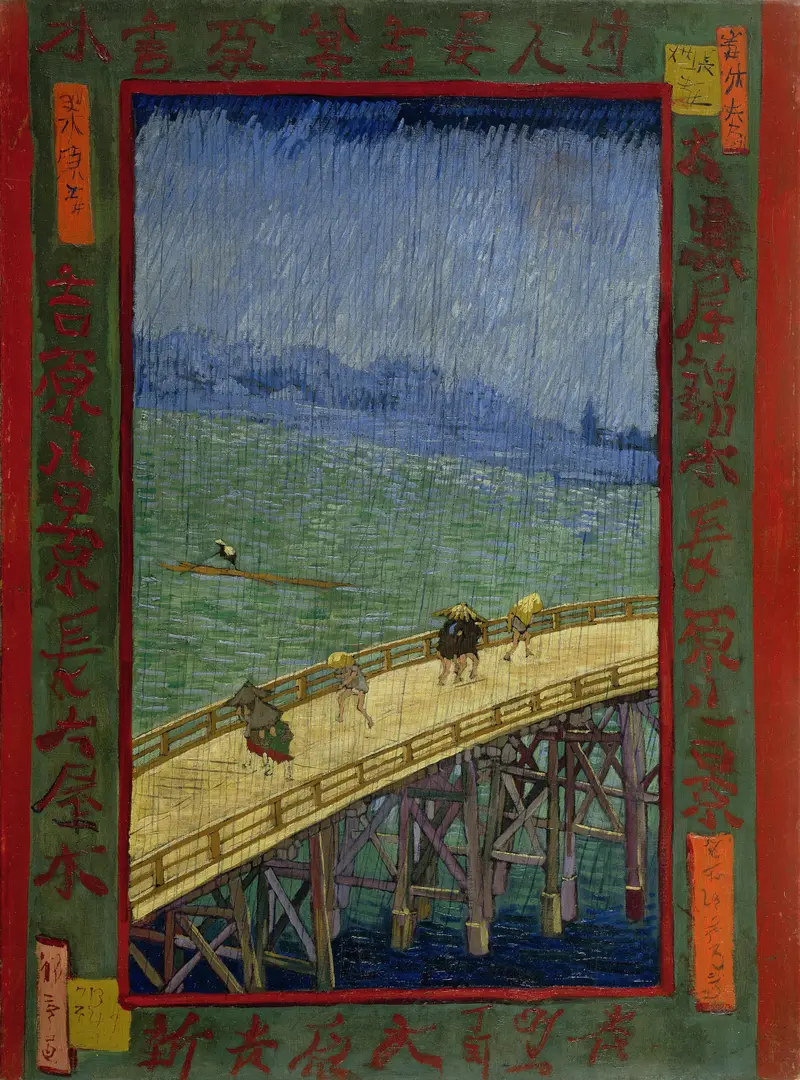 Post-Impressionismc. 1886–1905
 Art Nouveau1890s–1914
Ukiyo-e vs Japanese painting and Impressionism
| Compared | Japanese painting | Ukiyo-e | Impressionism |
|---|---|---|---|
| When | 10th–19th century | 17th–19th century | c. 1867–1886 |
| Medium | Ink and bright pigment on folding screens, sliding doors and scrolls | Mostly color woodblock prints, also paintings and picture books | Oil paint, often outdoors |
| Subject | Classical court tales, seasonal nature, landscapes | Courtesans, kabuki actors and, later, famous landscape views | Changing light and fleeting moments of modern life |
| Famous example | Hasegawa Tōhaku, Pine Trees | Hokusai, The Great Wave off Kanagawa | Monet, Impression, Sunrise |
| Key artists | Tosa Mitsunobu, Kano Tan'yū, Ogata Kōrin | Hokusai, Hiroshige, Utamaro, Harunobu | Monet, Renoir, Degas |
List of famous ukiyo-e prints and their artists
The famous ukiyo-e prints: who designed them, when, and which museum holds the impression shown.
Show the listHide the list
| Painting | Painted by | Year | Medium | Size | Located in | City |
|---|---|---|---|---|---|---|
| The Great Wave off Kanagawa | Katsushika Hokusai | c. 1830–32 | Woodblock print; ink and color on paper | 25.7 × 37.9 cm (10.1 × 14.9 in) | Metropolitan Museum of Art | New York |
| The Fifty-three Stations of the Tōkaidō (series; Shōno: Driving Rain shown) | Utagawa Hiroshige | c. 1833–34 | Color woodblock print; ōban | 24.2 × 36.2 cm (9.5 × 14.3 in) | Art Institute of Chicago | Chicago |
| Fine Wind, Clear Morning (Red Fuji) | Katsushika Hokusai | c. 1830–32 | Color woodblock print | 25.7 × 38.1 cm (10.1 × 15 in) | Indianapolis Museum of Art | Indianapolis |
| Sudden Shower over Shin-Ōhashi Bridge and Atake | Utagawa Hiroshige | 1857 | Color woodblock print; ōban | 37 × 25.4 cm (14.6 × 10 in) | Art Institute of Chicago | Chicago |
| Famous Places in the Sixty-odd Provinces (series; Sagami: Entrance to the Caves at Enoshima shown) | Utagawa Hiroshige | 1853 | Color woodblock print; ōban | 37 × 25.3 cm (14.6 × 10 in) | Art Institute of Chicago | Chicago |
| Rainstorm Beneath the Summit (Sanka hakuu) | Katsushika Hokusai | 1829–33 | Color woodblock print | 25.4 × 37.5 cm (10 × 14.8 in) | Rijksmuseum | Amsterdam |
| One Hundred Aspects of the Moon (series; Fujiwara no Yasumasa Playing the Flute by Moonlight shown) | Tsukioka Yoshitoshi | 1888 | Color woodblock print | 34.1 × 23.3 cm (13.4 × 9.2 in) (sheet) | LACMA | Los Angeles |
| Eight Parlor Views (series; A Folding Fan: Clear Day shown) | Suzuki Harunobu | 1765–66 | Color woodblock print; chūban | 28.8 × 21.7 cm (11.3 × 8.5 in) | Art Institute of Chicago | Chicago |
| Thirty-two Aspects of Customs and Manners (series; Wanting to Meet Someone shown) | Tsukioka Yoshitoshi | 1888 | Color woodblock print | 37.3 × 25.4 cm (14.7 × 10 in) (sheet) | LACMA | Los Angeles |
| Drying and Stretching Cloth | Kitagawa Utamaro | c. 1796–97 | Color woodblock print; ōban, left sheet of a triptych | 38.5 × 25.8 cm (15.2 × 10.2 in) | Art Institute of Chicago | Chicago |
| Beauty and Attendant on New Year's Day | Kitagawa Utamaro | c. 1800 | Color woodblock print; ōban | 37.3 × 24.4 cm (14.7 × 9.6 in) | Art Institute of Chicago | Chicago |
| Southern Teahouse | Kitagawa Utamaro | Undated (before 1806) | Color woodblock print; ōban | 38.3 × 25.9 cm (15.1 × 10.2 in) | Art Institute of Chicago | Chicago |
| Ōmori, from Famous Places in the Eastern Capital | Utagawa Kuniyoshi | early 1830s | Color woodblock print | 23.9 × 34.2 cm (9.4 × 13.5 in) | Cleveland Museum of Art | Cleveland |
| Snow at Tsukahara, Sado Island, 1271 | Utagawa Kuniyoshi | c. 1835 | Color woodblock print | 22.1 × 33.8 cm (8.7 × 13.3 in) | LACMA | Los Angeles |
| A Fan Peddler Showing His Wares to a Young Woman | Suzuki Harunobu | c. 1765–70 | Color woodblock print; chūban | 27.5 × 20.2 cm (10.8 × 8 in) | Art Institute of Chicago | Chicago |
| Passing the Bamboo Grove | Suzuki Harunobu | 1766 | Color woodblock print; chūban, surimono | 29.9 × 21 cm (11.8 × 8.3 in) | Art Institute of Chicago | Chicago |
| Kenshin, from Twelve Aspects of the Moon | Tsukioka Yoshitoshi | 1885–92 | Hanging scroll; ink and colors on silk | 105.5 × 40.7 cm (41.5 × 16 in) | Art Institute of Chicago | Chicago |
| Carrying a Lantern, from The Festival of the Kanda Shrine | Torii Kiyonaga | 1779 | Color woodblock print; chūban, nishiki-e | 26.1 × 19.8 cm (10.3 × 7.8 in) | Art Institute of Chicago | Chicago |
| The Courtesan Tōji of the Ogiya with Her Attendants Satoji and Uraji | Torii Kiyonaga | 1784 | Color woodblock print; ōban | 36.6 × 26.1 cm (14.4 × 10.3 in) | Art Institute of Chicago | Chicago |
| The Card Game | Utagawa Toyokuni I | c. 1790 | Color woodblock print; ōban triptych | 37 × 74.3 cm (14.6 × 29.3 in) | Art Institute of Chicago | Chicago |
| A Distant View of Snow on the Sumida River in Edo | Keisai Eisen | early 1830s | Color woodblock print | 21.6 × 34.8 cm (8.5 × 13.7 in) (sheet) | Cleveland Museum of Art | Cleveland |
| Yatsuhashi Bridge in Mikawa Province, from Tales of Ise in Fashionable Brocade Pictures | Katsukawa Shunshō | c. 1772–73 | Color woodblock print; koban | 22.8 × 16.1 cm (9 × 6.3 in) | Art Institute of Chicago | Chicago |
| A Parody of Yuranosuke in the Pleasure Quarters | Chōbunsai Eishi | c. 1796 | Color woodblock prints; ōban triptych | 39.1 × 77 cm (15.4 × 30.3 in) | Art Institute of Chicago | Chicago |
| Enjoying the Evening Cool near Ryōgoku Bridge (perspective picture) | Okumura Masanobu | c. 1740 | Hand-colored woodblock print (beni-e); horizontal ōban | 44.6 × 65.5 cm (17.6 × 25.8 in) | Art Institute of Chicago | Chicago |
| Snow-Viewing Entertainment | Utagawa Toyoharu | c. 1771 | Color woodblock print; large ōban | 38.9 × 25.5 cm (15.3 × 10 in) (sheet) | Art Institute of Chicago | Chicago |
Ukiyo-e: questions and answers
What does ukiyo-e mean in art?
Ukiyo-e means “pictures of the floating world.” In art it names the prints and paintings made for the townspeople of Edo (now Tokyo) from the 1600s to the 1800s. The Library of Congress translates the word as pictures of the floating, or sorrowful, world, and explains that the floating world was Edo's licensed pleasure quarter, the Yoshiwara, with its kabuki theater, restaurants and street entertainment, where the limits of social class could be pushed aside. The Getty's art vocabulary describes ukiyo-e as a genre in painting and other media, most prominently woodblock printing, that arose in the Edo period.
Sources: Library of Congress: The Floating World of Ukiyo-e (overview) · Library of Congress: The Floating World of Ukiyo-e, Beauties, Actors and Landscapes · Getty AAT: Ukiyo-e
What are the characteristics of ukiyo-e?
Ukiyo-e is recognizable by strong outlines, flat areas of bright color and bold, often cropped compositions, printed from carved woodblocks. Its subjects were the fashions and pleasures of the city: beautiful women, kabuki actors and, from the 1800s, famous views and travel scenes. Tate names the flatness, brilliant color and high degree of stylization of Japanese woodcuts, combined with realist subjects, as the qualities that changed Western painting from Impressionism on. Hokusai's Thirty-six Views of Mount Fuji also made heavy use of Berlin blue, a pigment that had just become affordable, the Art Institute of Chicago notes.
Sources: Tate: Japonisme · Library of Congress: The Floating World of Ukiyo-e, Beauties, Actors and Landscapes · Art Institute of Chicago: Under the Wave off Kanagawa
How were ukiyo-e prints made?
Ukiyo-e prints were made by a team of four: a publisher, a designer, a carver and a printer. The Library of Congress explains that the artist drew the design, the carver cut it into woodblocks, on average ten to sixteen in the Edo period, and the printer printed each color on handmade paper, while the publisher coordinated the work and sold the prints. The earliest prints were in black ink only; printing in many colors arrived around the mid-1700s, and the Cleveland Museum of Art credits Suzuki Harunobu as the first to print each color from its own block.
Sources: Library of Congress: The Floating World of Ukiyo-e (overview) · Library of Congress: The Floating World of Ukiyo-e, Early Masters · Cleveland Museum of Art: Harunobu, Young Woman Looking at a Pot of Pinks
When did ukiyo-e start and end?
Ukiyo-e began in the 1600s and flourished through the Edo period, 1615–1868, with late masters such as Yoshitoshi working into the 1890s. The Library of Congress dates the earliest prints to about 1600, says multicolor printing arrived around the mid-1700s and that landscape became a popular genre in the 1800s. In the early 1900s the publisher Watanabe Shōzaburō led a revival of the traditional technique called shin hanga, or new prints, the Art & History Museum in Brussels says.
Sources: Library of Congress: The Floating World of Ukiyo-e, Early Masters · Library of Congress: The Floating World of Ukiyo-e, Beauties, Actors and Landscapes · Library of Congress: The Floating World of Ukiyo-e (overview) · Art & History Museum, Brussels: Shin hanga · LACMA: One Hundred Aspects of the Moon (album)
Why was ukiyo-e created?
Ukiyo-e was created for, and largely by, the merchants and townspeople of Edo. Under the Tokugawa shoguns the merchant class stood low in society despite its wealth, and, the Library of Congress explains, it turned to art and culture as arenas where it could take part on an equal footing with the elite; the collaboration of merchants, artists, publishers and townspeople gave ukiyo-e its voice. Printing from woodblocks made the pictures plentiful and affordable: actor prints were sold as souvenirs of a performance for about the price of a bowl of noodles.
Sources: Library of Congress: The Floating World of Ukiyo-e (overview) · Library of Congress: The Floating World of Ukiyo-e, Beauties, Actors and Landscapes
Who are the most famous ukiyo-e artists?
The most famous ukiyo-e artists are Katsushika Hokusai and Utagawa Hiroshige, the masters of landscape, Kitagawa Utamaro, known for beautiful women, Tōshūsai Sharaku, known for kabuki actors, and Suzuki Harunobu, who pioneered full-color prints. The Library of Congress says Hokusai and Hiroshige brought landscape in ukiyo-e to a pinnacle; the Cleveland Museum of Art calls Harunobu one of the most celebrated of all ukiyo-e artists; and the Art Institute of Chicago notes that Sharaku made his entire body of bold actor portraits in about ten months in 1794–95.
Sources: Library of Congress: The Floating World of Ukiyo-e, Beauties, Actors and Landscapes · Cleveland Museum of Art: Harunobu, Young Woman Looking at a Pot of Pinks · Cleveland Museum of Art: Utamaro, The Flirtatious Type · Art Institute of Chicago: Sharaku, Bando Mitsugoro II as Ishii Genzo
What is the most famous ukiyo-e print?
The most famous ukiyo-e print is Katsushika Hokusai's The Great Wave off Kanagawa, of about 1830–32, the image many people know simply as the Japanese wave painting. By our measure it has encyclopedia entries in 62 languages, more than any other ukiyo-e design we checked, and the Art Institute of Chicago calls it the most famous image of Hokusai's Thirty-six Views of Mount Fuji. Many impressions of the Great Wave survive; the one on this page is in the Metropolitan Museum of Art.
Sources: Art Institute of Chicago: Under the Wave off Kanagawa · Metropolitan Museum of Art
Is ukiyo-e painting or printmaking?
Both, though the woodblock prints are far better known. The Getty's art vocabulary describes ukiyo-e as a genre in painting and other media, but most prominently in woodblock printing. Many print designers also painted: on this page, Yoshitoshi's Kenshin is a hanging scroll painted in ink and colors on silk, now in the Art Institute of Chicago. Printed picture books, ehon, were another major form, the Library of Congress notes; it holds three complete sets of Hokusai's sketchbooks, the Hokusai Manga.
Sources: Getty AAT: Ukiyo-e · Art Institute of Chicago · Library of Congress: The Floating World of Ukiyo-e (overview) · Library of Congress: The Floating World of Ukiyo-e, Images and Literary Sources
Why are there so many ukiyo-e prints of beautiful women and kabuki actors?
Beautiful women and kabuki actors were the stars of Edo's floating world, and their pictures sold like celebrity portraits. The Library of Congress explains that pictures of beauties, bijinga, first showed high-ranking courtesans and later geisha, townswomen and heroines of fiction, always in the latest fashions and hairstyles, and that actor prints were timed to particular performances, sold cheaply as souvenirs, and helped make actors into cultural icons. The Cleveland Museum of Art compares prints of famous beauties to today's fashion magazines. Sharaku set his actors against dark mica backgrounds to make their poses even more dramatic, the Art Institute of Chicago says.
Sources: Library of Congress: The Floating World of Ukiyo-e, Beauties, Actors and Landscapes · Cleveland Museum of Art: Utamaro, Takigawa of the Ōgiya · Art Institute of Chicago: Sharaku, Bando Mitsugoro II as Ishii Genzo
How did ukiyo-e influence Western art?
Ukiyo-e changed Western art after Japan reopened to trade in the 1850s. Tate says the resulting craze for Japanese art, Japonisme, had an almost incalculable effect: the flatness, brilliant color and stylization of Japanese woodcuts shaped modern painting from Impressionism on, and design movements such as Art Nouveau. Vincent van Gogh collected Japanese prints and in 1887 painted copies of two Hiroshige designs, Plum Garden at Kameido and Sudden Shower over Shin-Ōhashi Bridge. After a show of Japanese prints in Paris in 1890, Mary Cassatt made color prints the Library of Congress counts among the landmarks of Japonisme.
Sources: Tate: Japonisme · Van Gogh Museum: Flowering Plum Orchard (after Hiroshige) · Van Gogh Museum: Bridge in the Rain (after Hiroshige) · Library of Congress: The Floating World of Ukiyo-e, Japan and the West
What is Edo period art?
Edo period art is the art of Japan from 1615 to 1868, when the Tokugawa shoguns ruled from Edo, now Tokyo. Its popular, urban side is ukiyo-e: the prints, picture books and paintings made for the townspeople of Edo, which the Library of Congress describes as both populist and highly sophisticated, presenting the historical alongside all that was current and fashionable. The same period also saw painting on folding screens, sliding doors and scrolls in the older traditions of the court, temples and warrior elite, which we cover on our Japanese painting page.
Sources: Library of Congress: The Floating World of Ukiyo-e (overview) · Getty AAT: Ukiyo-e
What is shin hanga?
Shin hanga, or “new prints,” was a revival of ukiyo-e printmaking in the early 1900s. The Art & History Museum in Brussels credits the publisher Watanabe Shōzaburō (1885–1962), who saw woodblock printing losing ground to photography and lithography, and says the movement kept classic themes such as landscapes, beauties, kabuki actors and birds and flowers while reflecting a modernizing Japan. As in the Edo period, a publisher commissioned the designs and professional carvers and printers made them, the Library of Congress notes. Ohara Koson and Hashiguchi Goyō are among its artists in our collection.
Sources: Art & History Museum, Brussels: Shin hanga · Library of Congress: The Floating World of Ukiyo-e, Beyond Ukiyo-e · Museum of East Asian Art, Cologne: Shin hanga
Where can you see ukiyo-e prints?
Ukiyo-e is held by museums and libraries around the world, and many put their collections online. The Library of Congress holds about 2,000 Japanese woodblock prints and 400 printed picture books, much of them given in 1905 by Crosby Stuart Noyes, owner and editor of the Washington Evening Star. Many of the prints on this page come from the Art Institute of Chicago's Clarence Buckingham Collection; others shown here are in the Metropolitan Museum of Art, LACMA, the Rijksmuseum, the Cleveland Museum of Art and the Indianapolis Museum of Art.
Sources: Library of Congress: The Floating World of Ukiyo-e (overview) · Art Institute of Chicago
Are ukiyo-e prints in the public domain, and can I download them free?
Yes. Every artist on this page died by 1945, so their work is in the public domain in the United States and in countries where copyright ends 70 years after the artist's death. You can download them free and use them for anything, including commercial projects. A few countries have their own rules on photographs of artworks, so check them if you publish outside the U.S.
Sources: Cornell University Library: Copyright Term and the Public Domain
How we chose the famous prints
The famous prints on this page are the ukiyo-e designs known most widely around the world, measured by the number of languages that have an encyclopedia entry about each one, checked in November 2026. We count fame per design, not per sheet: most prints survive in many impressions, so we show one good impression and name the museum that holds it. Where the encyclopedias write about a whole series rather than its single prints, as with Hiroshige's Fifty-three Stations of the Tōkaidō or Yoshitoshi's One Hundred Aspects of the Moon, we count the series once and show one print from it. No artist has more than three works, which is why Hiroshige's Plum Garden at Kameido and most of Hokusai's Thirty-six Views appear in their own rows further down.
Most single prints have no encyclopedia entry of their own. For those we went by how widely the artist is known, then by date, and we only included impressions whose holding museum we could confirm from its own record. We left out erotic prints, images that show a scroll's mounting or a frame, and a few famous designs that are not yet in our collection. One work, Yoshitoshi's Kenshin, is a painting on silk rather than a print.
Dates, sizes and locations come from the museums' own records and from Wikidata.
Spotted a mistake? Tell us and we will correct it.