Bamboo in Autumn — History & Facts
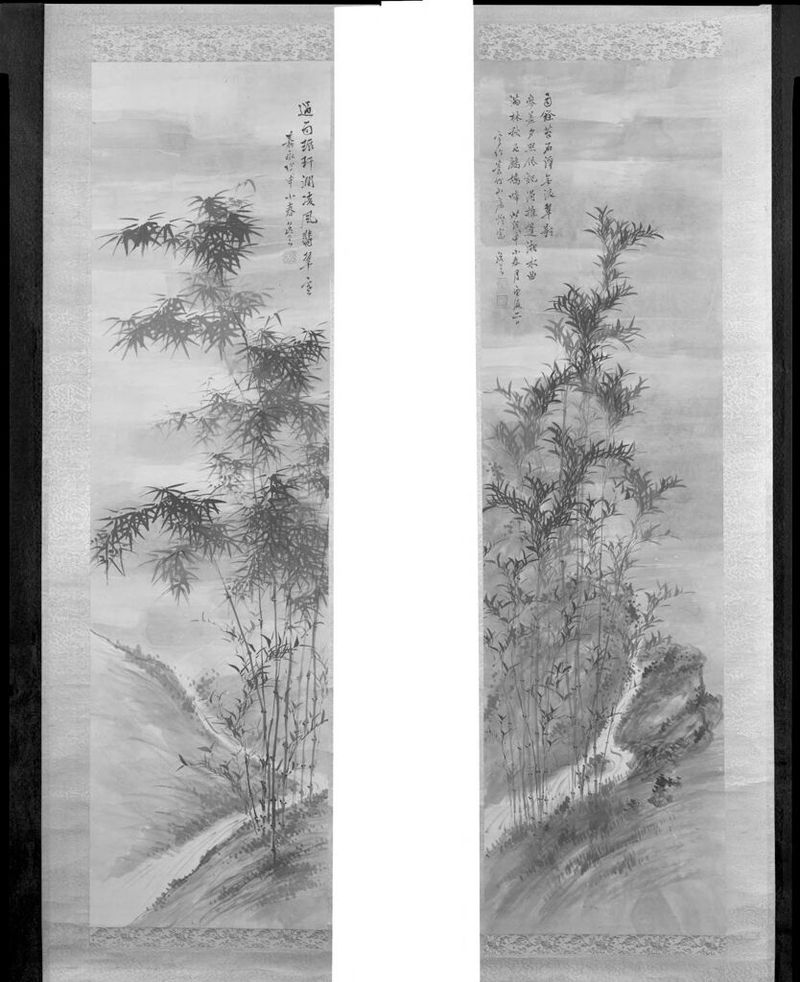
What if beauty was never meant to be finished? In the delicate strokes of this late Edo period masterpiece, loneliness is portrayed with an elegance that invites reflection. Look closely at the left side, where falling bamboo leaves cascade gently toward the ground. The subtle brushwork captures their fleeting moments, each leaf a whisper of autumn's melancholic embrace. Notice the rich greens that fade into muted yellows and browns, creating a vibrant tapestry of the season's transition.
The use of negative space around the bamboo emphasizes both its strength and isolation, as if standing resilient yet solitary against the backdrop of an expansive sky. The interplay of light and shadow speaks volumes, revealing the emotional landscape of this artwork. The bamboo, while strong and upright, is surrounded by the quiet stillness of its surroundings—evoking a sense of yearning. Each fallen leaf carries with it an echo of what was, embodying the transient beauty of nature.
This tension between life and decay serves as a poignant reminder of the impermanence that defines existence itself. Kinoshita Itsu'un created Bamboo in Autumn in 1848, during a time when Japan was experiencing both artistic flourishing and social change. The late Edo period was marked by a rise in ukiyo-e prints that celebrated landscapes and nature, reflecting the nation's evolving identity. Against this backdrop, Itsu'un's work encapsulates the essence of solitude within the beauty of nature, revealing deeper layers of emotion amidst a world in transition.