
Banks of the Loing, Autumn Effect — History & Facts
What if beauty was never meant to be finished? In Banks of the Loing, Autumn Effect, the fleeting essence of a moment is captured with a serenity that invites endless contemplation. Focus first on the gentle interplay of colors. Look to the vibrant oranges and yellows of the leaves, which dance atop the calm water, their hues echoing the warmth of a late autumn sun. The palette is not merely a depiction of nature but a symphony of light and reflection, blending harmoniously with the soft strokes that create delicate ripples along the river’s surface.
Notice how the distant trees stand sentinel, their blurred outlines creating a sense of depth that pulls the viewer into this tranquil scene. Here, contrasts abound: the vibrant seasonal colors juxtaposed against the stillness of the water evoke a sense of transience, a reminder that autumn’s beauty is fleeting. The serene sky, painted in soft blues and grays, hints at the inevitable encroachment of winter while simultaneously celebrating the momentary brilliance of the season. Each element works together, weaving a narrative of peace amidst change, evoking a deep emotional resonance that lingers long after the gaze shifts. Alfred Sisley painted this work in 1881 while living in France, a time when Impressionism was redefining artistic expression.
Surrounded by fellow artists pushing boundaries, he found inspiration in the natural world, capturing its beauty with a focus on light and atmosphere. In an era of societal upheaval, his commitment to the ephemeral joys of nature offers a poignant counterpoint, conveying a timeless message of serenity.
More Artworks by Alfred Sisley
Browse all →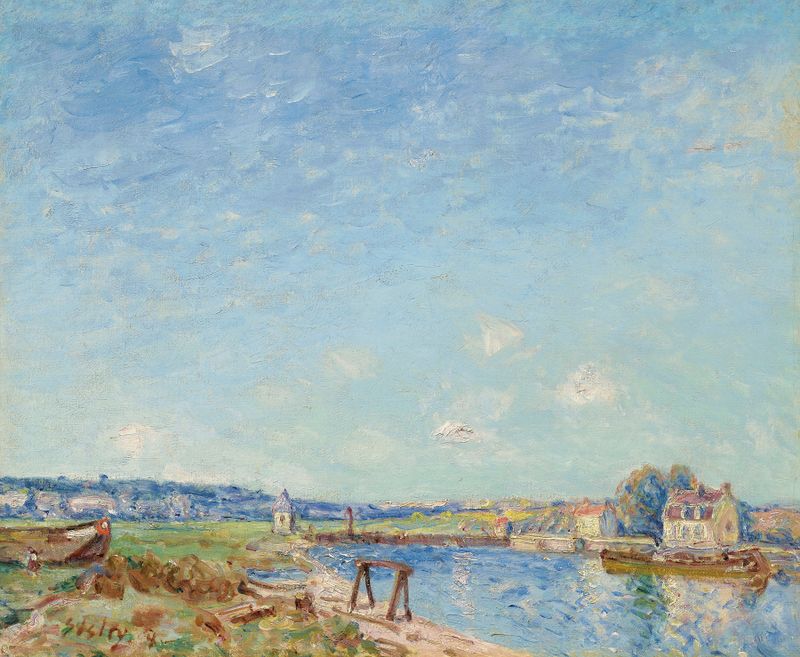
Le Loing à Saint-Mammès
Alfred Sisley
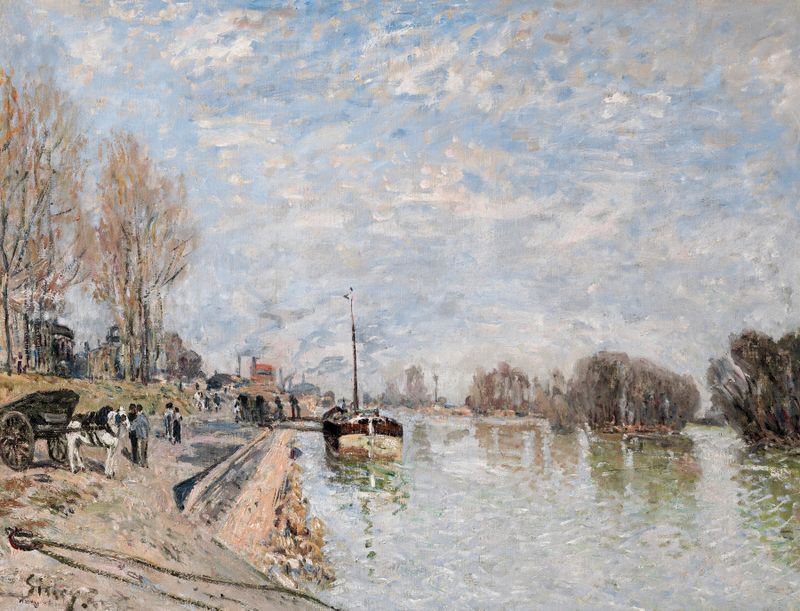
La Seine à Suresnes
Alfred Sisley
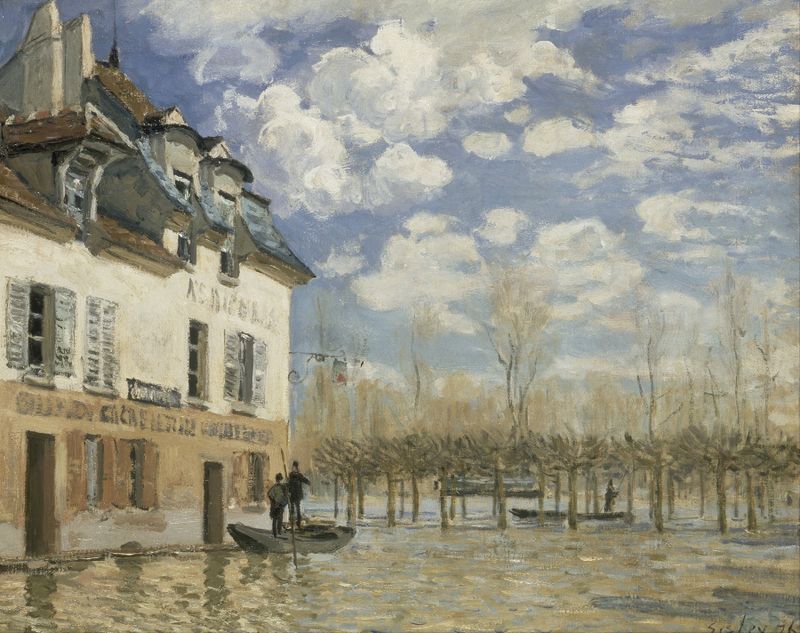
Boat in the Flood at Port Marly
Alfred Sisley
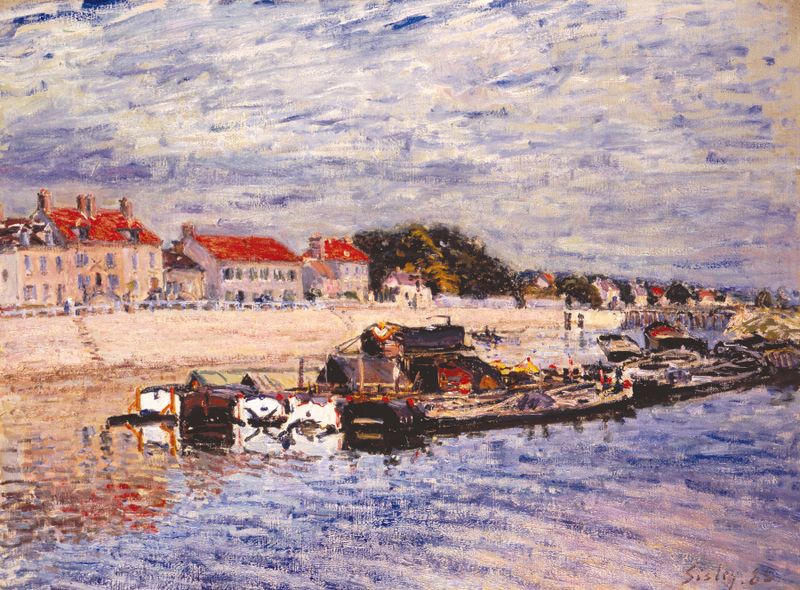
Barges on the Loing at Saint-Mammès
Alfred Sisley

L’allée des peupliers au bord du Loing
Alfred Sisley

Molesey Weir, Hampton Court
Alfred Sisley
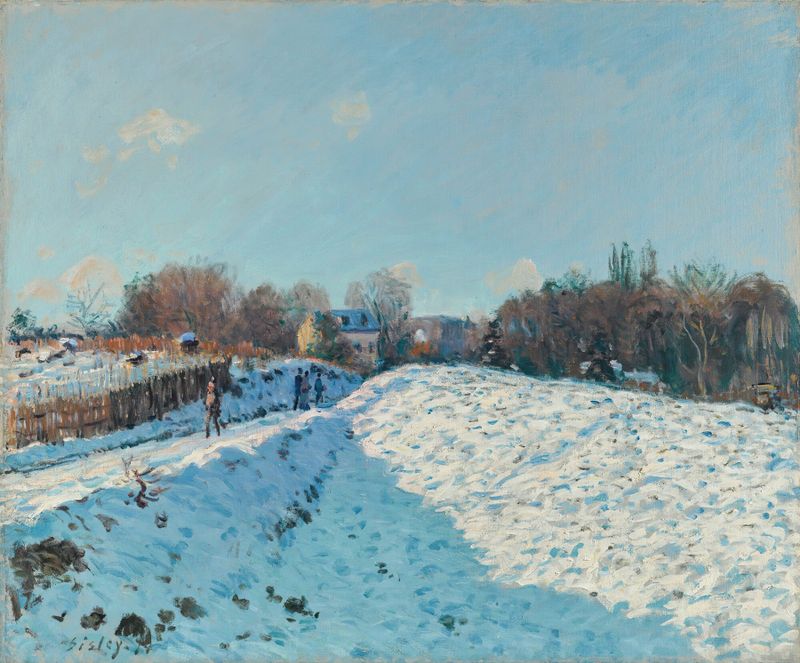
Effet De Neige À Louveciennes
Alfred Sisley
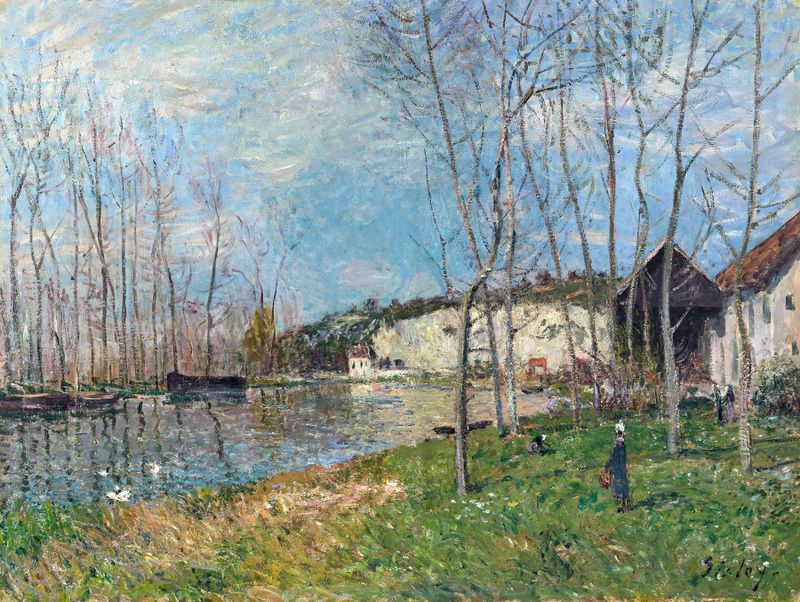
Printemps au bord du Loing
Alfred Sisley
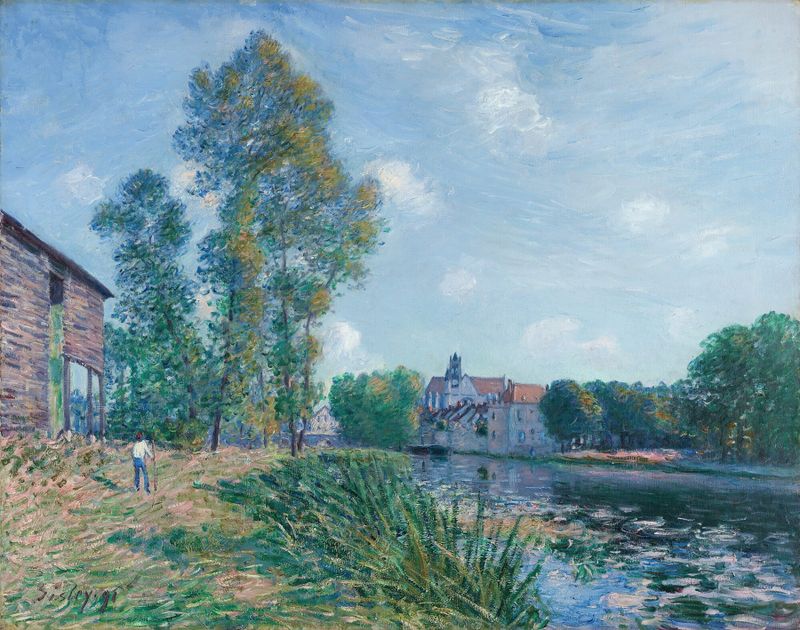
Le Loing À Moret, En Été
Alfred Sisley
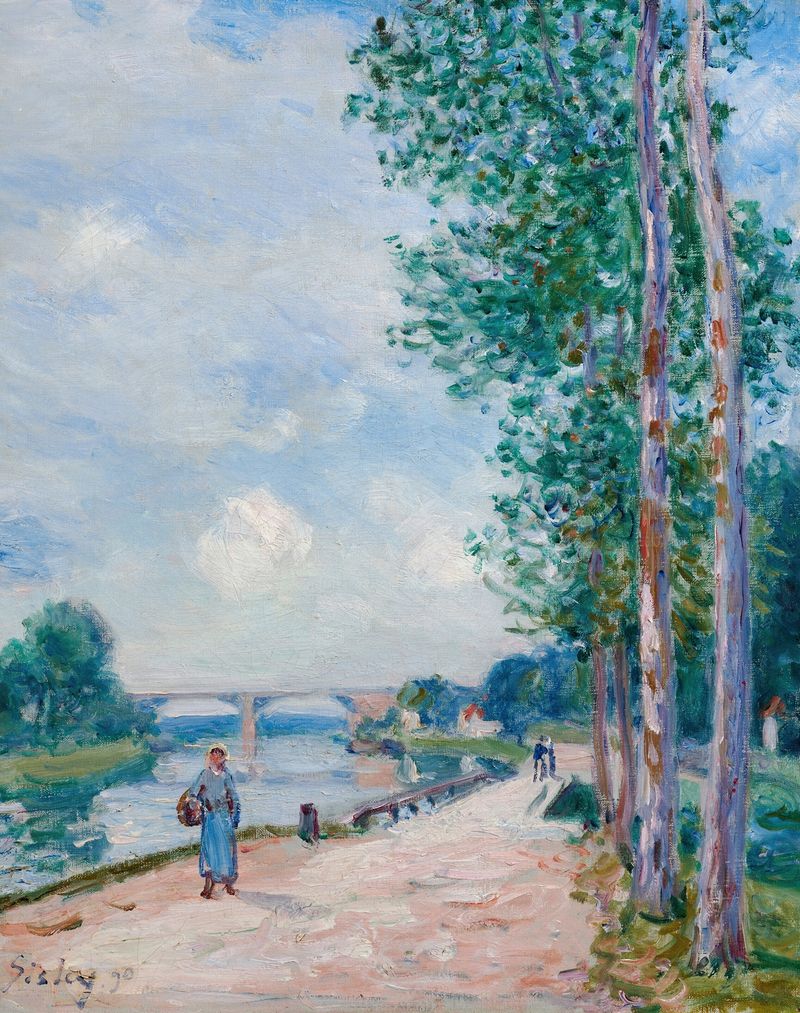
Les bords du Loing près de Moret
Alfred Sisley





