
Battle — History & Facts
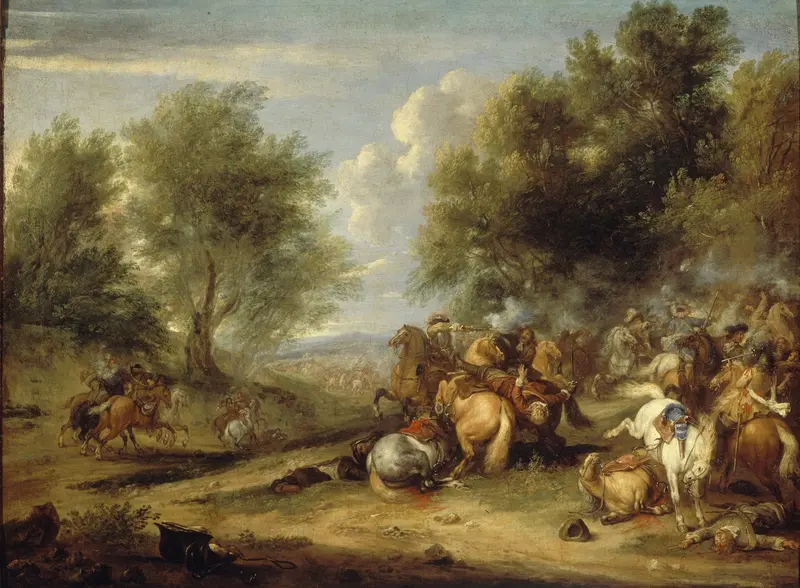
A surge of chaos pulls the viewer straight into the heart of the fray: horses rear, soldiers clash, and the ground itself seems to buckle under the weight of the struggle. The artist, Adam Frans van der Meulen, orchestrates a tumult of movement and color, drawing the eye from the tangle of fallen bodies and horses in the foreground to the dense ranks of troops and banners that stretch toward the horizon. The drama is heightened by the contrast between the sunlit sky—vast, turbulent, and indifferent—and the dark, crowded earth below, where every gesture signals urgency: a raised arm commands, a toppled standard signals defeat, a white horse collapses in the dust.
The scattered hats and weapons tell of a moment when order has broken down, and the outcome hangs in the balance. Painted in 1657, Battle belongs to a world where the depiction of warfare was both a record and a spectacle, often commissioned to commemorate victories or assert the might of rulers. In the mid-17th century, artists like van der Meulen were sought after for their ability to capture not just the facts of conflict, but its energy and confusion—qualities that appealed to princely patrons and military commanders alike. Today, this work resides in the Hermitage Museum in St.
Petersburg, a reminder of how such paintings once served as both propaganda and memory. The sense of immediacy van der Meulen achieves invites you to look closer, to pick out the stories within the crowd, and to imagine the world that demanded such vivid chronicles of power and peril.
More Artworks by Adam Frans van der Meulen
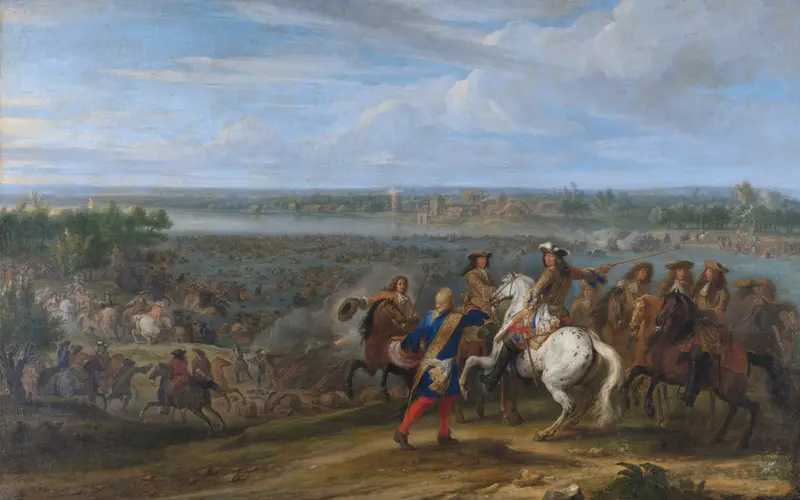
Louis XIV Crossing into the Netherlands at Lobith
Adam Frans van der Meulen
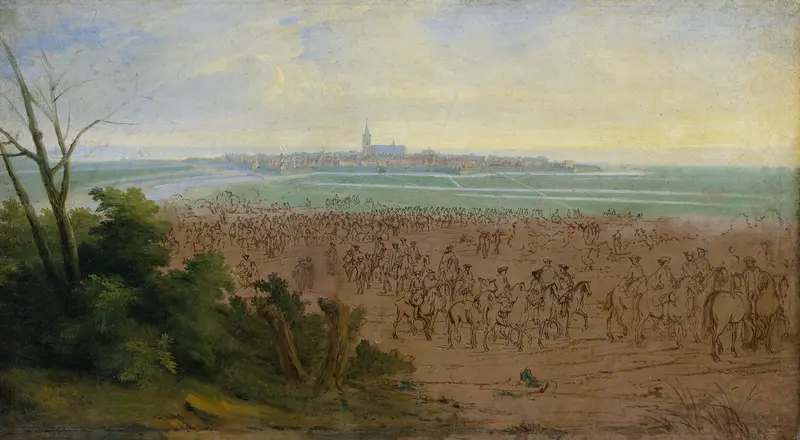
The Troops of Louis XIV before Naarden, 20 July 1672
Adam Frans van der Meulen
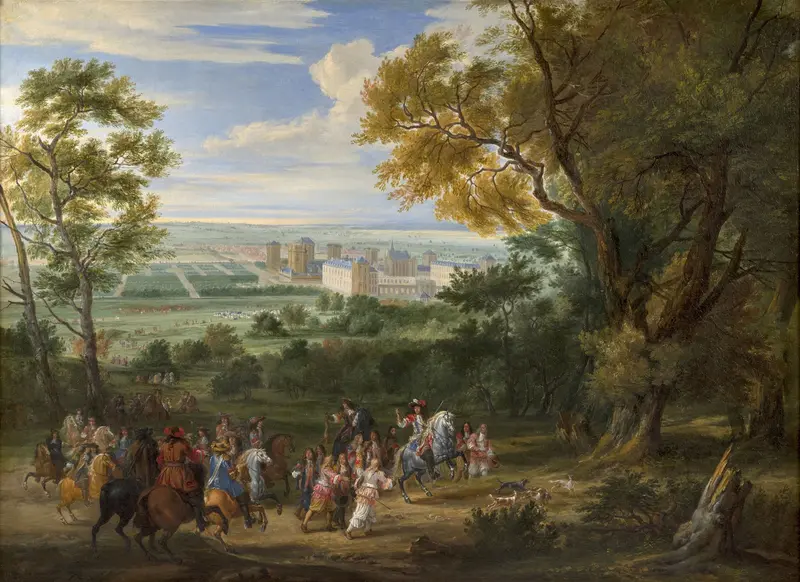
View of the château de Vincennes or The Departure of Louis XIV for the hunt
Adam Frans van der Meulen

A battle scene
Adam Frans van der Meulen
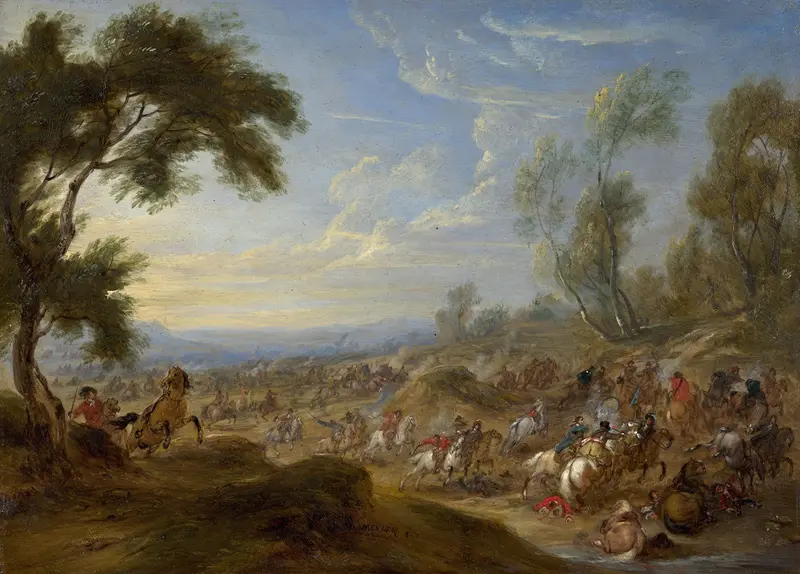
A cavalry charge
Adam Frans van der Meulen
Choc de cavalerie ou Combat de cavalerie
Adam Frans van der Meulen
Cavalry Skirmish
Adam Frans van der Meulen
Le Château Neuf de Saint-Germain-en-Laye et les jardins, vus de la rive droite de la Seine
Adam Frans van der Meulen
Choc de cavalerie ou Combat de cavalerie
Adam Frans van der Meulen
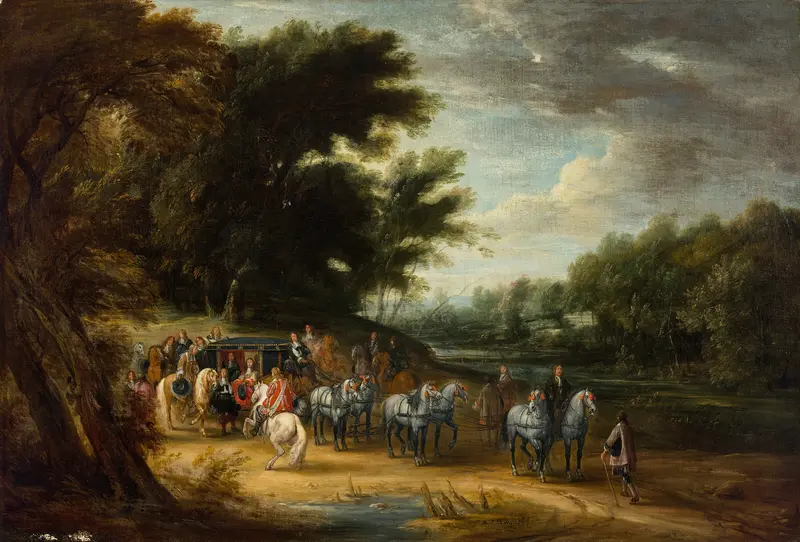
A nobleman in a state coach at rest escorted by his men and horses, with a gentleman on a white horse approaching and landscape beyond
Adam Frans van der Meulen





