
Battle Scene — History & Facts
A sweep of the eye across Battle Scene by Adam-François van der Meulen is rewarded with a panorama that feels almost cinematic in its scope. The viewer is drawn first to the foreground, where a cluster of mounted officers and foot soldiers, their banners unfurled, survey the unfolding chaos below. Their vivid red and blue garments catch the light, pulling the gaze into the depths of the landscape, where thousands of tiny figures—troops, horses, and tents—stretch across the valley.
The artist’s careful orchestration of diagonals leads us from the immediacy of the commanders’ gestures to the distant, smoky tumult of battle, and finally to the fortified city on the horizon, bathed in a cool, pale light. Works like this, painted between 1632 and 1690, were born of an age when rulers and generals sought to immortalize their victories and the grandeur of their campaigns. Painters such as van der Meulen became specialists in these sweeping military vistas, commissioned to record not just the clash of arms but the spectacle and order of war. The genre thrived in the courts of Europe, especially in France and the Low Countries, where such images served as both propaganda and commemoration.
Today, this example is housed in the National Museum of Art, Architecture and Design, a reminder of how history once demanded to be seen on a grand scale, inviting us to look closer and imagine the stories behind each distant figure.
More Artworks by Adam Frans van der Meulen
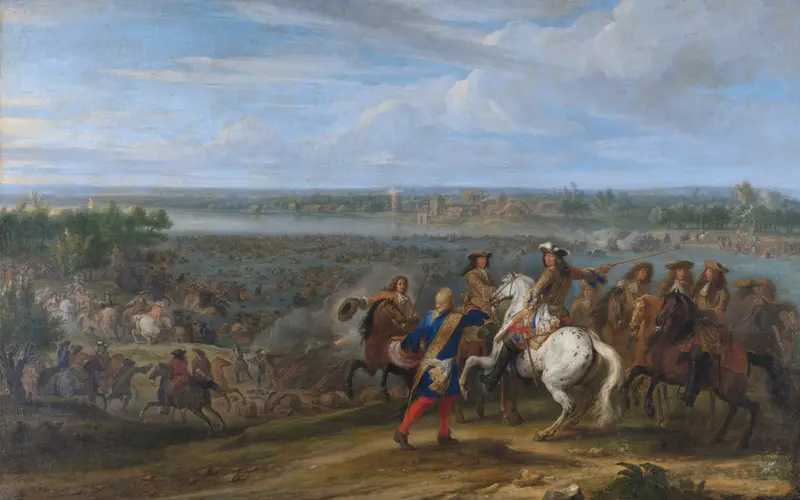
Louis XIV Crossing into the Netherlands at Lobith
Adam Frans van der Meulen
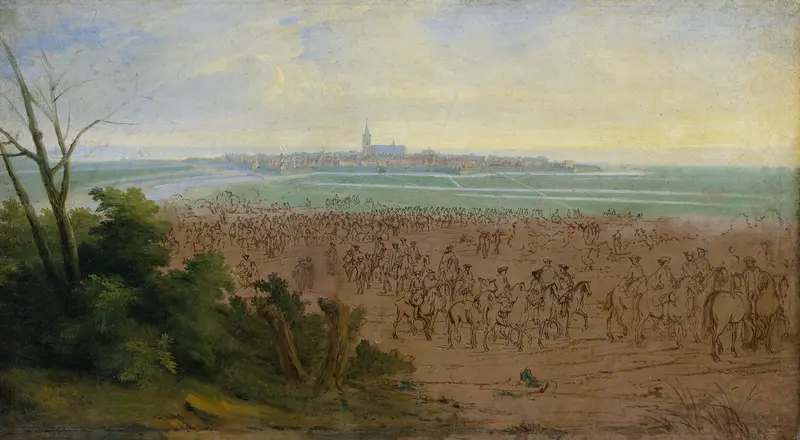
The Troops of Louis XIV before Naarden, 20 July 1672
Adam Frans van der Meulen
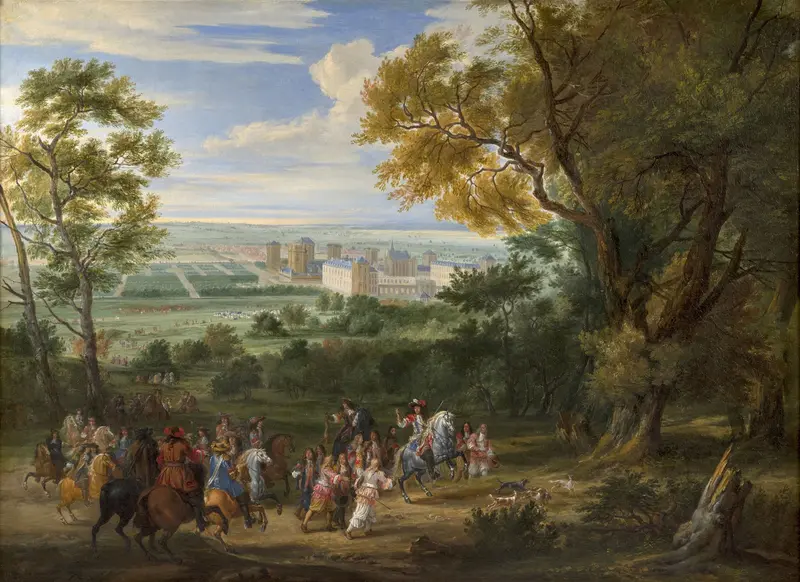
View of the château de Vincennes or The Departure of Louis XIV for the hunt
Adam Frans van der Meulen

A battle scene
Adam Frans van der Meulen
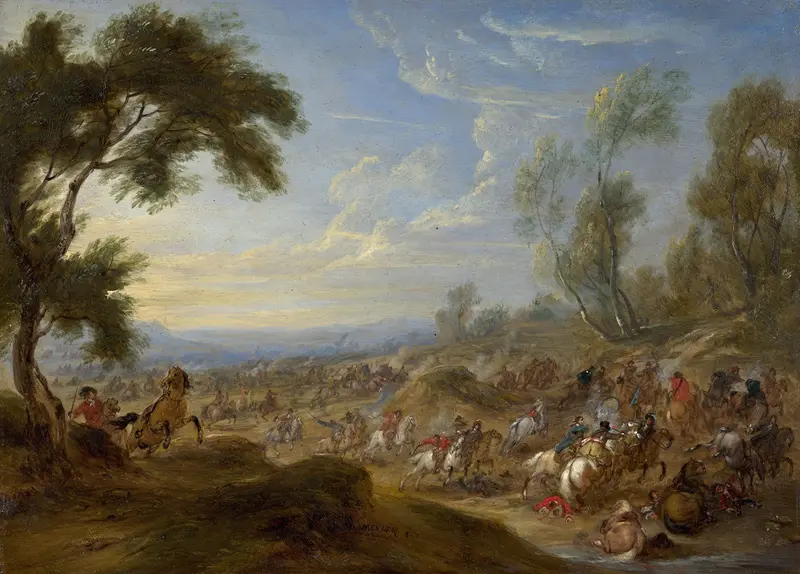
A cavalry charge
Adam Frans van der Meulen
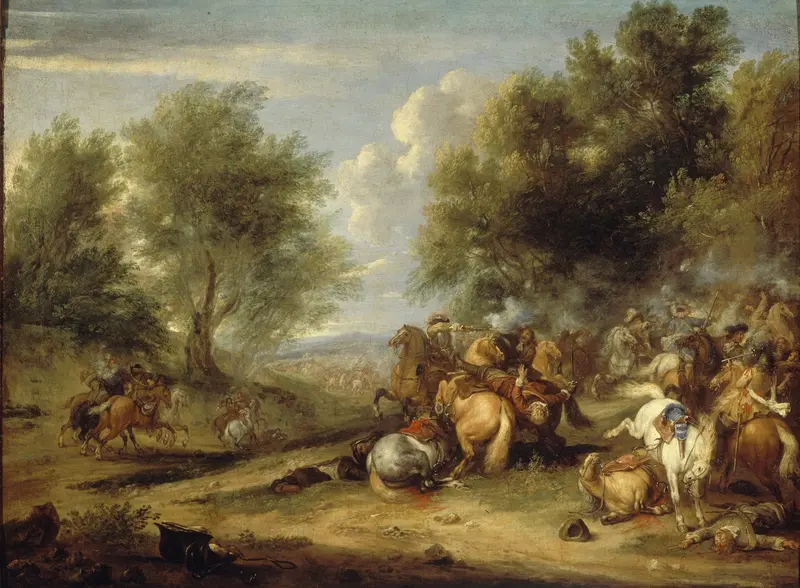
Choc de cavalerie ou Combat de cavalerie
Adam Frans van der Meulen
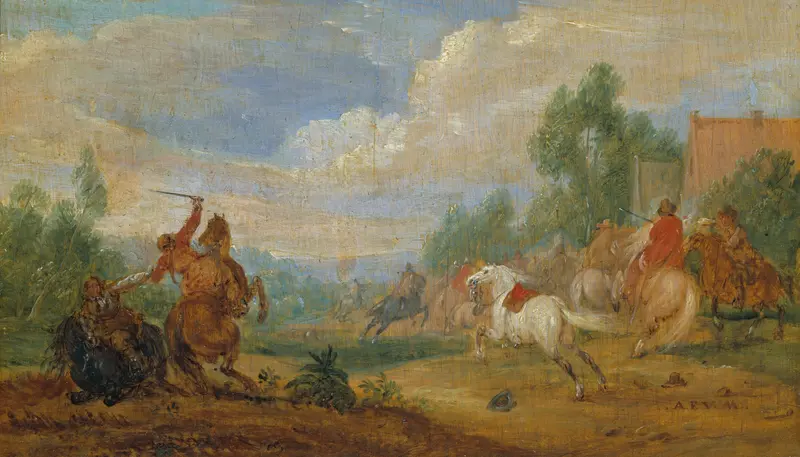
Cavalry Skirmish
Adam Frans van der Meulen
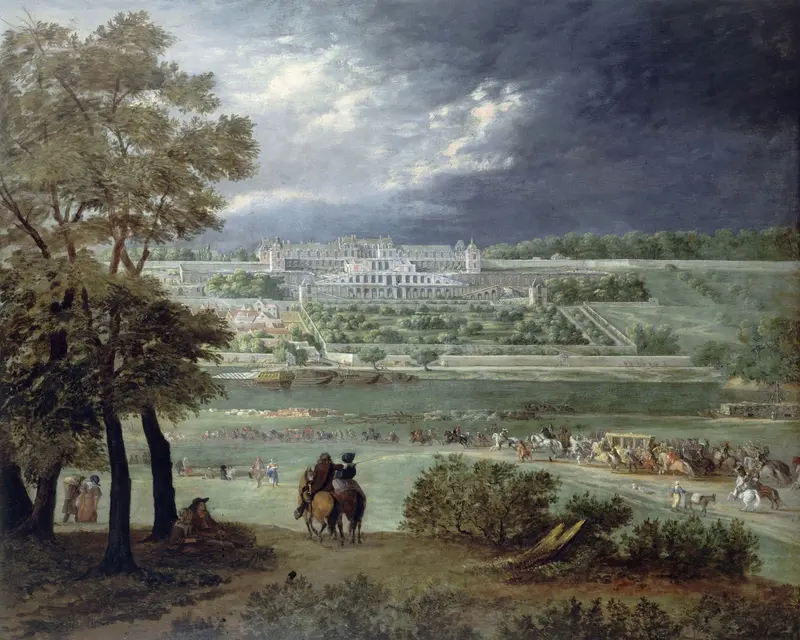
Le Château Neuf de Saint-Germain-en-Laye et les jardins, vus de la rive droite de la Seine
Adam Frans van der Meulen
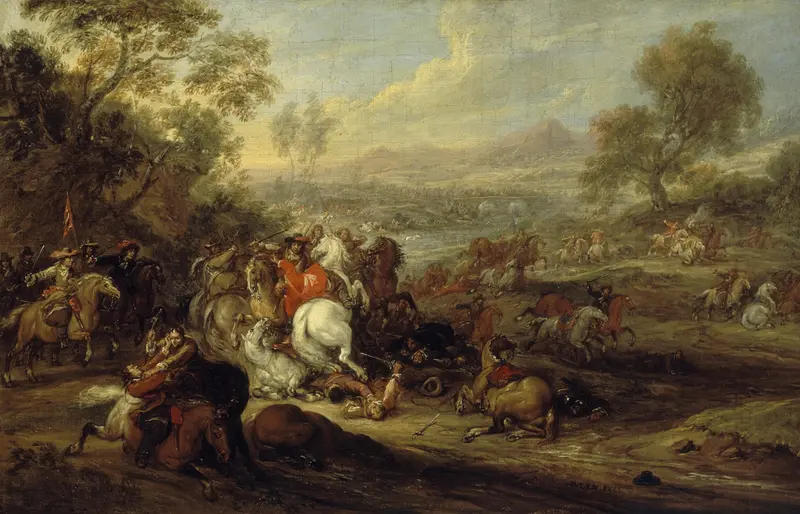
Choc de cavalerie ou Combat de cavalerie
Adam Frans van der Meulen
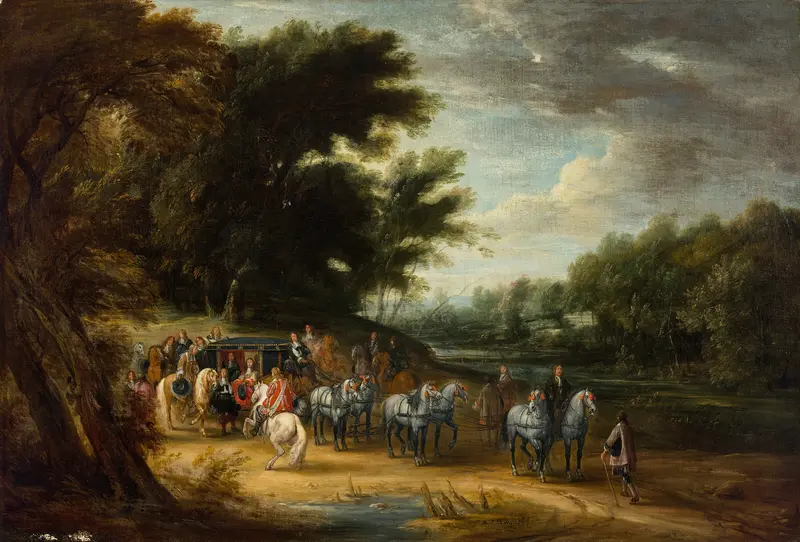
A nobleman in a state coach at rest escorted by his men and horses, with a gentleman on a white horse approaching and landscape beyond
Adam Frans van der Meulen





