Bauerntanz vor einer italienischen Küste — History & Facts
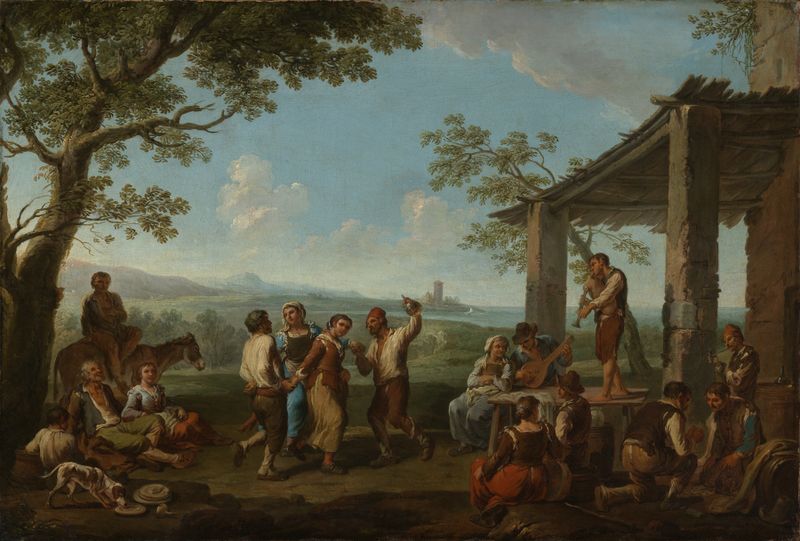
Did the painter know this moment would outlive them? In Bauerntanz vor einer italienischen Küste, the essence of truth dances across the canvas, encapsulating the fleeting joy of life against the backdrop of a serene Italian coastline. Look to the left at the joyous figures in traditional attire, their faces illuminated by the warm, golden hues of late afternoon sun. The vibrant reds and greens of their garments contrast beautifully with the soft, blue tones of the sea, creating a sense of harmony between the dancers and their environment. The dynamic composition leads your eye around the circle, inviting you to participate in the celebration, while the gentle waves in the background provide a tranquil counterpart to the lively scene. Amidst the revelry lies a deeper narrative.
The surrounding coastal landscape, with its majestic cliffs and expansive sky, implies an eternal setting, suggesting that such moments of fleeting happiness are both transient and timeless. Each dancer, caught in a moment of joyful abandon, reflects the universal human longing for connection and celebration. Subtle details, such as the way hands clasp and expressive gestures unfold, convey a profound sense of community and shared experience, ultimately anchoring the viewer in the truth of this idyllic moment. Paolo Monaldi painted Bauerntanz vor einer italienischen Küste around 1750 while residing in Italy, during a period marked by a blend of Baroque and Rococo influences in art.
At that time, the art world was transitioning towards more personal expressions that connected viewers to emotion and realism. Monaldi’s work fits within this context, reflecting both the joyous life of rural celebration and the serenity found in nature, as he sought to depict the vibrancy of everyday life.