
Beach at Apia, Samoa — History & Facts
In the vastness of existence, where human footprints vanish beneath the tide, emptiness whispers its haunting truth. Look to the center of the canvas, where a serene expanse of ocean extends toward an unbroken horizon. Notice how the gentle waves seem to embrace the shore, painted in soft blues and greens that evoke a tranquil mood, inviting the viewer into a meditative space. The light, diffused and ethereal, casts a warm glow, hinting at the ephemeral nature of each fleeting moment.
To the left, fragments of lush foliage stand in stark contrast to the emptiness of the beach, grounding the scene in a delicate balance between land and sea. At first glance, the solitude of the composition may seem peaceful, yet it cradles an underlying tension. The absence of human figures suggests isolation, while the empty beach evokes a poignant sense of longing. The juxtaposition of vibrant colors against the vacant space amplifies this emotional landscape, prompting contemplation on both the beauty and desolation of nature.
What narratives could unfold in a place so serene, yet so devoid of life? In 1905, while creating this evocative piece, the artist was immersed in a period of introspection and exploration. Living in the artistic backdrop of New York, he found inspiration in the natural world, seeking to express a profound connection with beauty and solitude. At this time, Eilshemius was beginning to establish his unique style, moving away from conventional themes and embracing a more personal, intimate vision of his surroundings.
More Artworks by Louis Michel Eilshemius
Browse all →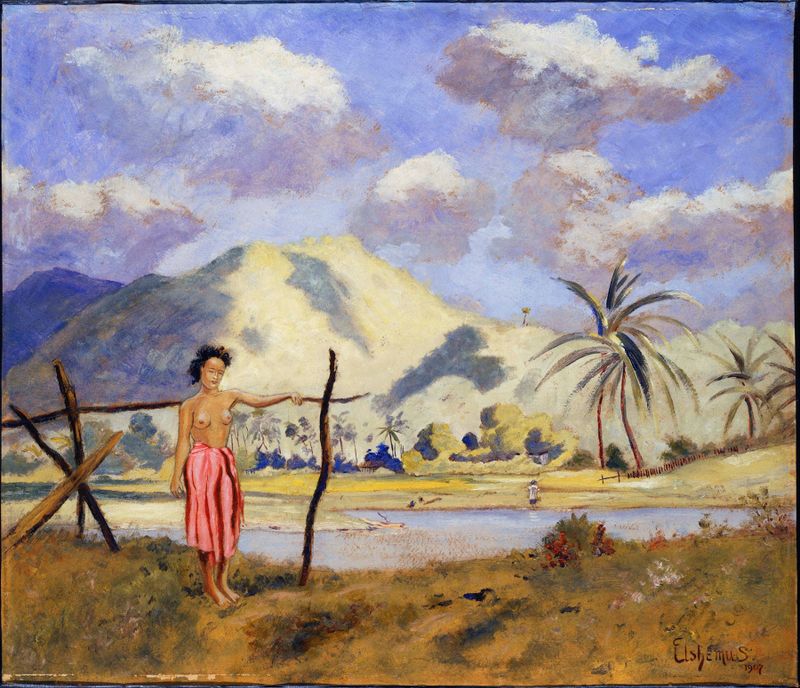
Samoa
Louis Michel Eilshemius
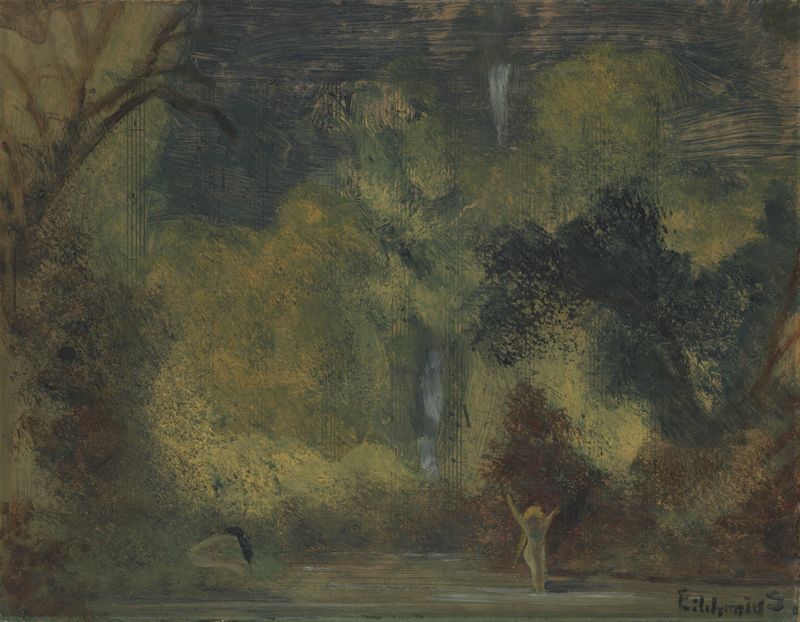
The Pool
Louis Michel Eilshemius

Overhanging Branches
Louis Michel Eilshemius

Fifty-Seventh Street
Louis Michel Eilshemius

Approaching Storm
Louis Michel Eilshemius
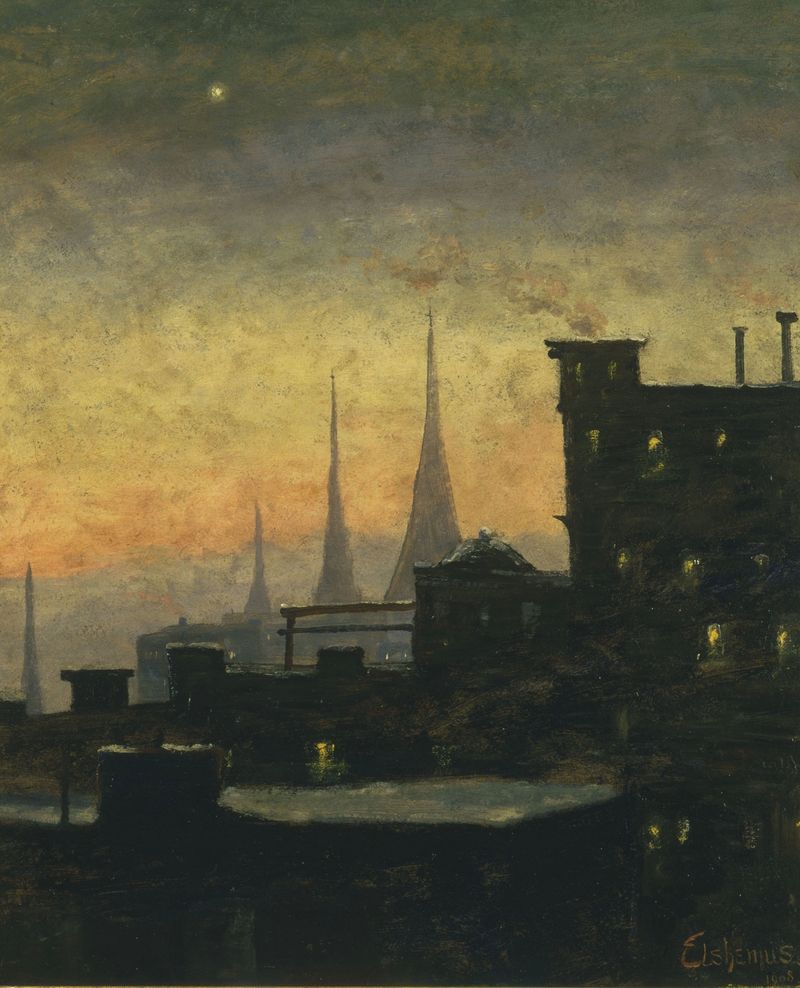
New York Roof Tops
Louis Michel Eilshemius
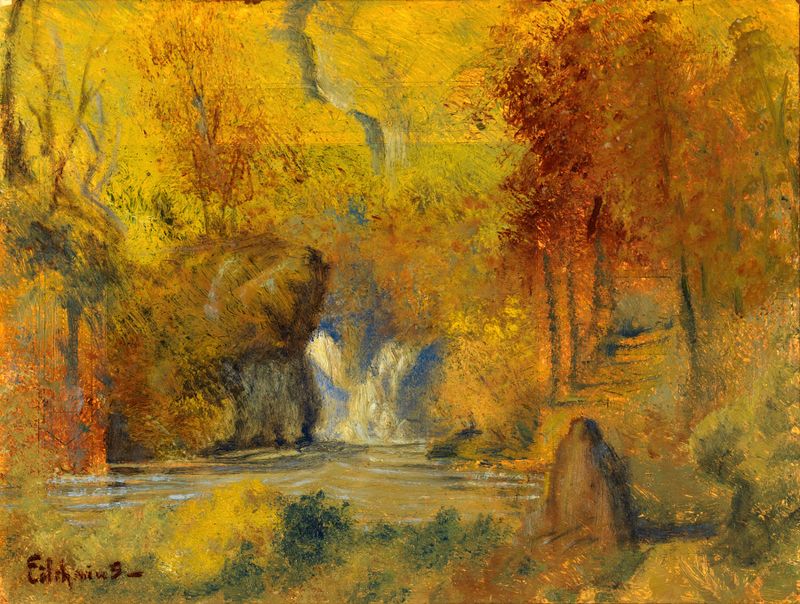
Autumn Landscape
Louis Michel Eilshemius

Sunset with Man Standing on Shore
Louis Michel Eilshemius

New York at Night
Louis Michel Eilshemius

Delaware Water Gap Village
Louis Michel Eilshemius





