Beach Scene — History & Facts
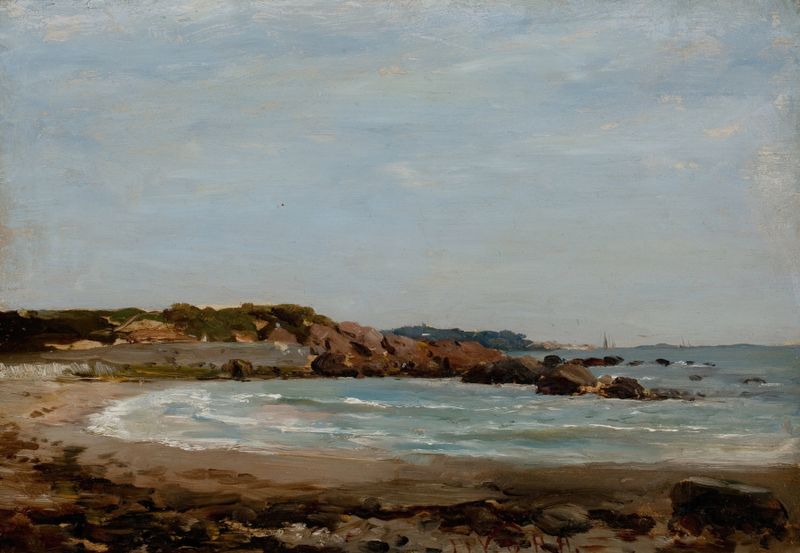
Where does light end, and longing begin? In a world where the horizon blurs between reality and reverie, the boundaries of our dreams dance like waves on a shore. Focus on the gentle gradient of blues that envelop the canvas, where the sky seamlessly merges with the restless sea. Notice how the sun casts its golden hues across the water, creating a shimmering pathway that invites the viewer's gaze to wander. To the left, a group of figures interacts on the beach, their postures and gestures revealing a fleeting moment of joy, yet there’s an underlying sense of solitude that permeates the scene.
The delicate brushwork captures the ephemeral essence of summer, inviting one to linger in the warmth and vibrancy of the moment. At first glance, the painting radiates happiness, but upon closer inspection, a contrast emerges between the lively figures and the vastness of the landscape. The figures, although engaged in playful banter, seem dwarfed by the infinite stretch of the sea, evoking a sense of isolation amid joy. The light that warms their skin juxtaposes the coolness of the distant waves, echoing the duality of connection and detachment that often punctuates human relationships. In 1898, during a period of artistic exploration and transition, the artist was deeply immersed in the vibrant art scene of New England.
This painting reflects his engagement with Impressionism, emphasizing the effects of light and atmosphere. At the time, he was seeking new ways to express emotion through landscapes, striving to capture both the beauty of nature and the complexities of human experience.