Beneath the Birches. Motif from Mälaren — History & Facts
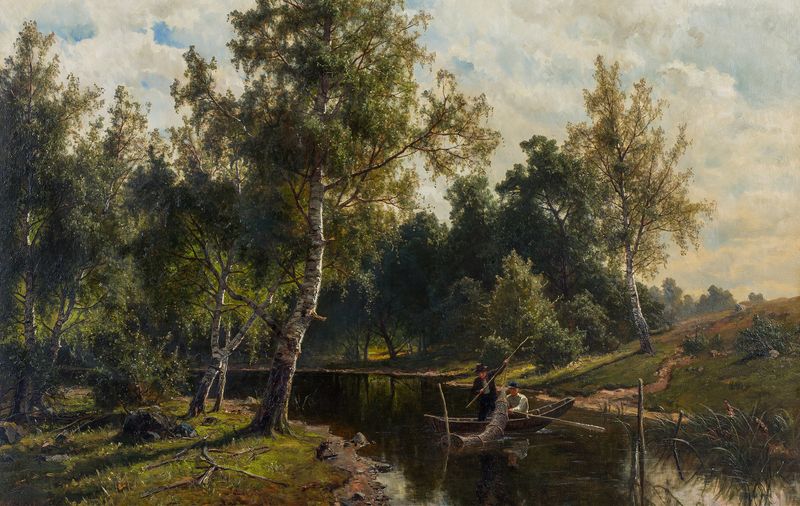
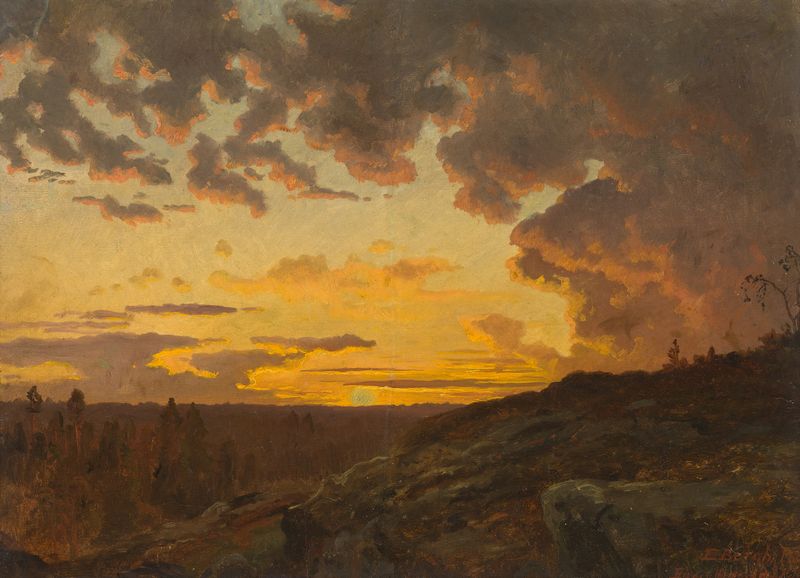
Did the painter know this moment would outlive them? Beneath the towering birches, a pocket of tranquility conceals the tension lurking just beneath the surface, a silent witness to the violence of nature and the human condition alike. Focus first on the birch trees that dominate the left side of the canvas, their white trunks contrasting sharply against the lush greens and deep earth tones surrounding them. The dappled sunlight filtering through the leaves creates a play of light and shadow, guiding the viewer’s eye into the serene yet haunting depth of the forest. The shimmering reflections in the water mirror not just the trees but the weight of unspoken stories, a testament to Bergh’s masterful brushwork and vivid palette that encapsulates the essence of both peace and unrest. Delve deeper into the painting, and you’ll find the interplay of light hinting at hidden narratives.
The juxtaposition of the calm scenery and the darker undertones suggests an underlying violence, whether of turbulent emotions or the raw power of the natural world. Each stroke carries an echo of tension, provoking a visceral response as one contemplates the fragility of this moment, suspended in time yet on the brink of change. In 1870, Edvard Bergh created this piece while he was immersed in the Romantic movement, which sought to emphasize emotion and the sublime aspects of nature. Living in Sweden during a time of national identity exploration, Bergh’s work resonated with a burgeoning appreciation for the landscapes that defined his homeland, providing a profound commentary on both personal and collective experiences.