Summer Landscape — History & Facts
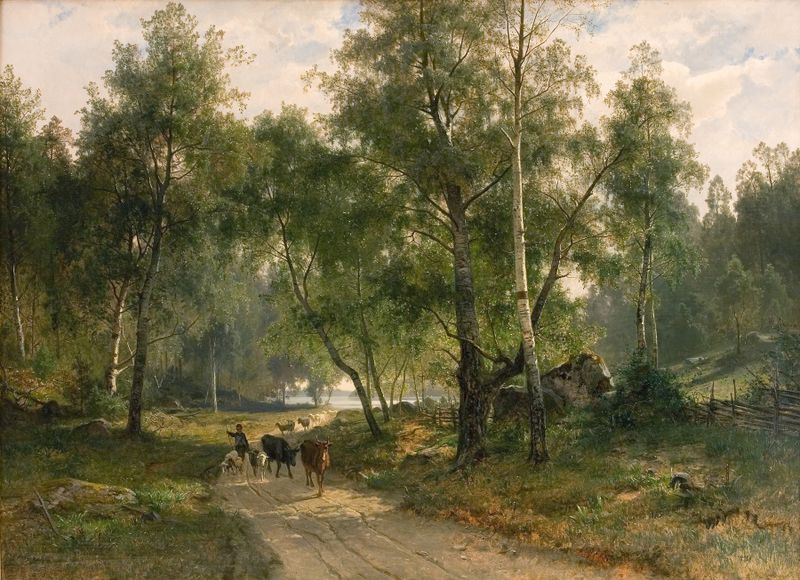
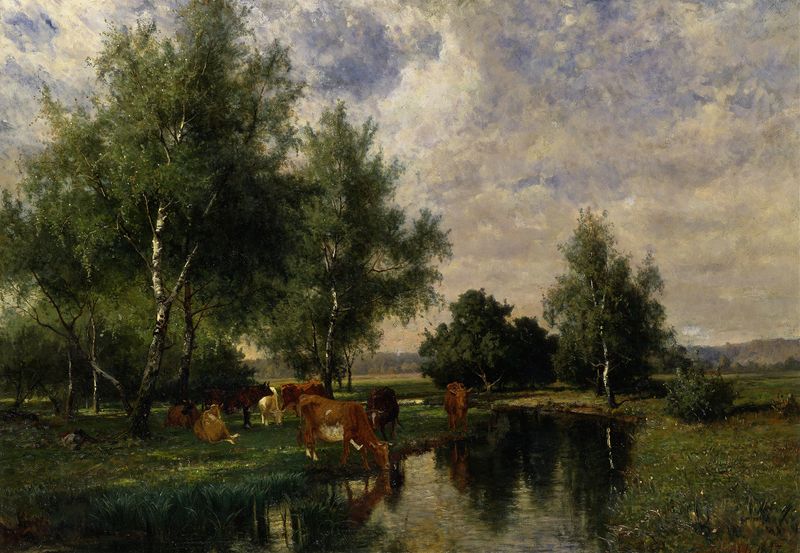
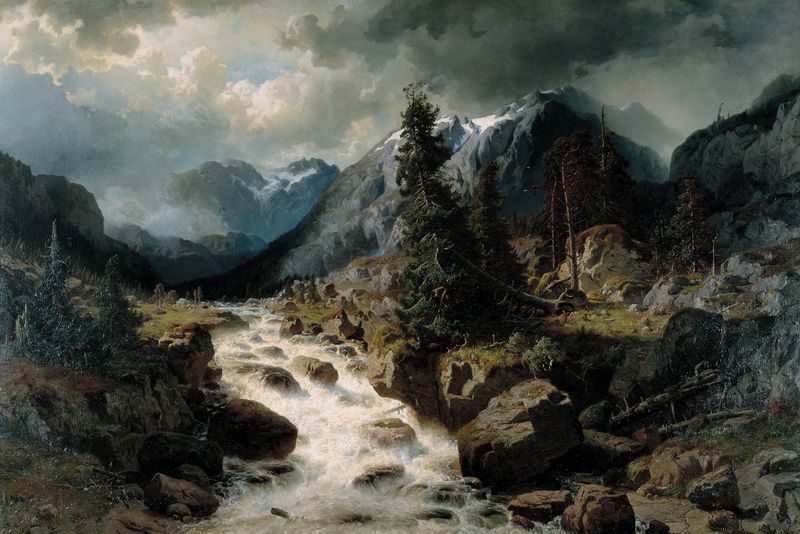
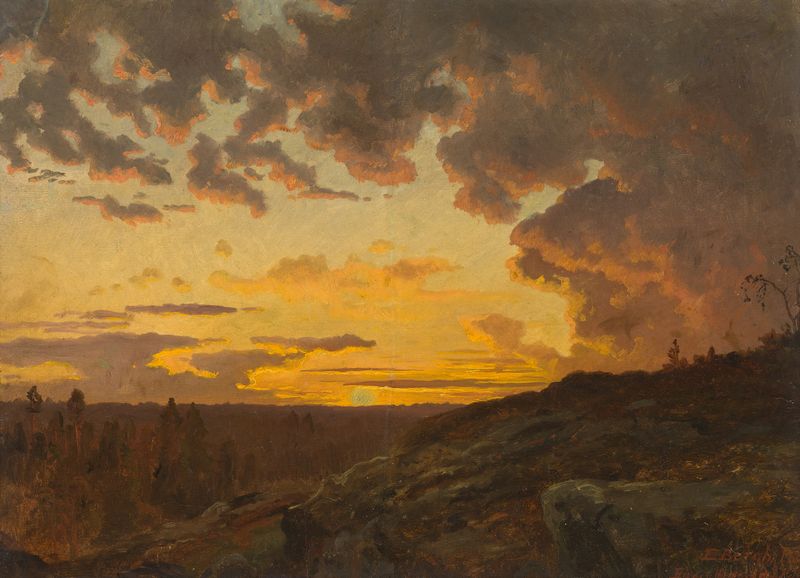
Did the painter know this moment would outlive them? In Summer Landscape, Edvard Bergh encapsulates a fleeting essence of nature, forever suspended in a breath of time. The canvas invites us to reflect on our own relationship with the cycle of life and the moments that define our existence. Look to the left at the vibrant green fields, where every brushstroke breathes life into the landscape. The gentle undulations of the hills guide the eye towards the horizon, while soft, dappled sunlight casts a warm glow across the scene.
Notice how the clouds, painted with soft grays and whites, intermingle with blue skies, suggesting both the promise of a summer day and the inevitability of change. The careful composition leads the viewer not just into the painting, but into a serene space of contemplation. Delve deeper into the contrast of light and shadow that reveals emotional layers within the landscape. Each element—the deep greens of the foliage set against the brilliant blue sky—echoes the joy of summer while hinting at the impermanence of such beauty.
The quietude of the scene resonates with the viewer, evoking feelings of nostalgia and yearning, as if the landscape itself is a bittersweet reminder of moments past that we cherish yet cannot hold onto. In 1873, as Bergh painted this work in Norway, he was immersed in a burgeoning art scene that embraced naturalism and the exploration of light. This period marked a transition for many artists who sought authenticity in their depictions of nature. The world was alive with change, and Bergh's focus on the serenity of summer reflects both personal and collective desires to capture the ephemeral beauty of life amidst the complexities of modernity.