Rocky Landscape with Waterfall and Watermill, Småland — History & Facts
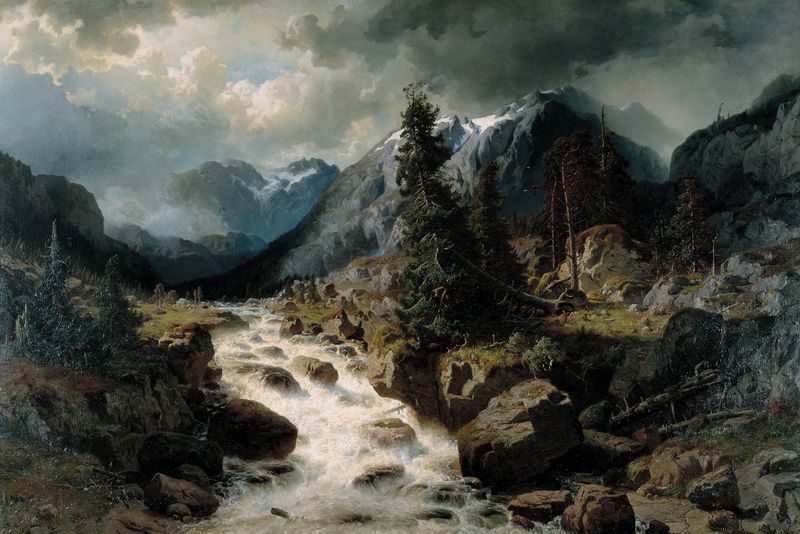
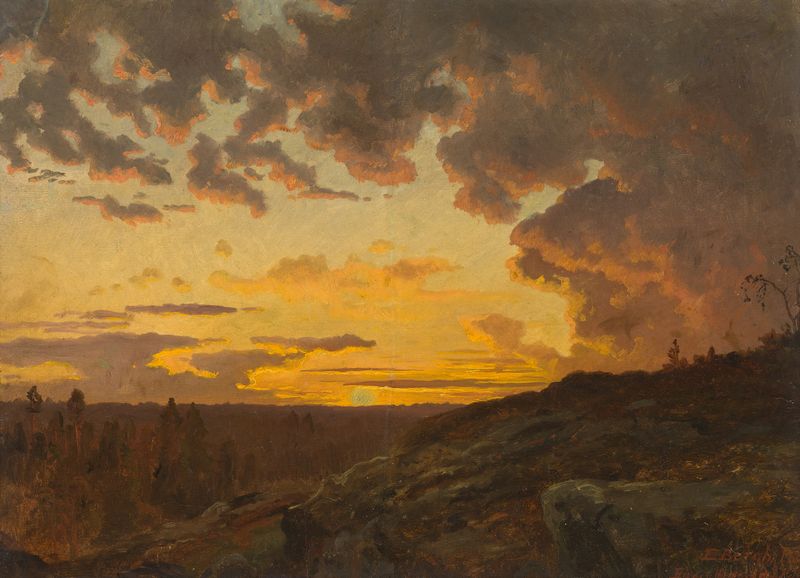
Is this a mirror — or a memory? In Rocky Landscape with Waterfall and Watermill, Småland, the boundaries between the natural world and the sublime blur, inviting us to contemplate the divinity of the landscape. Focus first on the cascading waterfall, which commands the left side of the composition. The brilliance of the water, rendered with clean, white strokes, contrasts dramatically against the darker, rough rocks cradling it. Notice how the sunlight dances off the surface, creating a shimmer that draws the eye deeper into the scene.
The watermill, nestled at the base, appears almost idyllic, a testament to human harmony with nature, its earthy tones grounding the composition amidst the vibrant greens and blues. Yet, the interplay of light and shadow speaks volumes about the tension inherent in this setting. The waterfall, while beautiful, can also be seen as a force of nature—unstoppable and fierce. The distant hills loom, suggesting a greater wilderness beyond human reach, invoking a sense of both peace and unease.
This duality evokes a deeper emotional resonance as we reflect on humanity's place within this divine landscape. Painted in 1862 during a time of burgeoning Romanticism in Europe, Bergh found inspiration amidst the wild beauty of Sweden. Art was shifting focus towards nature and emotion, and this work embodies that transition. As Bergh captured this serene yet powerful scene, he was contributing to a movement that celebrated the spiritual dimensions of the natural world, a response to the industrial age creeping into modern life.