Berchtesgaden mit dem Watzmann — History & Facts
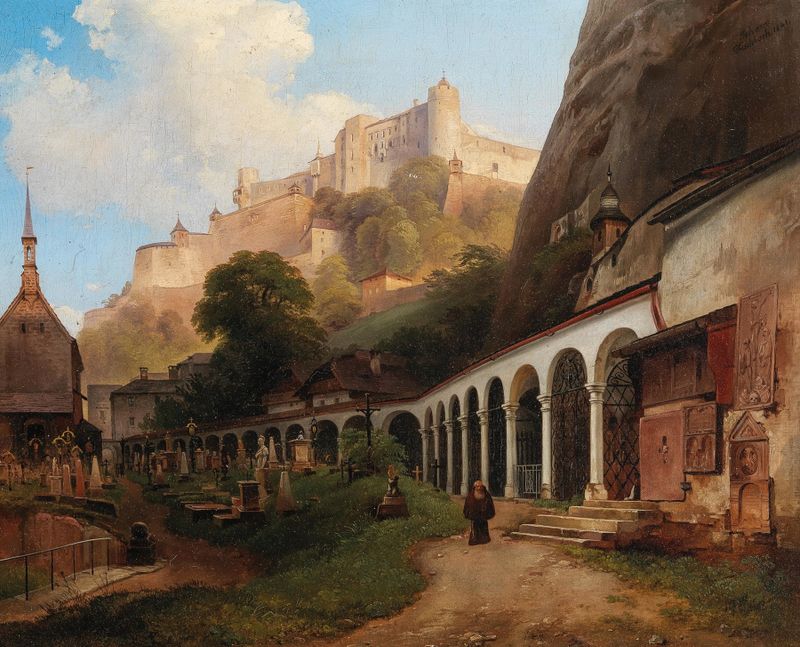
Is this a mirror — or a memory? In Berchtesgaden mit dem Watzmann, the landscape whispers tales of solitude and longing, an echo of nature's vastness that pulls us into its embrace. Look to the left at the tranquil village nestled in the valley, its pastel colors harmonizing with the muted greens and blues of the surrounding mountains. Notice how the light tenderly caresses the peaks of the Watzmann, rendering them majestic yet distant. The composition is framed by the gentle curves of the hills, drawing the eye toward the serene lake that reflects the sky, a perfect calm disrupted only by an occasional ripple. Yet beneath this stillness lies a profound emotional tension.
The contrast between the lively village and the looming, silent mountains suggests a dichotomy between human existence and nature's indifferent permanence. This duality evokes a sense of emptiness, as the viewer is left pondering the relationship between the fleeting moments of life and the timeless landscape that witnesses them. Every brushstroke is imbued with a yearning that invites us to explore our own reflections within this serene yet haunting vista. In 1836, Johann Fischbach painted this work amidst the Romanticism movement, a time when artists sought to capture the sublime beauty of nature and its emotional resonance.
Creating it in the picturesque region of Berchtesgaden, Fischbach found inspiration in its dramatic scenery, as Europe was experiencing a shift towards valuing individual experience and the emotive power of landscapes in art.