Berger de l’Atlas — History & Facts
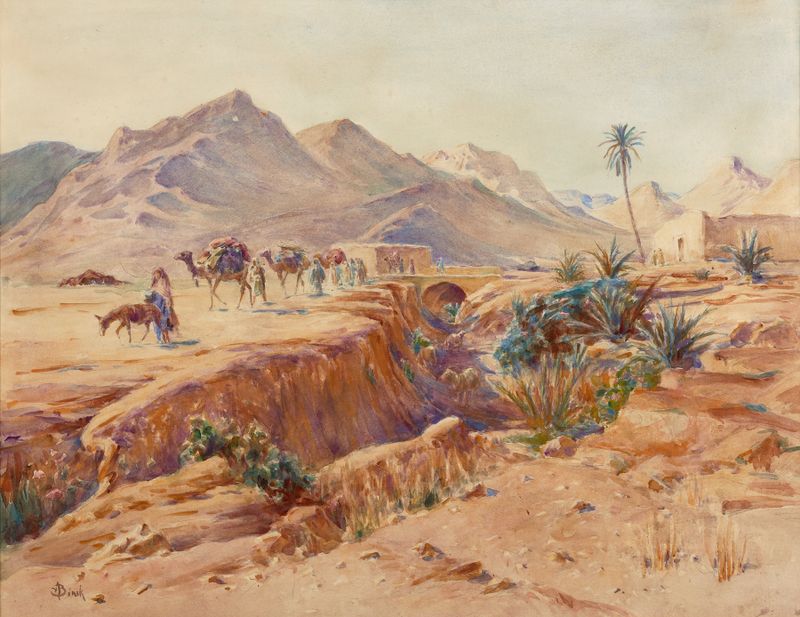
In this still moment, we find ourselves suspended between the tranquil and the tumultuous, where balance reigns, yet speaks volumes in its quietude. Look to the center of the canvas, where a shepherd stands poised on a rugged outcrop, a calm presence amidst a swirl of nature’s rawness. The earth is painted in earthy ochres and deep greens, while the sky, a tumult of blues and whites, suggests a storm brewing just beyond the horizon. Notice how the light falls softly on the shepherd’s face and the sheep surrounding him, casting gentle shadows that hint at the weight of their dependence and the solitude of the man in charge. The tension between man and nature is palpable.
The shepherd’s stoic gaze locks the viewer's attention, embodying a poise that mirrors the harmony of his flock. The scattered sheep, allowed to roam freely, contrast with his fixed position, suggesting the delicate balance between control and freedom. Even the landscape echoes this duality; the jagged cliffs signify the harshness of the environment while cradling pockets of lush vegetation that represent life’s resilience. Created during a period when Alphonse Birck was exploring themes of pastoral life, Berger de l’Atlas embodies his fascination with rural narratives.
Working in the late 19th century, Birck was influenced by the Romantic movement's emphasis on nature and emotion, capturing an era that sought beauty in simplicity and the enduring bond between humanity and the land. His artistry reflects a world where everyday life intertwines with a deeper philosophical inquiry into existence and balance.