La Casbah — History & Facts
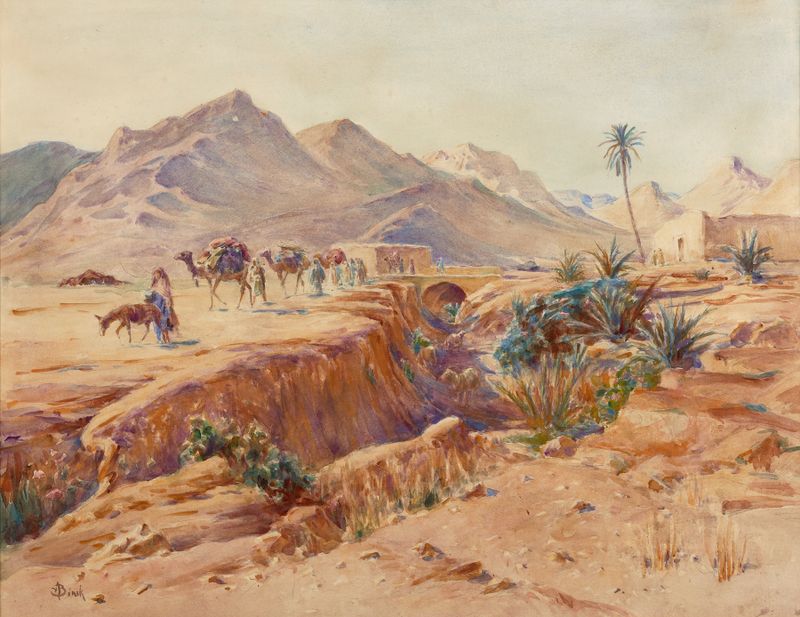
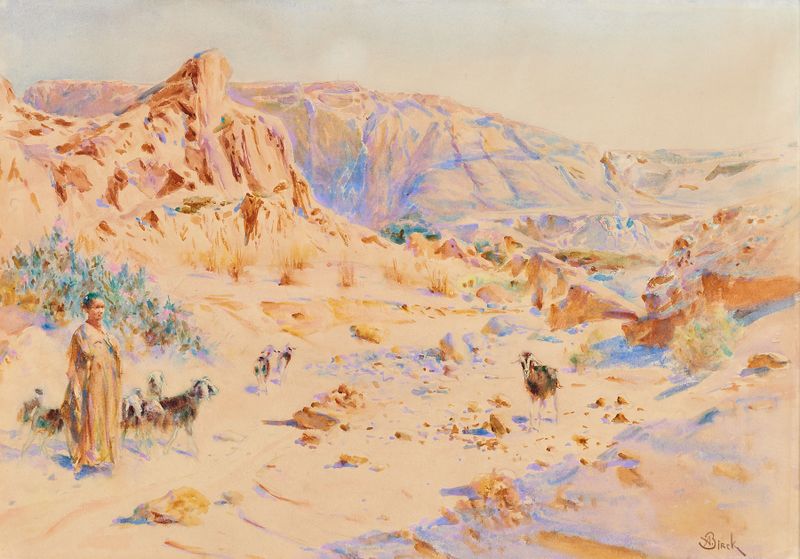
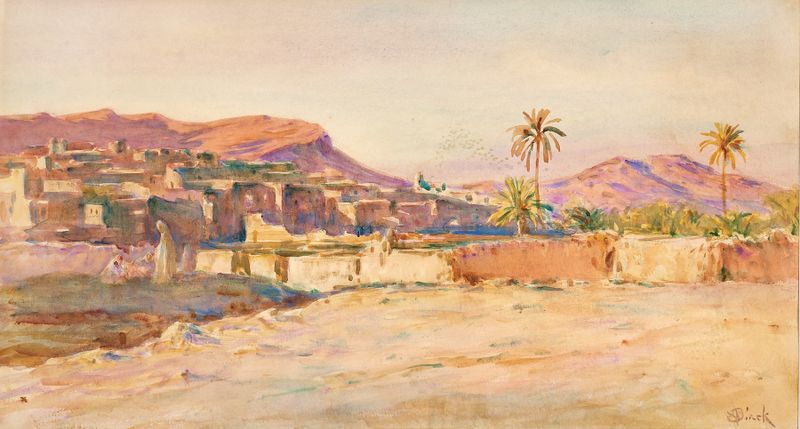
In a world where fleeting moments dissolve into oblivion, the artist captures the essence of mortality through his brushstrokes. The canvas breathes life into the inevitable passage of time, inviting viewers to reflect on their own existence amid the eternal march of life and death. Look to the center of the composition, where a sun-drenched pathway beckons with its warm hues of ochre and terracotta. The winding street, lined with ancient buildings, draws the eye, revealing intricate architectural details that seem to whisper stories of the past.
Notice how the shadows stretch and retreat, illuminating the scene while simultaneously hinting at the ephemeral nature of life itself, as if the light battles against the darkness that encroaches with every passing moment. The painting vibrates with emotional tension, contrasting the vibrant palette with the stillness of the figures who move through it. Each element tells a story – the slight tilt of a roof suggesting wear, the quiet demeanor of the pedestrians hinting at lives lived in the shadow of history, and the subtle decay in the walls that echoes the inevitability of time's embrace. Here, even the spaces between figures seem charged with meaning, reminding us of the connections we forge and the fragility with which we hold onto them. Alphonse Birck created this work during a period when artists were increasingly fascinated by the interplay of light, architecture, and memory.
While details of his life remain elusive, the exploration of urban life in La Casbah reflects a broader movement within art at the time, where the beauty and transience of the everyday became a poignant theme as artists sought to capture the essence of their surroundings before they faded into obscurity.