Berglandskap med forsande flod, klassiska ruiner och herdar — History & Facts
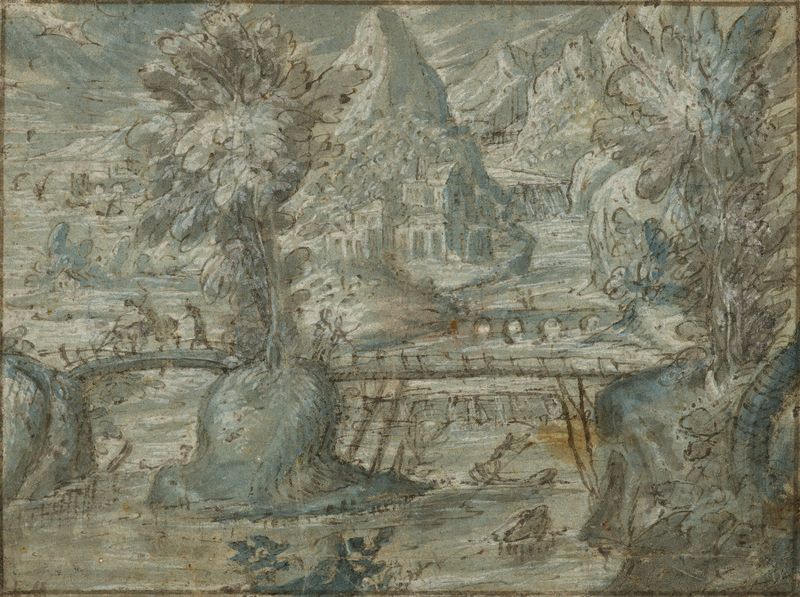
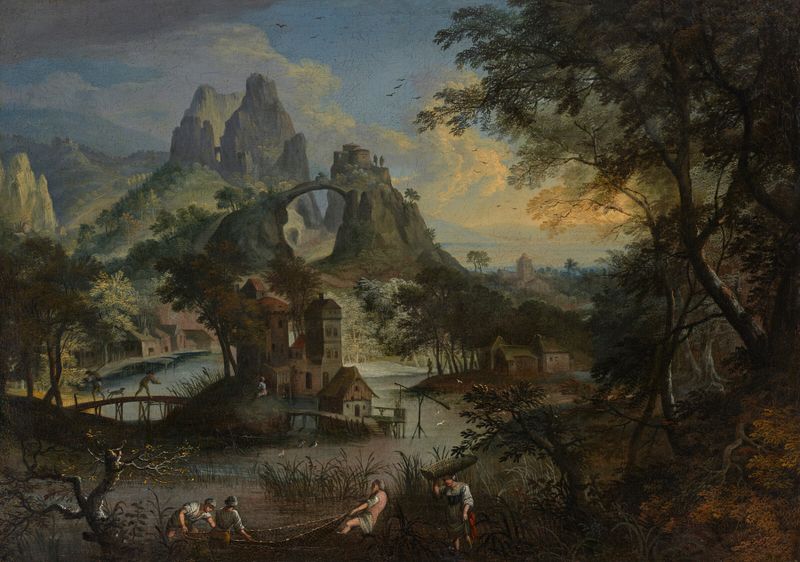
Is this a mirror — or a memory? The tension between the past and present resonates deeply within the lush landscape, hinting at destinies intertwined with ancient ruins and fleeting moments of pastoral life. Look to the center of the canvas, where the rushing river serves as a vivid artery, drawing the eye into its shimmering depths. The classical ruins, half-blanketed by verdant foliage, rise majestically to the left, their weathered stones bathed in soft, golden light. The shepherds, diminutive yet vital, traverse the terrain, their gestures evoking a timeless struggle between humanity and nature, between survival and the beauty of a world steeped in history.
The palette of greens and blues contrasts with the warm hues of the ruins, creating a dialogue that is both harmonious and fraught. Beneath the surface, the painting whispers of a destiny intertwined with the passage of time, of the fleeting nature of both life and legacy. The river, often a symbol of time’s relentless flow, hints at the inevitability of change, while the ruins stand as solemn reminders of civilizations lost and the fragility of human endeavors. The shepherds, caught in this moment, symbolize the continuity of existence amidst the decay, underlining a poignant balance between hope and nostalgia. Lodewijk Toeput painted this landscape in the late 1590s, a period marked by the flourishing of late Renaissance art and Northern Mannerism.
Living in Italy for much of his life, Toeput was influenced by the classical revival that permeated the era, melding serene landscapes with historical references. During this time, Europe was experiencing significant cultural shifts, with a growing interest in the interplay between nature and human existence, reflected in his evocative portrayal of this pastoral scene.