Paysage montagneux avec un pont au-dessus de la rivière — History & Facts
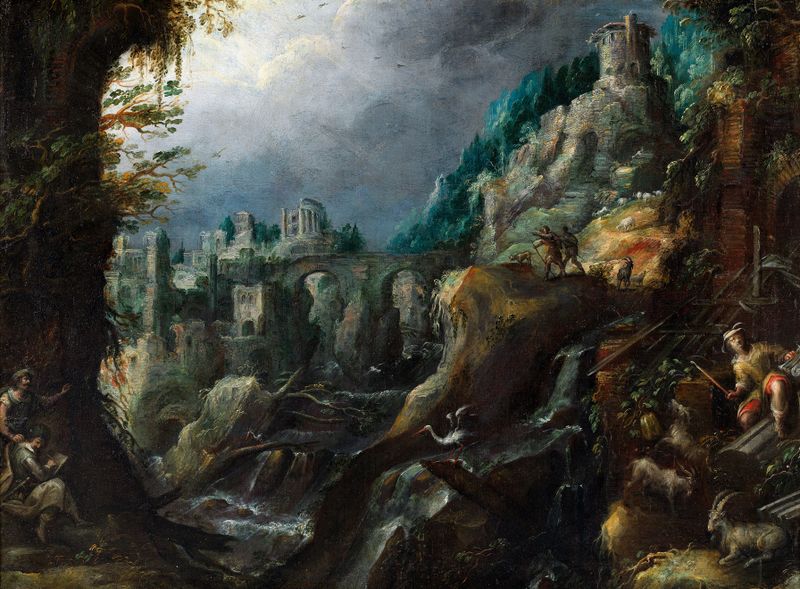
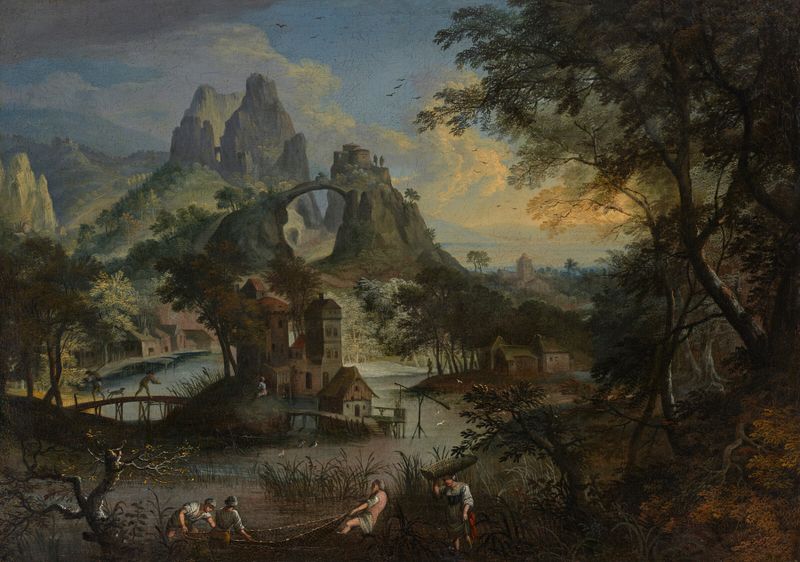
Where does light end, and longing begin? A serene landscape can mask the tumult beneath its surface, revealing not just beauty but the violence of nature’s untamed spirit. Look to the foreground, where a delicate bridge arches gracefully over the rushing river. The gentle curve of the bridge contrasts sharply with the chaotic energy of the water below, hinting at the fragility of human attempts to tame the wild. Focus on the lush greens and vibrant blues that populate the painting; they invite you in, yet the sharpness of the mountains looming in the background serves as a reminder of nature's formidable presence.
The artist employs a soft palette, yet the tension between the calm surface and underlying turbulence offers a rich narrative thread. This artwork spins a tale of duality; the serene setting juxtaposes the violent force of the river, suggesting that tranquility often conceals deeper struggles. The bridge symbolizes a tenuous connection, precariously straddling the divide between the peaceful landscape and the potential chaos of the water below. Each brushstroke seems to whisper of a yearning for harmony in a world where beauty and danger coexist in delicate balance. Lodewijk Toeput painted this piece during a period marked by personal exploration and evolving artistic thought, though the precise date remains elusive.
Emerging from the Dutch Golden Age, when landscape painting flourished, he sought to capture not just physical places but the emotional landscapes that accompany them. During this time, the art world was reeling with new ideas, and Toeput’s work reflects an engagement with the complexities of nature that resonates still today.