Berkshire Landscape — History & Facts
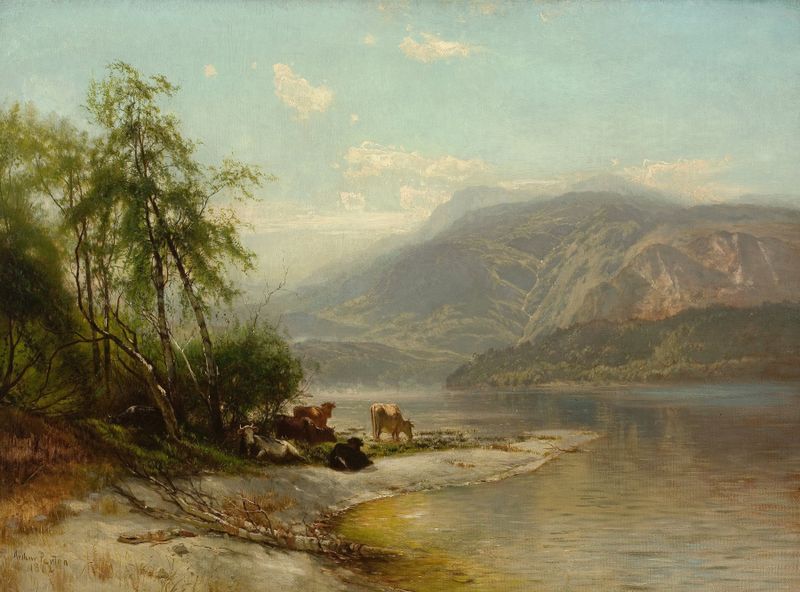
Could beauty survive in a century of chaos? In Berkshire Landscape, a serene world unfolds, whispering secrets of nature’s resilience amidst the tumult of human existence. Look to the center of the canvas, where soft hills roll gently against a tranquil sky. Notice how the artist masterfully blends earthy greens with warm, golden hues, creating a harmonious palette that invites the viewer into a realm of peace. The wisps of clouds dance above, their light reflecting on the landscape below, guiding your eye through the undulating forms of trees that sway silently in the breeze. Beneath the surface of this idyllic scene lies an interplay between stillness and the unseen forces of change.
The shadows cast by the trees hint at the passage of time, perhaps evoking nostalgia for a simpler past. The subtle contrast between the vibrant foreground and the distant, muted hills suggests the tension between the permanence of nature and the fleeting nature of human life. This landscape, while beautiful, is also a reminder of the inevitable transformations that shape our world. In 1872, Arthur Parton painted this piece during a period marked by rapid industrialization and social upheaval in America.
Living in the midst of a changing landscape, he sought to capture the enduring beauty of the natural world, contrasting it with the chaos of the era. Parton was connected to the Hudson River School tradition, which emphasized the importance of nature, and in this work, he solidified his legacy as an artist dedicated to portraying the serenity that can exist even amidst the loud march of progress.