Cows Watering at River’s Edge — History & Facts
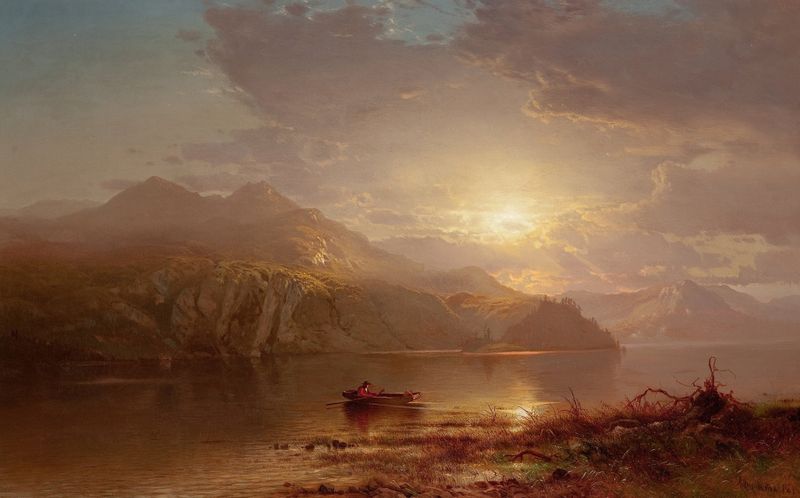
In Cows Watering at River’s Edge, this notion of tranquility amid a fleeting moment speaks volumes about the balance between serenity and the chaos of life. Look to the left at the gentle curve of the river, its surface reflecting the soft hues of dusk. The cows, stoic and patient, gather at the water’s edge, their forms rendered with tender strokes and warm earth tones that evoke a sense of nostalgia. Notice how the golden light bathes their backs, creating a luminous contrast against the cool, emerald grass lining the riverbank.
The composition draws the eye along the meandering flow of water, inviting viewers to linger in this pastoral oasis. Yet, beneath this calm facade lies a subtle tension. The vibrant color palette hints at the madness of time slipping away, as the day gives way to night and the world shifts into shadows. The cows, while seemingly at peace, also serve as a reminder of humanity's dependency on nature — a delicate balance that could easily tip toward chaos.
The stillness of the moment captures both the beauty and fragility of rural life, evoking a sense of longing for a simpler existence. In 1882, Arthur Parton was immersed in the American landscape painting movement, capturing the essence of rural life in a rapidly industrializing world. Living in the Hudson River Valley, he found inspiration in its serene beauty, creating works that reflected both the charm and precariousness of the natural environment. This piece, painted during this period of transition, showcases his mastery of light and color, resonating with an undercurrent of nostalgia and the inevitability of change.