Berkshire Landscape — History & Facts
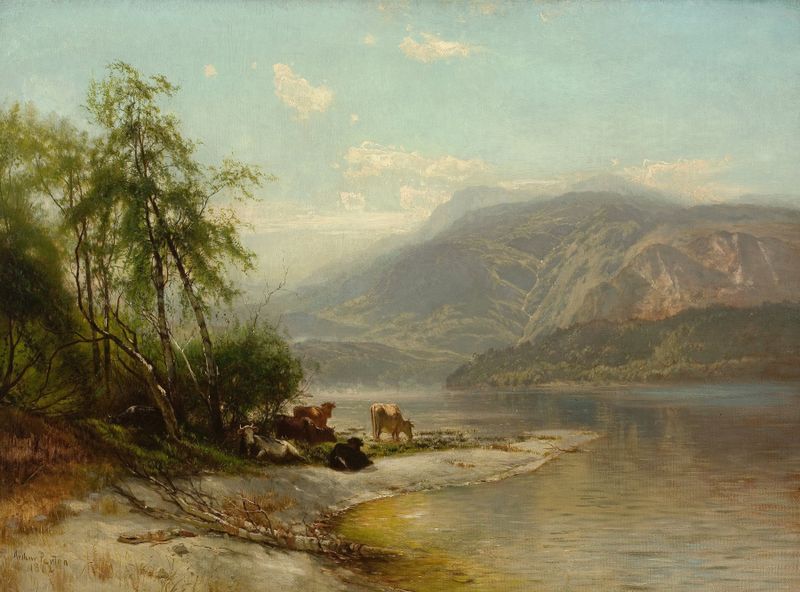
When did color learn to lie? In Arthur Parton's Berkshire Landscape, hues dance between reality and illusion, beckoning an exploration of nature's chaos and calm. Look to the left at the vibrant greens that cradle the rolling hills, a lush blanket draped under the expansive cerulean sky. Notice how the dappled sunlight spills onto the landscape, creating a play of light and shadow that gives depth to the scene. The brushstrokes swirl with a loose, impressionistic technique, infusing the work with both energy and movement, inviting the viewer to wander through the undulating terrain. Yet amid the serene beauty, tension brews beneath the surface.
The juxtaposition of the tranquil sky against the chaotic masses of trees hints at the unease of change, as the landscape teeters on the edge of wildness. Faint signs of human presence, a distant farmhouse barely peeking through the foliage, suggest a fragile coexistence with nature, where the line between order and disorder blurs. Each element whispers a tale of both harmony and conflict, reminding us of the complexity inherent in our surroundings. In 1872, Parton painted this work while residing in the Berkshires, a time when American landscape painting was gaining prominence.
The post-Civil War era was marked by a search for identity amid a rapidly changing nation, as artists began to explore the deeper emotional resonance of the American landscape. Parton's style reflects this transitional moment, capturing both the beauty and chaos of nature, while simultaneously challenging viewers to reconsider their perceptions of the familiar.