
Bildnis Emilie Weiss — History & Facts
What holds the viewer in Bildnis Emilie Weiss by Albert Anker is the quiet gravity of the child’s gaze, meeting us with a seriousness that belies her age. The painter has chosen a moment of stillness: the girl, in a crisp white dress, sits on a patterned red blanket, her hand resting on a plush toy ram. The toy’s woolly body and gently curling horns echo the innocence and gentle curiosity of childhood, while the delicate blue flowers scattered on her dress and clutched in her hand offer a whisper of play.
The deep green foliage behind her frames the scene, pushing the light and the girl forward, so that the soft roundness of her face and the textures of her dress and toy seem almost tangible. The palette is warm and natural, rooting the scene in the everyday world, yet the careful composition and the directness of the child’s expression invite us to linger and wonder what she is thinking. Created in 1868, this portrait belongs to a tradition of 19th-century European child portraiture, a genre that flourished as the middle class grew and families sought to commemorate their children’s earliest years. Such works were often commissioned to mark milestones or simply to capture the fleeting innocence of youth, and artists like Albert Anker became known for their ability to render the small, telling details of domestic life.
The presence of the plush toy—described in the source as “mit Plüschtier”—signals the growing importance of childhood as a distinct, cherished phase, a notion that was gaining ground in this period. Today, the painting is held in the Beurret & Bailly collection, a reminder that history has kept few traces of Emilie Weiss herself, but much of the world she inhabited. Look again at the way the light falls on her dress, and you might sense the quiet pride of a family, and the careful attention of an artist who understood the power of a child’s presence.
More Artworks by Albert Anker

Portrait Of A Girl
Albert Anker
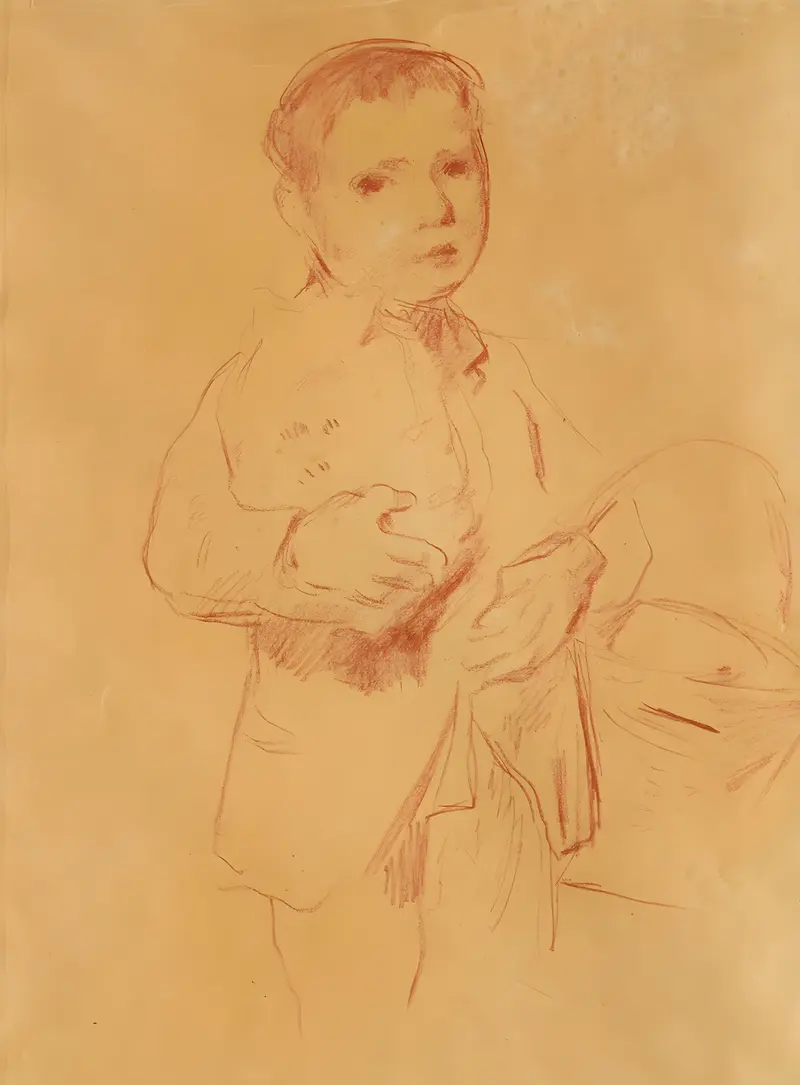
Boy with a basket
Albert Anker
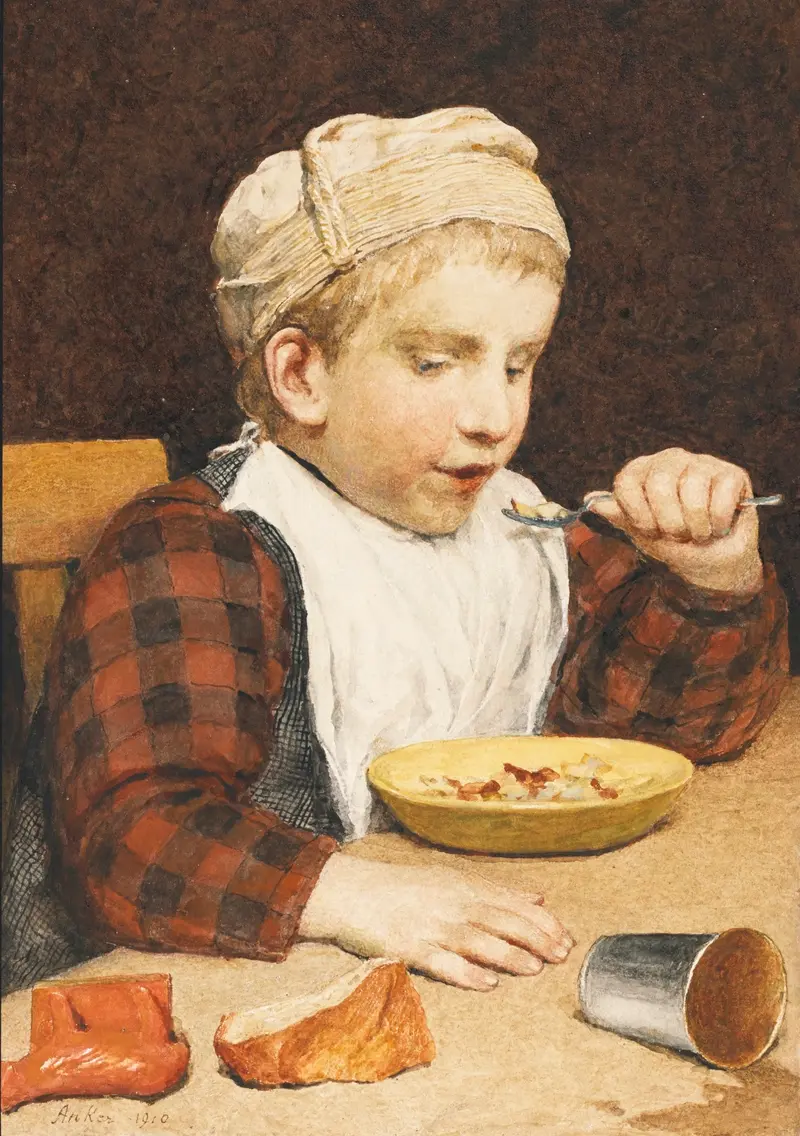
Knabe Mit Mütze Beim Essen
Albert Anker
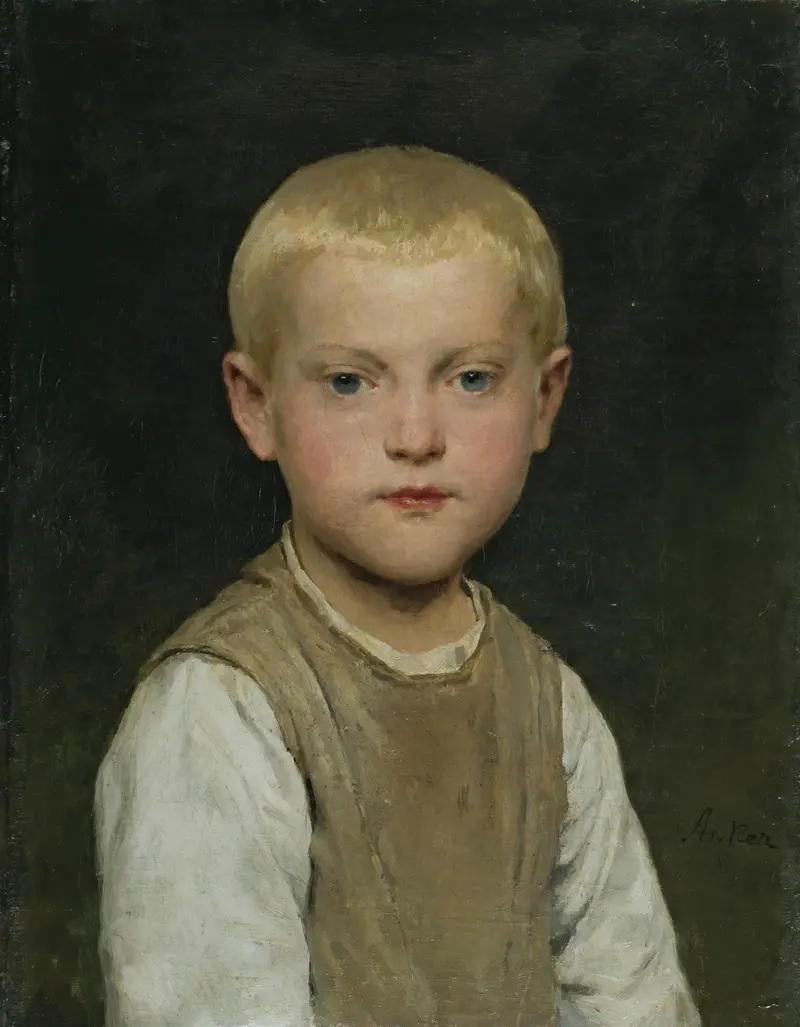
Knabenbildnis (Dr Heiri)
Albert Anker
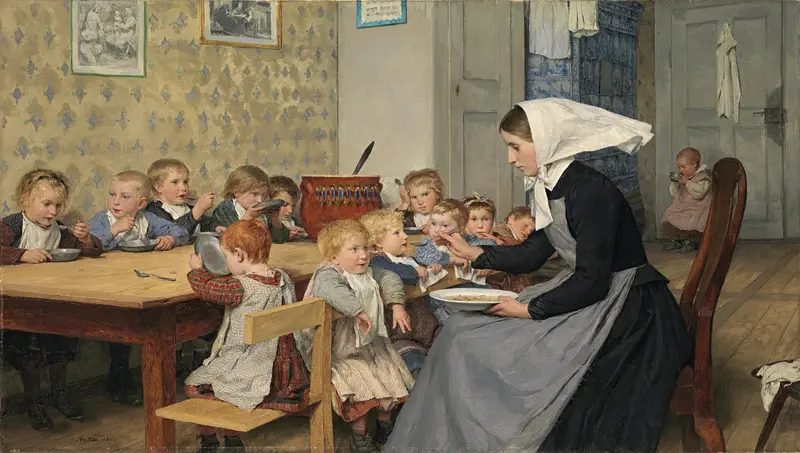
Die Kinderkrippe I
Albert Anker

L’instituteur et le pasteur
Albert Anker
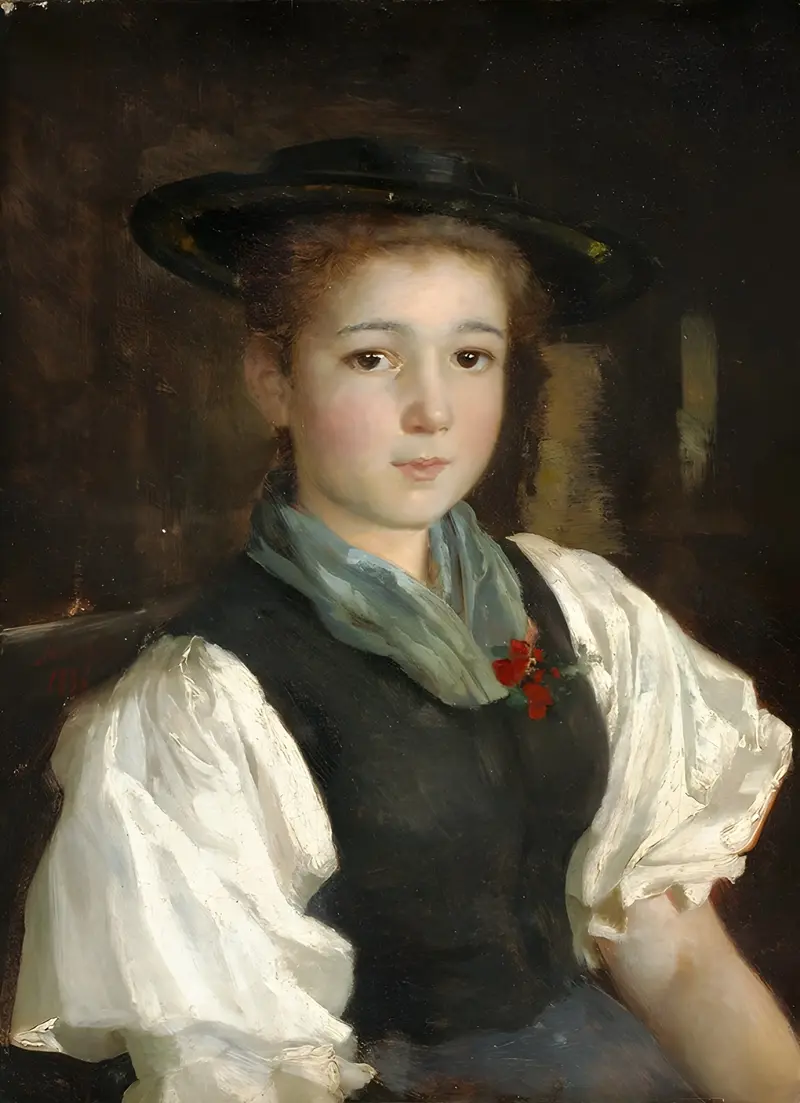
Bauernmädchen (Farm Girl)
Albert Anker
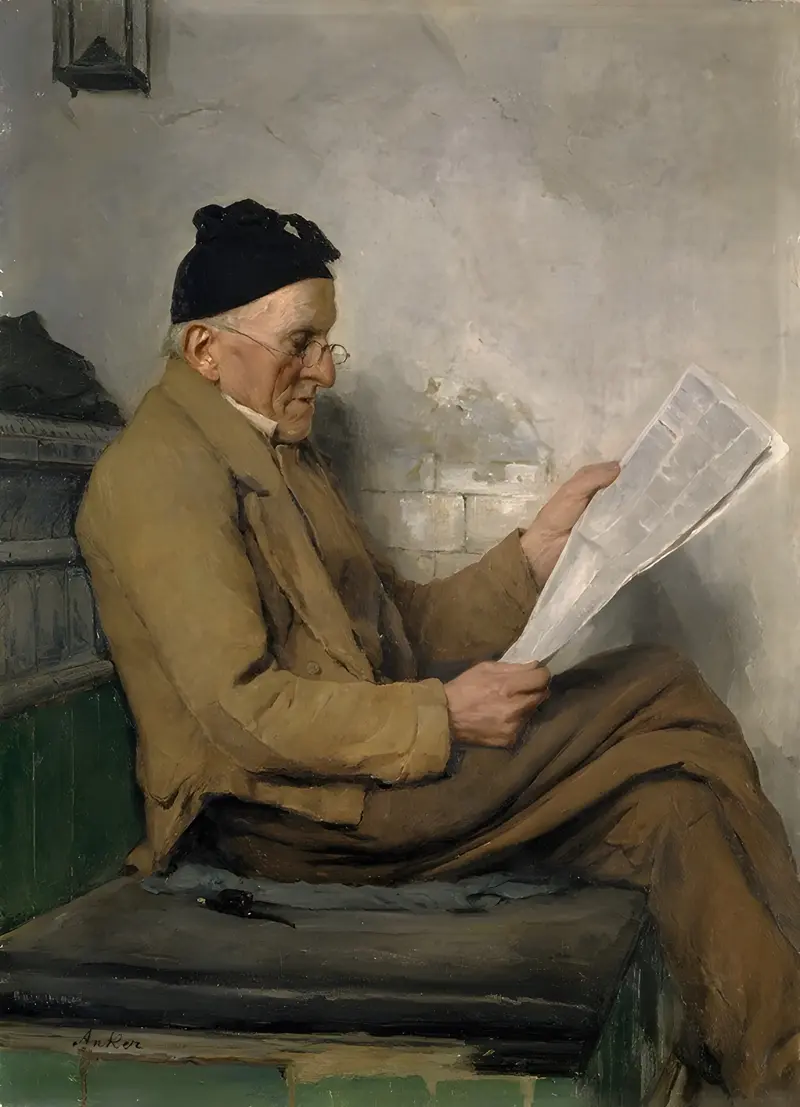
Farmer Reading on the Stove Bench
Albert Anker
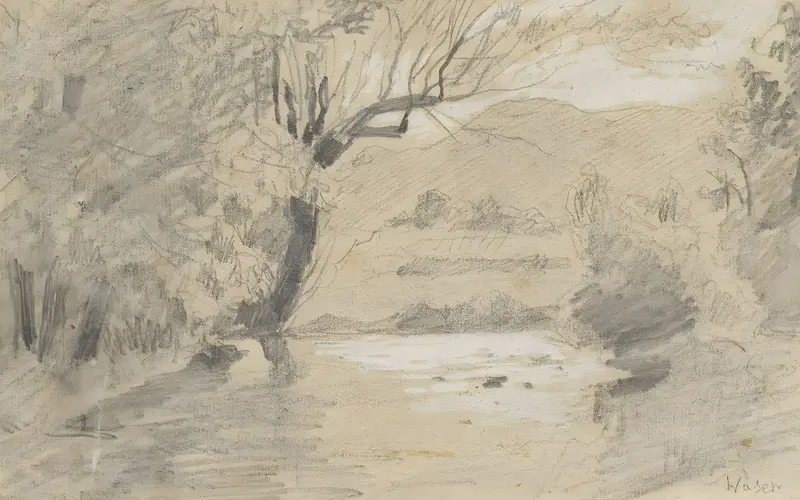
Flusslandschaft in Wasen (Emmental)
Albert Anker
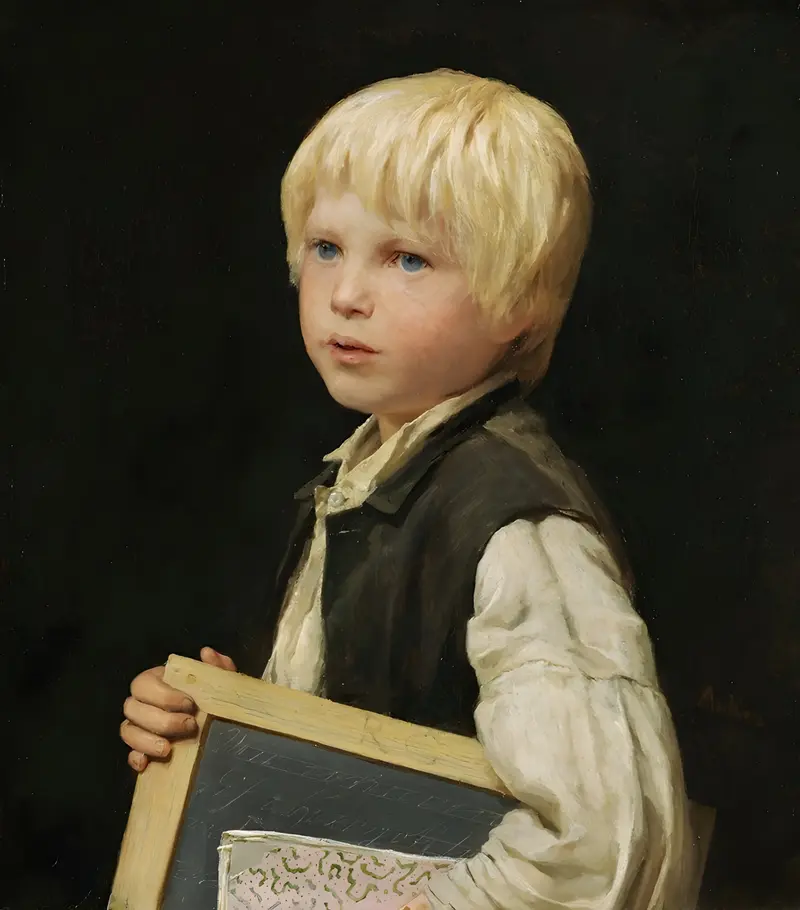
School Boy
Albert Anker





