Bishop’s Cleeve from Cleeve Hill — History & Facts
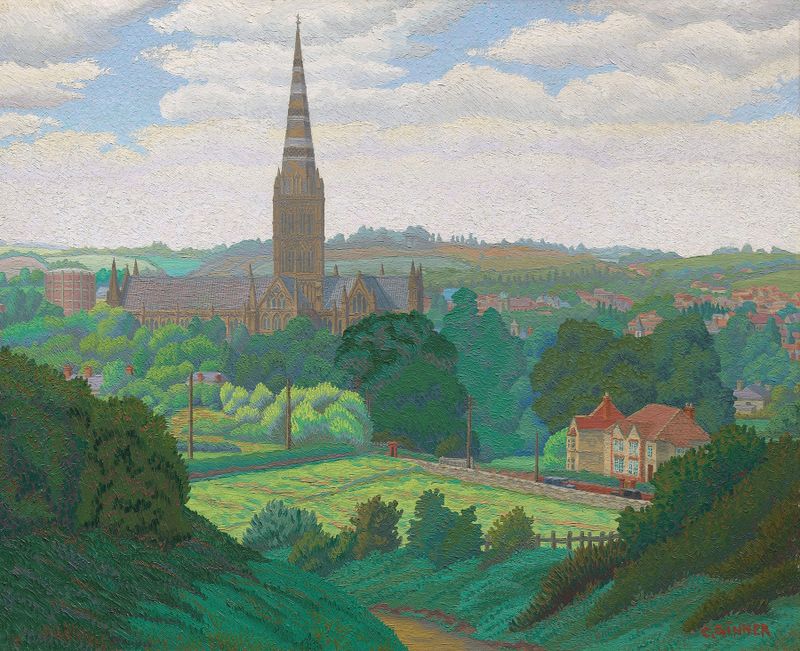
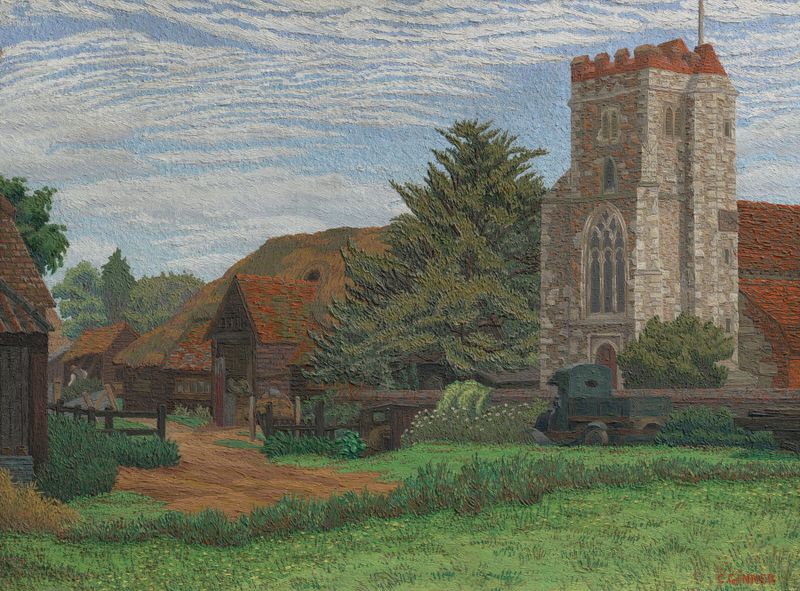
What if beauty was never meant to be finished? In Bishop’s Cleeve from Cleeve Hill, an ethereal landscape unfolds, a snapshot of serene existence that invites contemplation on the passage of time and legacy. Look to the expanse of rolling hills and fields that dominate the canvas, where the vibrant greens and golds blend seamlessly into the soft blue sky. Notice how the brushwork, both loose and intentional, creates a dynamic rhythm across the surface, guiding your gaze from the foreground to the distant horizon. The light plays delicately, dappling the landscape in a gentle embrace, highlighting the textured layers and the intricate interplay of shadow and sunlight, inviting viewers to explore every corner. Within this tranquil scene, one can sense a quiet tension between nature’s permanence and human transience.
The undulating hills, steadfast in their beauty, contrast sharply with the fleeting moment captured on canvas – a reminder that while landscapes endure, our interpretations and experiences are ephemeral. The soft strokes evoke a sense of nostalgia, as if the viewer grapples with a memory that is both vivid and elusive, hinting at the legacy we leave behind in our appreciation of nature. Charles Ginner painted this work in 1950, during a time when the British art scene was evolving and embracing new modernist influences. Living in a post-war era, Ginner sought solace in the English countryside, finding inspiration in its enduring beauty while navigating his own artistic journey.
This period marked a significant transition in his style, as he blended traditional techniques with a fresh modern perspective, ultimately enriching the legacy of British landscape painting.