Church and Barn, Waltham St Lawrence — History & Facts
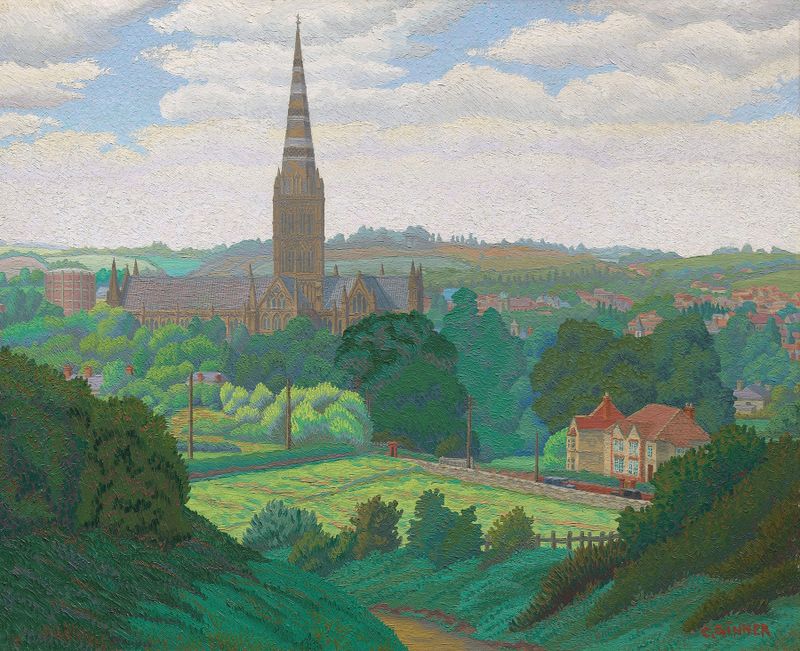
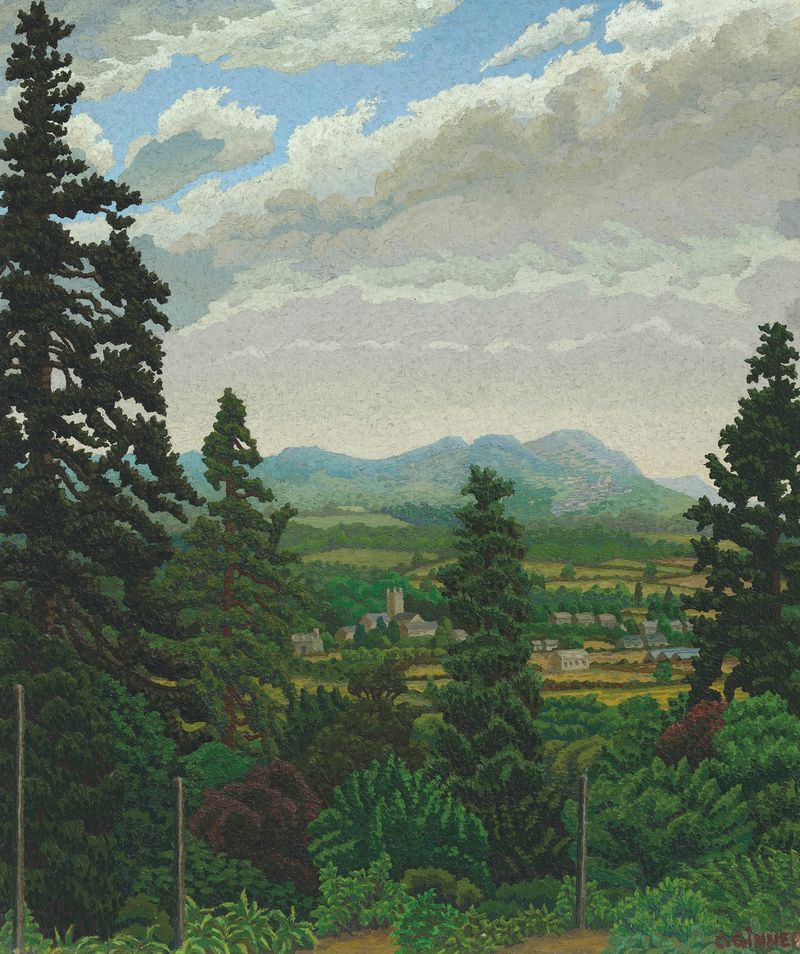
What if beauty was never meant to be finished? In the stillness of a quiet English landscape, the world holds its breath, revealing an ephemeral moment that whispers of both mortality and the sublime. Look to the center where the church stands resolutely, its crisp lines drawing your gaze. Surrounding it, the gentle contours of the barn and rolling hills are bathed in a soft, muted palette of greens and browns. Notice how the warm sunlight dances across the rooftops, casting elongated shadows that create a patchwork of light and darkness — a delicate interplay that invites contemplation.
Ginner’s brush work is both precise and fluid, capturing an essence that transcends mere representation. As you take in the scenery, consider the contrasts of permanence and transience. The church, a symbol of endurance, towers over the fleeting presence of the barn, suggesting a dialogue between spiritual and earthly realms. The play of light not only highlights the physical beauty but also hints at the inevitable passage of time, reminding us that each moment is both precious and ephemeral.
This tension evokes a poignant reflection on our own existence, revealing the fragility that underlies the visible world. Created in 1937 while the artist was residing in England, this work reflects the interwar period's search for identity and meaning. Ginner, influenced by the post-impressionist movement, sought to express a sense of place and emotional depth through his landscapes. At a time when the world faced uncertainties, his focus on serene, pastoral scenes offered a comforting contrast to the tumultuous backdrop of contemporary life.