Blaue Meereslandschaft im Mondschein — History & Facts
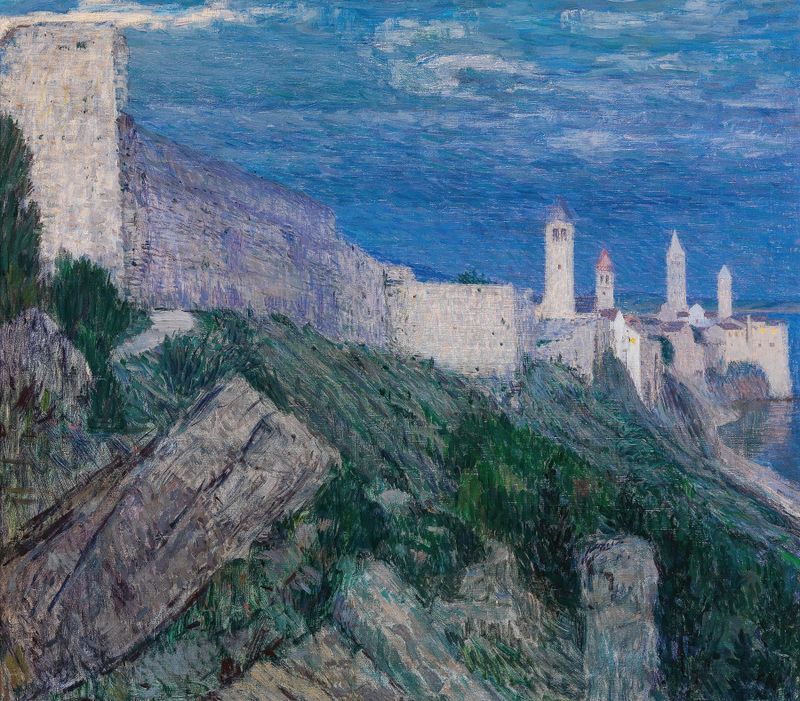
When did color learn to lie? In the depths of a blue landscape, whispers of destiny linger beneath the shimmering surface, urging us to question what we perceive and what truth lies hidden beneath. Look to the center of the canvas, where the moon hangs low, casting an ethereal glow across the undulating sea. The rich cobalt hues blend seamlessly, merging sky and water as if the two were destined to become one. The strokes are fluid yet deliberate, invoking a sense of movement while enveloping the viewer in a tranquil embrace, a serene yet haunting invitation to delve deeper. Upon closer inspection, notice the contrast between the serene moonlight and the turbulent waves that seem to pulse with a life of their own.
The interplay of light and shadow creates a dance of emotions—calm juxtaposed with an undercurrent of unrest. This duality mirrors the essence of existence itself, where beauty and turmoil coexist, suggesting that our destinies are shaped by both serenity and chaos alike. Max Kurzweil painted Blaue Meereslandschaft im Mondschein in 1900, during a time when he was deeply influenced by the Symbolist movement and the emerging trends of Expressionism. Living in Vienna, he sought to encapsulate profound emotional truths through color and form.
This work reflects his exploration of the mystical and the subconscious, amidst a world grappling with rapid changes in society and art.