
Blick auf den Hochvogel — History & Facts
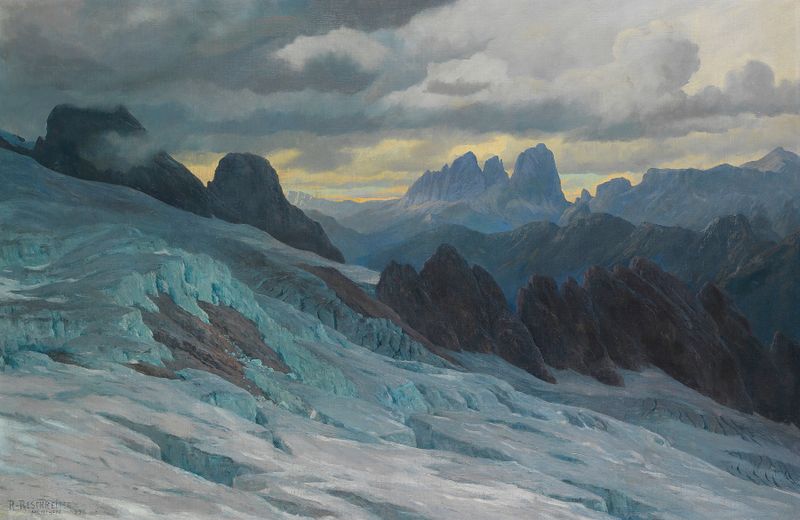
What if beauty was never meant to be finished? In Blick auf den Hochvogel, we stand before a breathtaking tableau, where the ephemeral dance of nature touches the soul with a bittersweet grace. Look to the left and let your gaze wander across the majestic peaks, their rugged forms defined by a soft interplay of light and shadow. The artist masterfully employs a palette of greens and blues, evoking an atmosphere that is both serene and haunting. Notice how the delicate brushstrokes create a sense of movement in the clouds, as if they are fleeting moments captured in time, inviting contemplation on the transitory nature of life itself. Hidden within this idyllic landscape are contrasts that provoke deeper reflection.
The vibrant, flourishing flora at the foreground stands in stark juxtaposition to the distant, imposing mountains, suggesting a dialogue between life’s vitality and the permanence of nature’s grandeur. This tension evokes an awareness of mortality, reminding us that beauty, much like the passing seasons, is both precious and temporary, urging us to cherish each moment. In 1900, Rudolf Reschreiter painted this work amidst a burgeoning art scene in Europe, where the Romantic movement was giving way to Impressionism. Reschreiter, an observer of the world around him, grappled with the concepts of nature and existence during a period marked by industrial change and personal introspection.
This painting, capturing the majesty of the Hochvogel, reveals his pursuit of transcendence in a world that felt increasingly ephemeral.
More Artworks by Rudolf Reschreiter
Browse all →
Die Meilerhütte im Wettersteingebirge (von Westen aus gesehen)
Rudolf Reschreiter
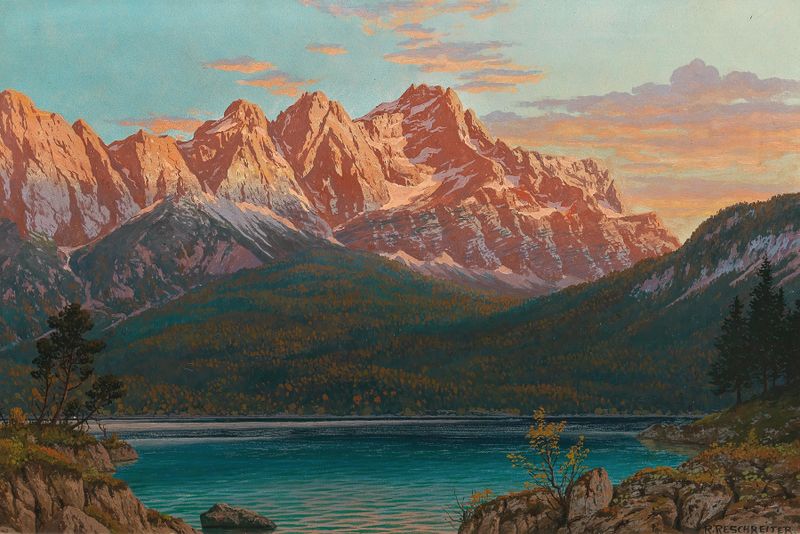
Föhnabend, Eibsee mit Zugspitze
Rudolf Reschreiter
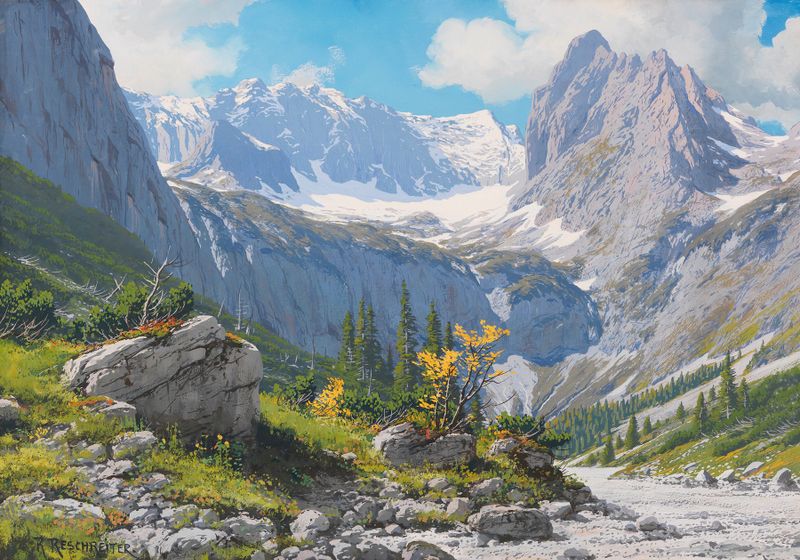
Blick von der Höllentalangerhütte zum Höllentalgletscher und den Riffelwandspitzen
Rudolf Reschreiter
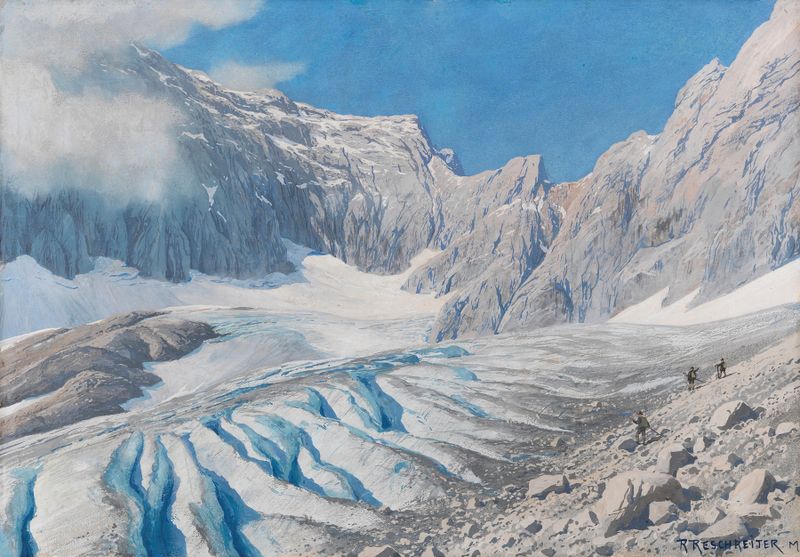
Auf dem Höllentalgletscher (mit Blick auf die Zugspitze)
Rudolf Reschreiter
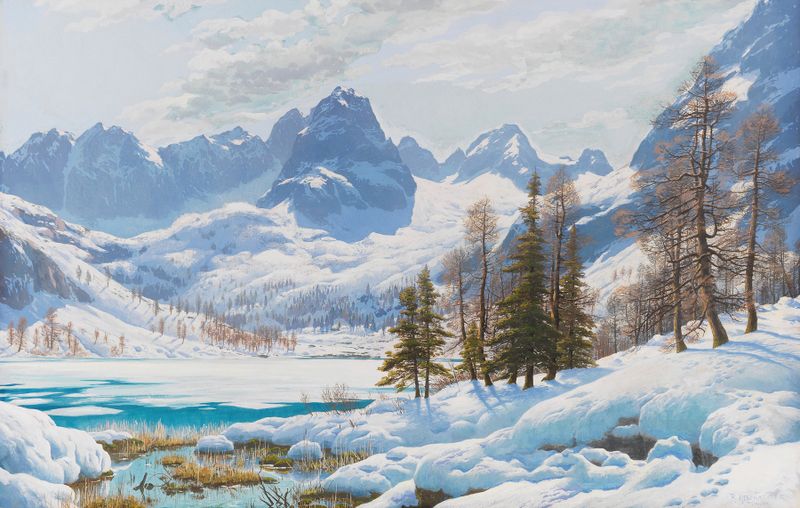
Seebensee bei Ehrwald
Rudolf Reschreiter

Die Meilerhütte im Wettersteingebirge (von Osten aus gesehen)
Rudolf Reschreiter

Der Zugspitzgipfel mit Wetterwarte und Münchner Haus
Rudolf Reschreiter

Blick von der Höllentalangerhütte zum Höllentalgletscher und den Riffelwandspitzen
Rudolf Reschreiter
In den Dolomiten
Rudolf Reschreiter

Morgenstimmung am großen Ahornboden (Karwendelgebirge)
Rudolf Reschreiter





