Blick auf Geroldsau bei Baden-Baden mit Tierstaffage — History & Facts
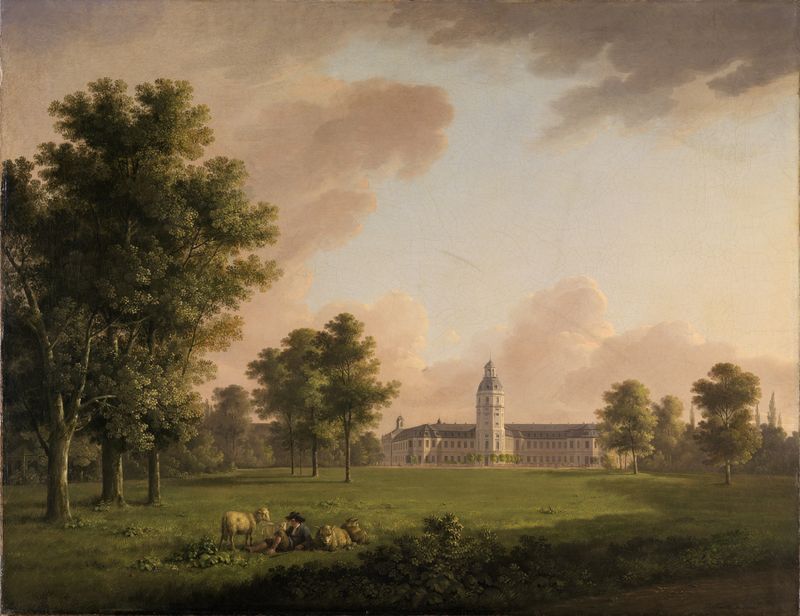
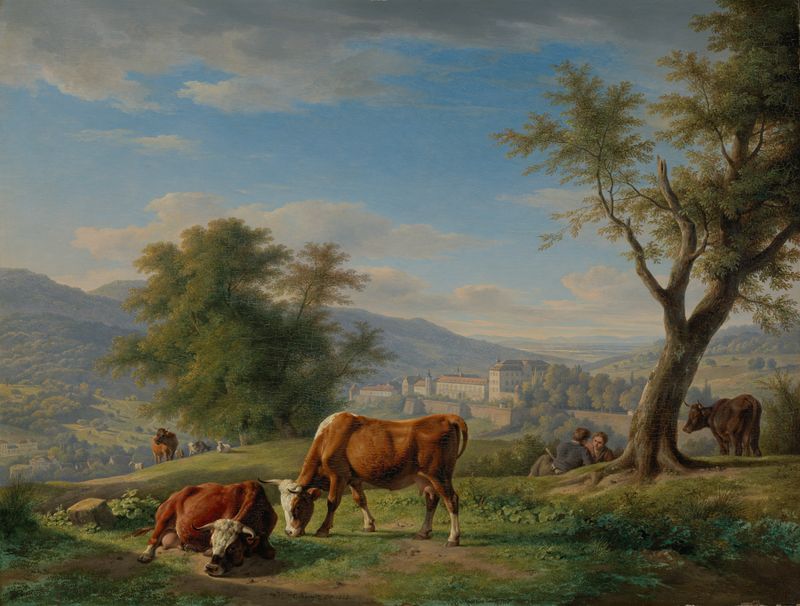
When did color learn to lie? In the interplay of hue and shadow, nostalgia weaves itself through the canvas, whispering secrets of a world both remembered and imagined. Look to the left where delicate greens and soft browns guide your gaze into the heart of the landscape, gently framing a serene village nestled against the hills. Notice how the artist employs a palette of muted, earthy tones that evoke warmth, yet hint at the coolness of twilight settling in. The gentle brushstrokes combine to create a sense of depth, allowing sunlight to dance playfully across the rooftops, while the contrasting shadows breathe life into the scene. As you immerse yourself deeper, subtle details emerge—figures meandering through the foreground, momentary glimpses of domestic life that anchor the idyllic setting.
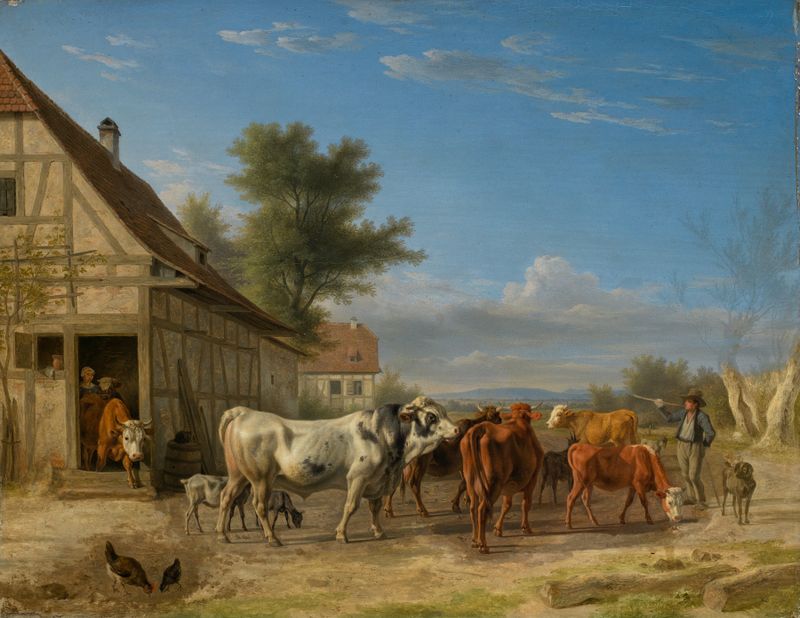
The presence of animals adds a layer of charm and connection to nature, enhancing the feeling of harmony between humanity and the landscape. Each element speaks to the simplicity of existence, yet collectively they hint at an underlying tension between the past and the fleeting nature of time. In 1827, Carl Kuntz produced this piece during a period of artistic transition in Germany, where Romanticism was giving way to realism. Living in a world that wrestled with social and political change, he sought solace in the beauty of nature and everyday life.
This work embodies a yearning for a simpler, more tranquil era, reflecting both his personal sentiments and the broader artistic movement of his time.