Weidende Tiere in Landschaft bei Baden-Baden — History & Facts
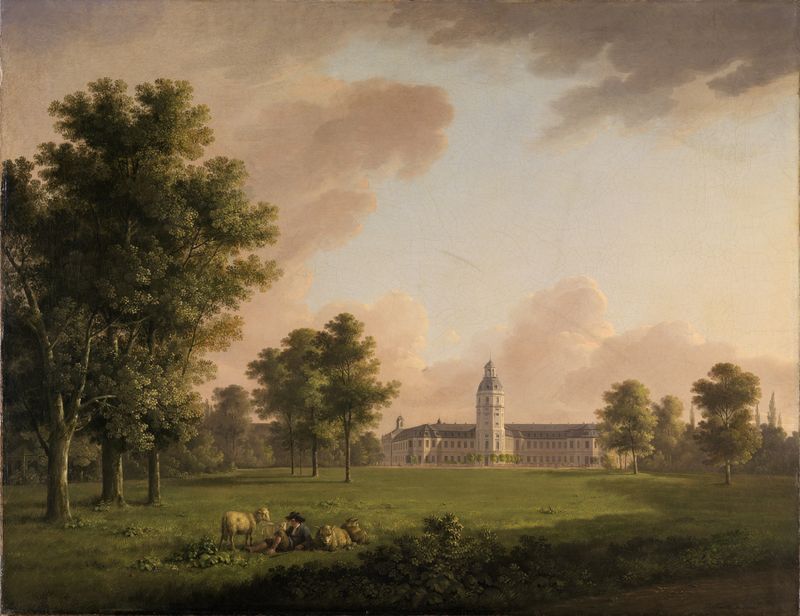
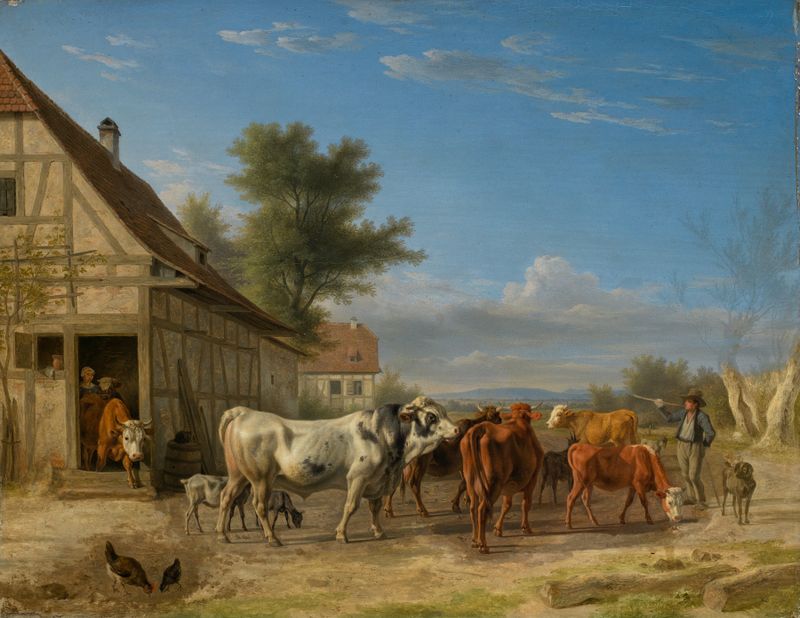
Did the painter know this moment would outlive them? In Weidende Tiere in Landschaft bei Baden-Baden, Carl Kuntz encapsulates a serene pause in nature, a moment of quiet rebirth amid a landscape brimming with life. Look to the foreground where gentle animals graze, their forms softened by the delicate brushstrokes that evoke a sense of tranquility. Notice how the light spills across the verdant grass, illuminating the rich, earthy tones that breathe life into the scene. The composition invites the viewer's eye to wander through the idyllic surroundings, with lush trees framing the horizon and the soft hues of the sky hinting at a day just beginning or drawing to a close. Within this pastoral tranquility lies a profound contrast.
The animals, symbols of pastoral peace, suggest a simple existence, yet their presence is juxtaposed against the expansive landscape that calls for exploration and adventure. The interplay of light and shadow hints at the transient nature of these moments, reminding us that beauty can be fleeting. The soft contours of the hills cradle the scene, encapsulating not just a physical space but an emotional sanctuary that whispers of rebirth in the cycle of life. Kuntz painted this work in 1825, during a time of burgeoning Romanticism in art, characterized by a deep appreciation for nature's beauty and a yearning for emotional expression.
Residing in Baden-Baden, an area renowned for its picturesque landscapes, the artist was influenced by the surrounding beauty and the shifting tides of artistic movements, contributing to a legacy that captures not only a scene but a feeling that resonates through time.