Blick auf Karlsruhe von Süden — History & Facts
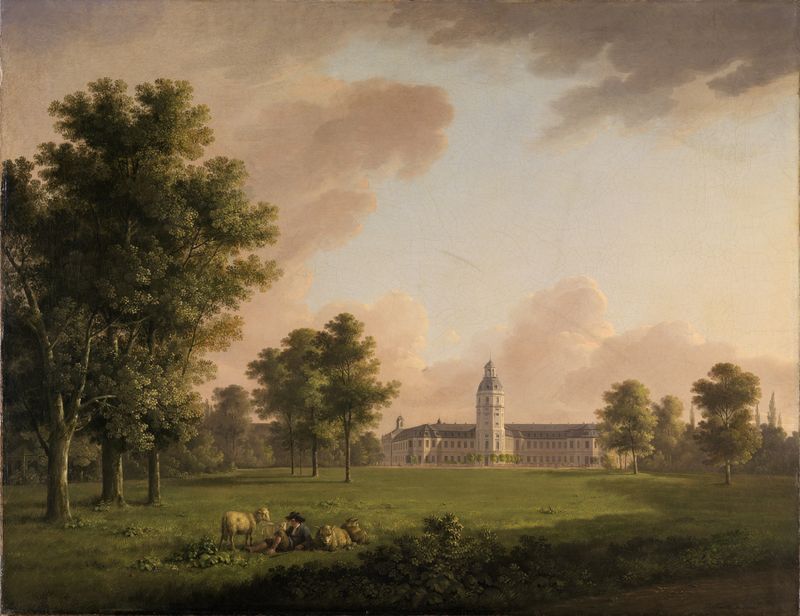
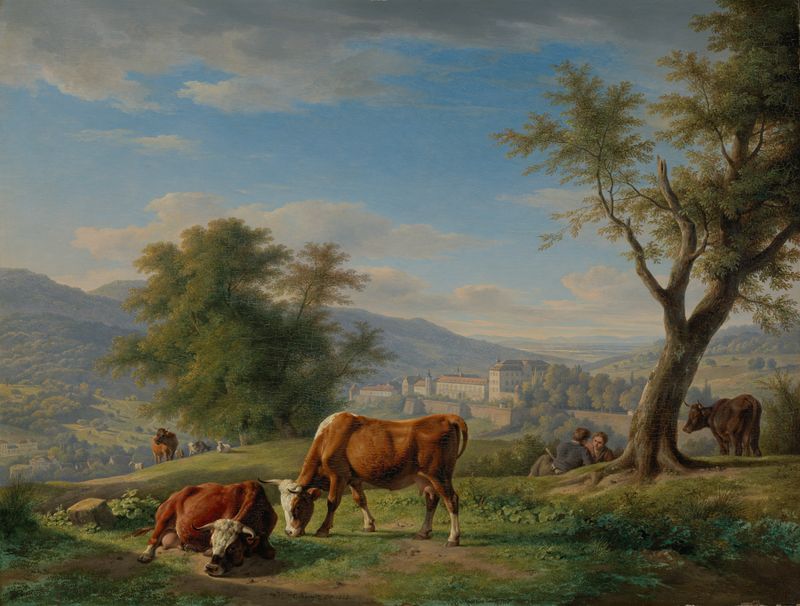
Is this a mirror — or a memory? A vast landscape stretches out, where time seems to linger in a delicate stillness, inviting reflection on what exists and what has been lost. Look to the center, where the prominent figure of Karlsruhe emerges against a backdrop of gentle hills and expansive sky. The soft hues of blues and greens blend seamlessly, captivating the eye and drawing it deeper into the serene scene. Notice how the light dances across the city’s rooftops, creating an interplay of shadow and illumination that adds depth to the composition.
The artist’s brushstrokes evoke not just the physicality of the place, but an emotional essence that bridges the gap between reality and nostalgia. Yet, within this tranquil vista lies a poignant contrast. The foreground, while lush and inviting, hints at an emptiness that echoes through the lush vegetation. The absence of human figures speaks to solitude and yearning, allowing viewers to ponder on the transient nature of life.
The distant mountains loom like sentinels, symbols of permanence against the fleeting moments captured in the cityscape. Each element contributes to a sense of longing, both for the idyllic scene itself and for the interactions that might once have filled it with life. In 1804, when this piece was created, Carl Kuntz was immersed in the burgeoning Romantic movement, capturing landscapes that spoke to both the beauty and melancholy of nature. Living in Germany amidst a period of great change, Kuntz was influenced by the tension between the emerging industrial age and the timelessness of the natural world.
This work reflects his desire to find solace and meaning in the landscapes that surrounded him, marking a moment of artistic expression that resonates with the search for connection in a shifting reality.