
Blick Auf Hallstatt — History & Facts
In moments of chaos, beauty often finds a voice, speaking to the intricacies of human experience and emotion. Focus your gaze on the serene village nestled between the mountains, immediately drawing the eye with its vibrant palette. Look to the left, where the sunlight dances upon the rooftops, illuminating the delicate brushwork that captures each structure’s unique character. The contrast of deep blues and greens against the warm earth tones creates a magnetic pull, inviting exploration of the landscape and its hidden narratives. Yet beneath this picturesque façade lies a tension — the chaos of nature juxtaposed with the tranquility of human life.
Notice how the jagged peaks loom ominously over the idyllic settlement, their shadows hinting at an underlying threat. The stillness of the water reflects both the beauty and fragility of existence, mirroring the delicate balance between serenity and upheaval. Each detail, from the wisps of cloud to the distant figures, speaks to a world on the brink of transformation. In 1874, the artist created this work while residing in Vienna, a time when the art world was blossoming with new movements and ideas.
Amidst the burgeoning interest in realism and the exploration of natural landscapes, he sought to capture the essence of Hallstatt, a village teetering between beauty and turmoil. This period marked his transition towards a distinctive style that would later influence his contributions to the art of his era.
More Artworks by Gustav Barbarini
Browse all →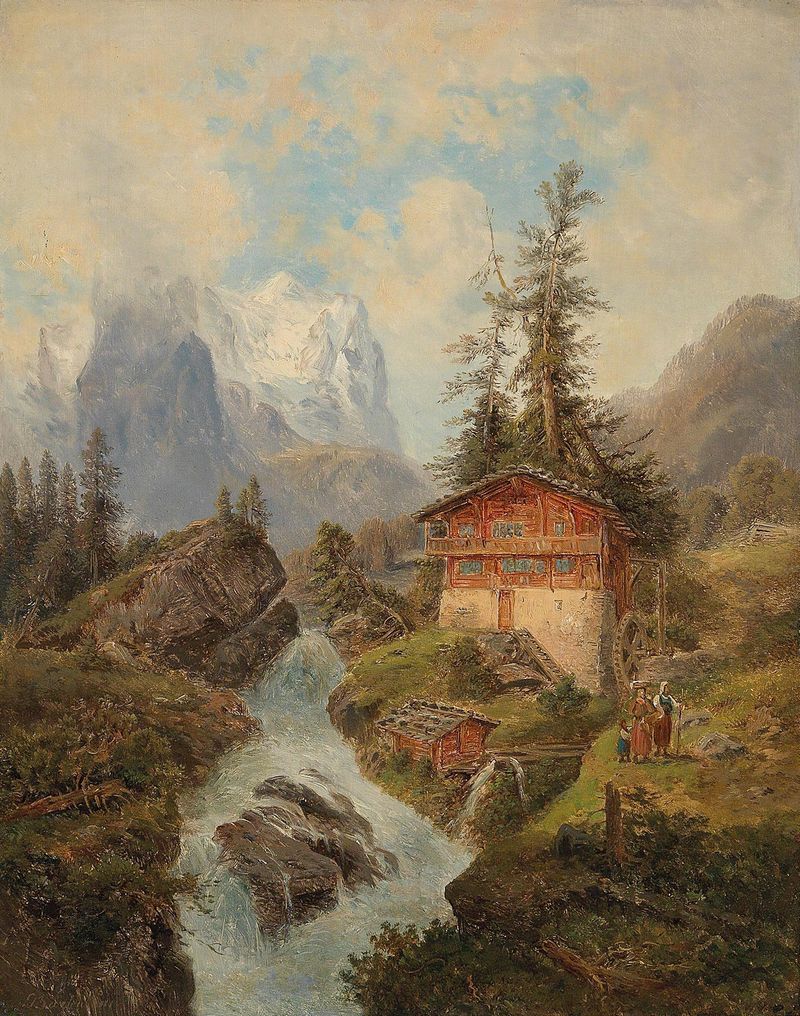
Das Wetterhorn
Gustav Barbarini
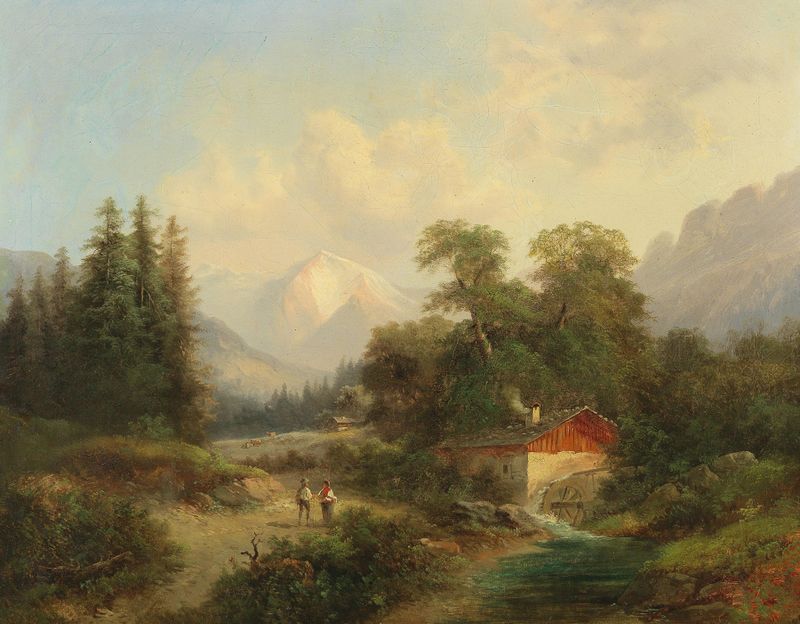
View of the Breite Riss, Puchberg in the Schneeberg Region
Gustav Barbarini
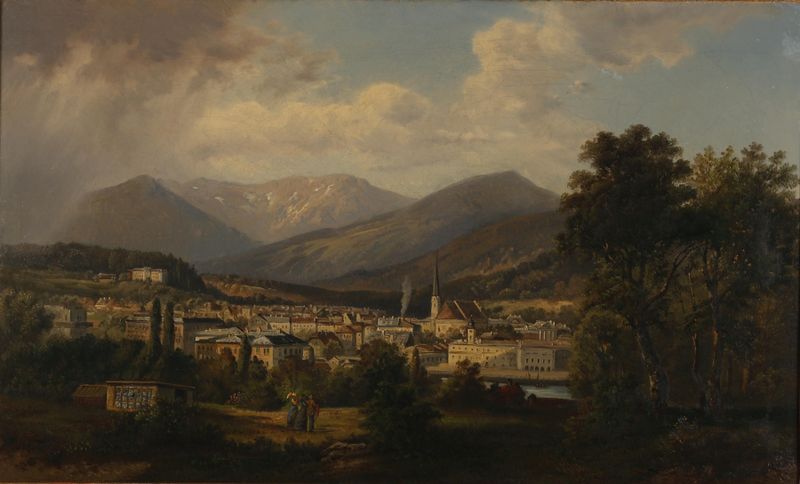
Blick auf Bad Ischl
Gustav Barbarini
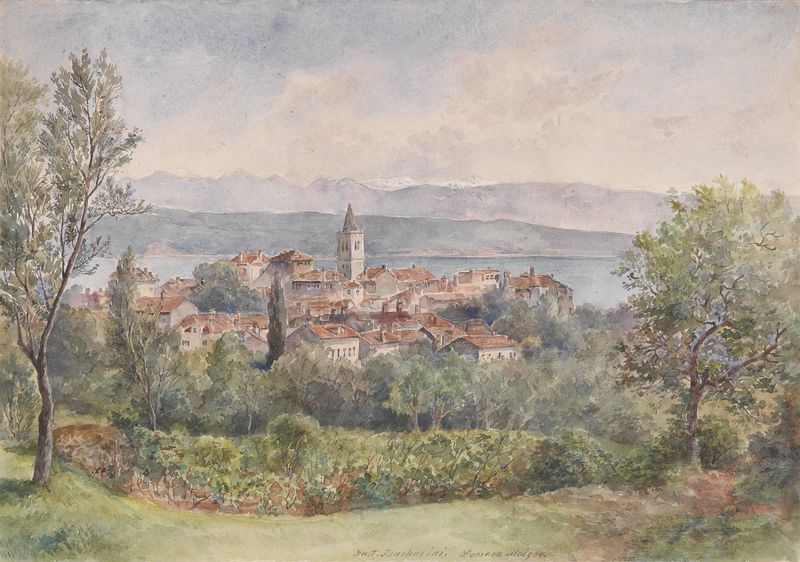
Blick auf Lovran
Gustav Barbarini
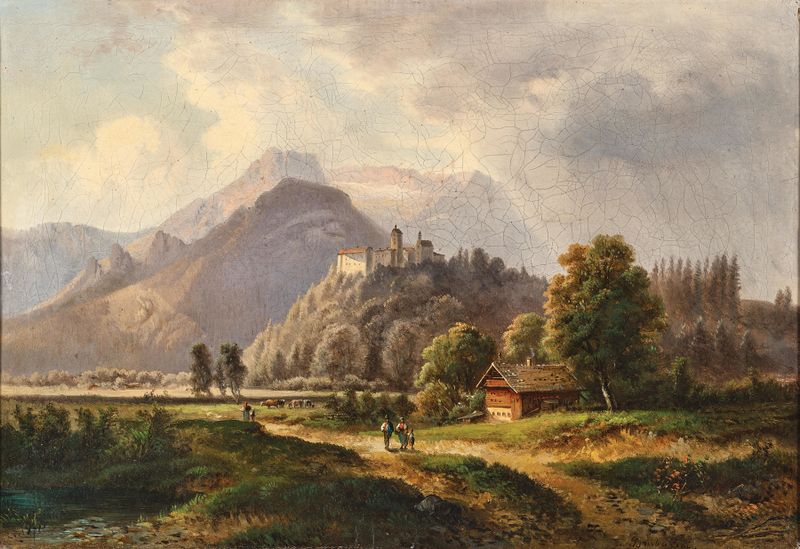
A View of the Glanegg Castle Ruins
Gustav Barbarini
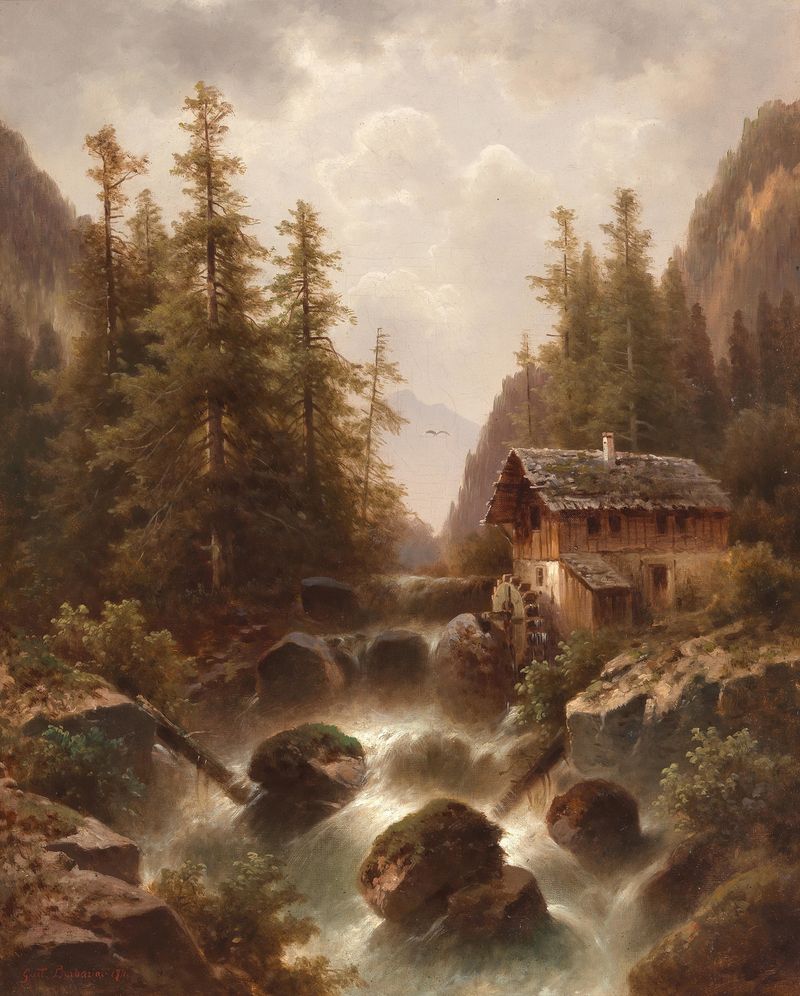
A Mill by a Mountain Torrent
Gustav Barbarini
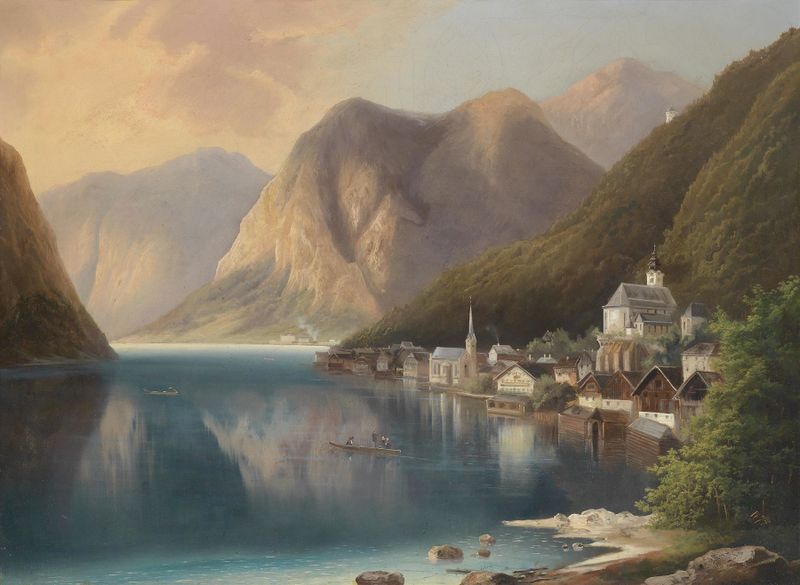
Blick auf Hallstatt
Gustav Barbarini
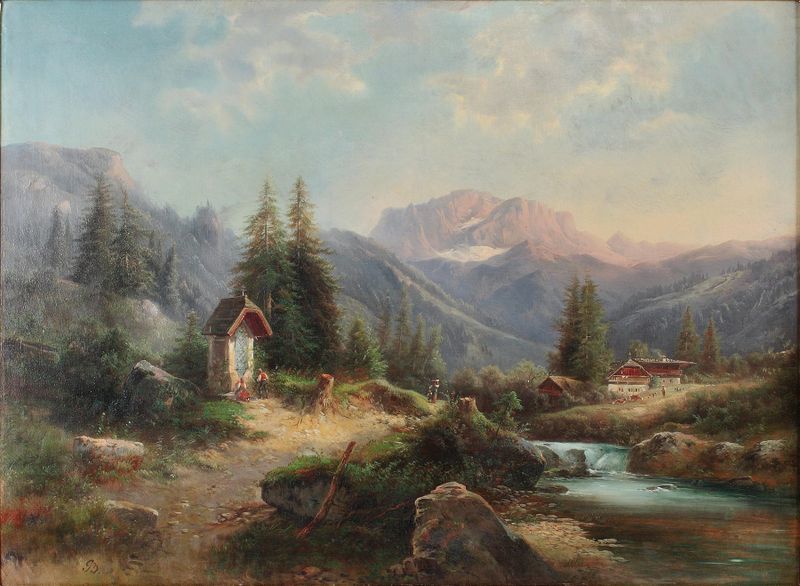
Bachlandschaft mit Figurenstaffage
Gustav Barbarini
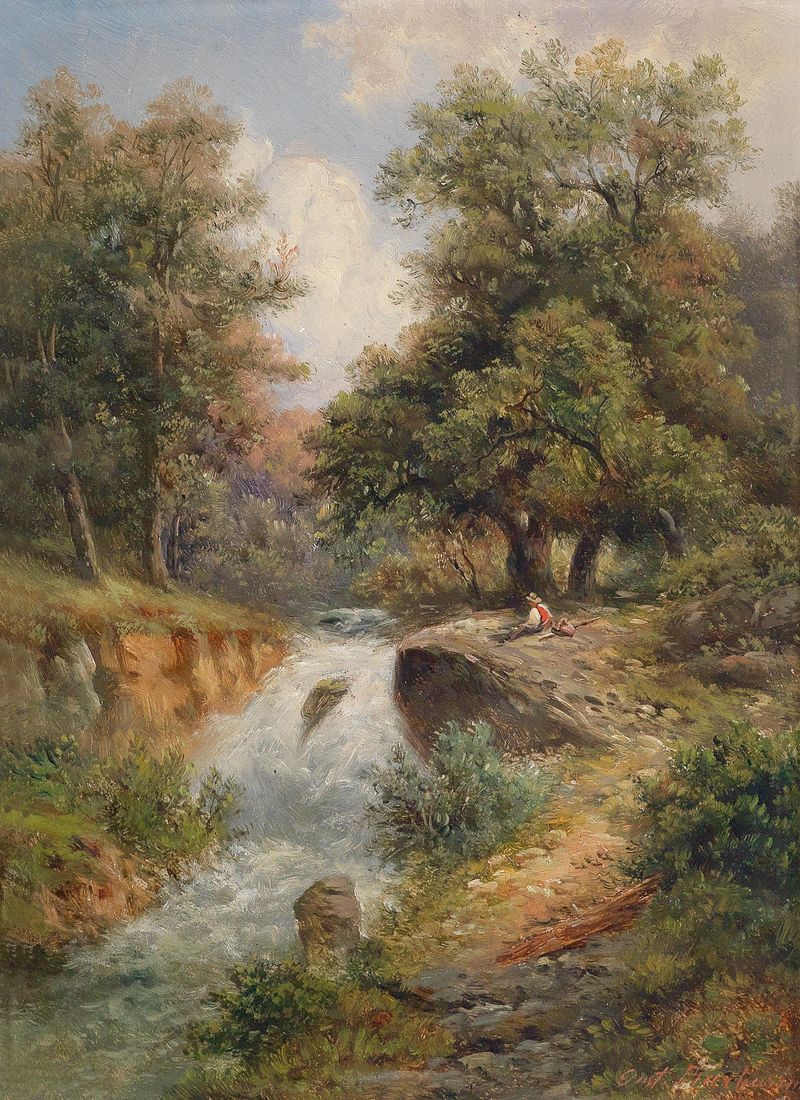
Wasserfall in Tirol in Windisch-Matrei
Gustav Barbarini
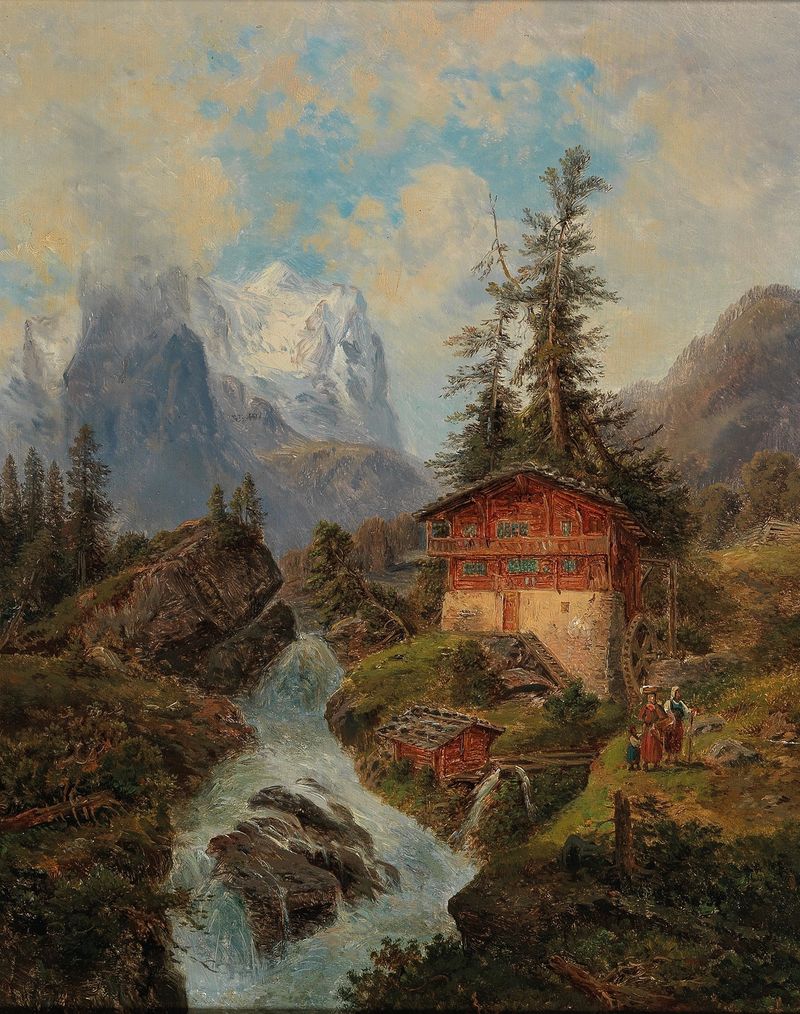
Das Wetterhorn in der Schweiz
Gustav Barbarini





