Blick über das Schanzel zum Augarten — History & Facts
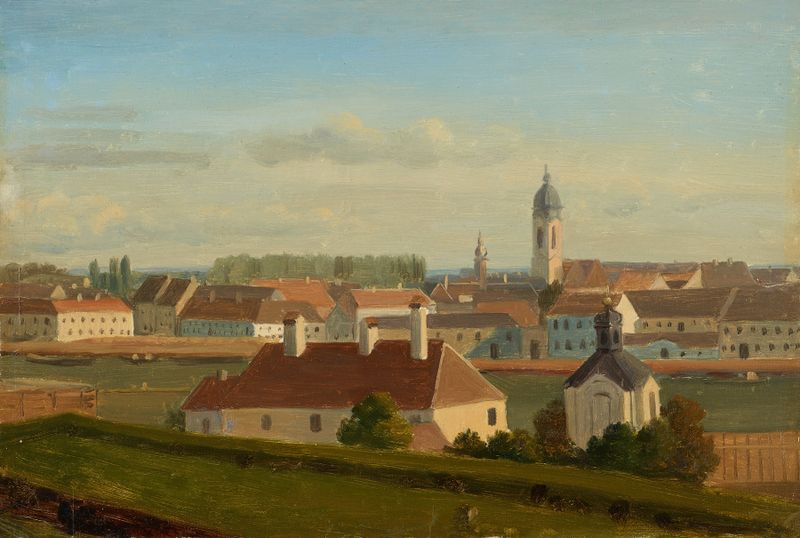
Did the painter know this moment would outlive them? In a world where the chaos of existence sometimes drowns out the whispers of nature, such stillness seems both a gift and a maddening reminder of fleeting time. Look to the left at the gentle curve of the path, winding its way through verdant grass that dances softly in the breeze. This tranquil scene is punctuated by the vibrant greens and soft blues, each hue meticulously applied, creating a sense of depth and inviting the viewer into the landscape. Notice how the light filters through the branches overhead, casting intricate shadows that evoke both peace and an underlying tension — the chaotic rhythm of life just beyond the canvas. As you absorb this serene view, consider the juxtaposition of the idyllic park against the tumultuous backdrop of early 19th-century Europe.
The lush flora embodies hope and renewal, yet hints of madness linger in the periphery — the chaos of war and social upheaval that threatened to unravel the very fabric of society. The delicate balance of light and dark suggests a fragile peace, one that may shatter under the weight of reality. In 1812, Johann Peter Krafft painted this piece during a time of personal and political turmoil. Living in Vienna, he was deeply affected by the Napoleonic Wars that ravaged the continent.
The art world was shifting, drawing on Romantic ideals that sought to capture not just beauty but the emotional currents of existence, and Krafft's work reflects this tension, striving for harmony even as the world outside his canvas was spiraling into chaos.