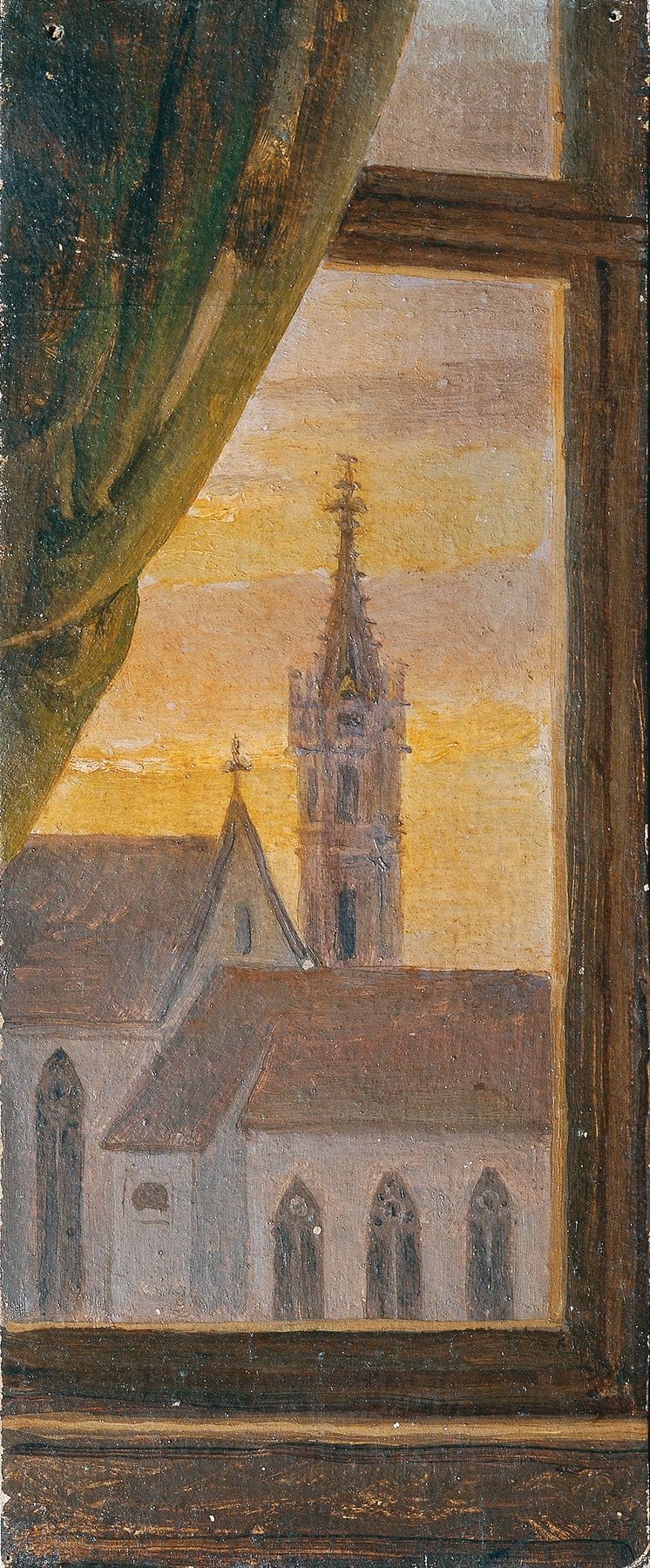
Landschaftsstudie mit brennenden Dörfern im Hintergrund — History & Facts
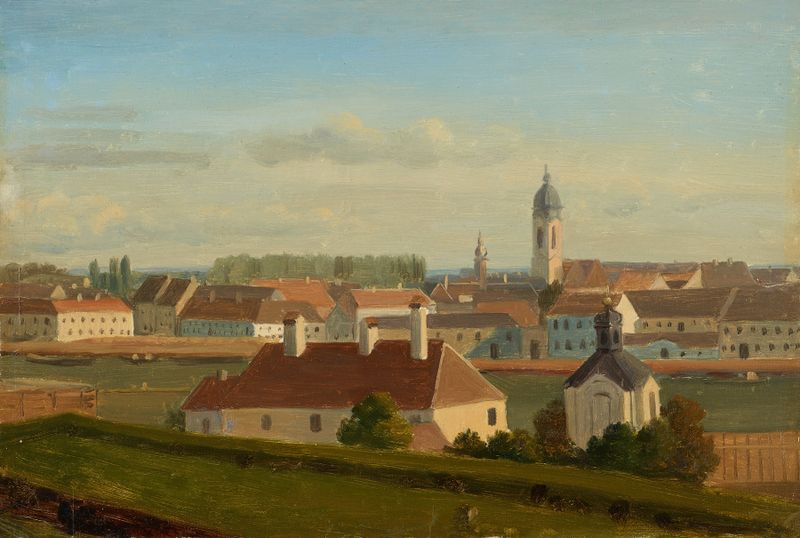
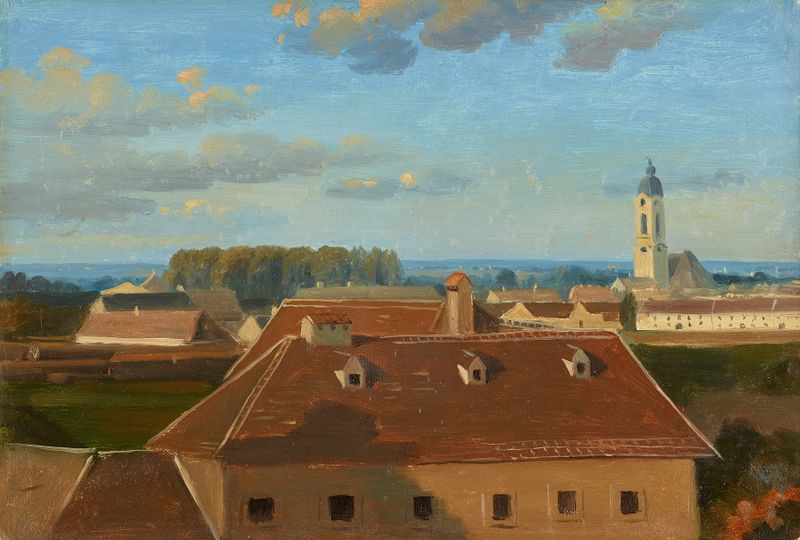
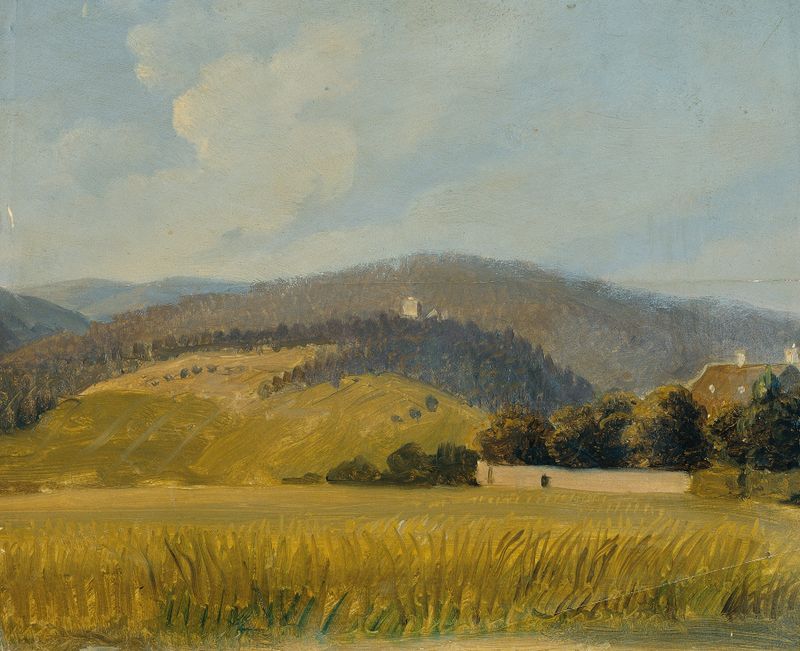
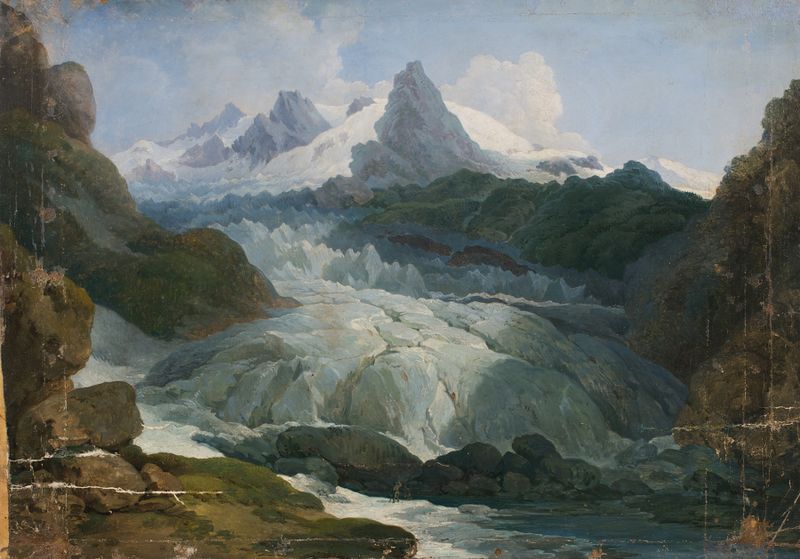
Did the painter know this moment would outlive them? The transient nature of humanity is captured in the vivid landscapes that bear witness to the flames of destruction in the background, a reminder of mortality’s relentless grasp. Look to the center of the canvas, where the undulating hills rise and fall like breaths of a dying world. The warm hues of orange and red contrast strikingly against the cooler blues and greens of the foreground, leading the eye toward the distant infernos. Notice how Krafft employs sweeping brushstrokes to convey the chaos of the burning villages, almost inviting the viewer to feel the heat radiating off the flames, while the serene landscape remains untouched, caught in a moment frozen in time. The contrast between the peacefulness of nature and the devastation of human folly speaks volumes.
The villages engulfed in flames symbolize not just destruction, but the fleeting nature of existence, as lush greenery whispers of life contrasting sharply with the cruel reminder of mortality. Each flame flickering in the distance serves as a metaphor for the fragility of our creations and the inevitable passage of time, suggesting that every moment, however beautiful, may also hold the seeds of destruction. During the years 1830 to 1840, Krafft painted this piece amid a Europe rife with political turmoil and social upheaval. The artist, known for his romantic landscapes, sought to combine beauty with a deeper reflection on the human condition.
As revolutions erupted and societal structures crumbled, the haunting imagery of burning villages became a symbolic representation of the era's chaos and uncertainty, echoing the quiet despair of a world balancing on the edge of transformation.