Blick In Die Bucht Von Palermo — History & Facts
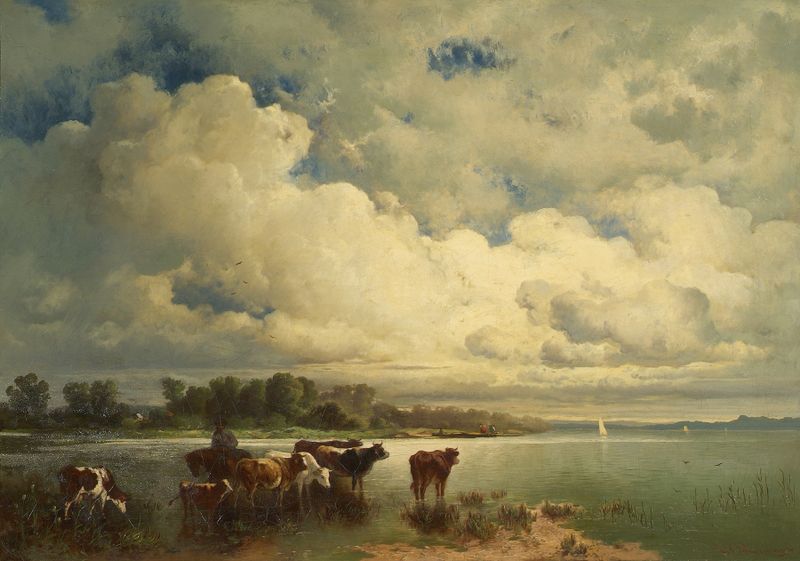
In Blick In Die Bucht Von Palermo, the vibrancy of nature emerges as a canvas for rebirth, inviting viewers to explore the layers of life resting beneath the surface. Begin your exploration by focusing on the horizon where the azure sea meets the soft, golden light of the setting sun. Notice how the warm hues of orange, pink, and gold merge seamlessly with the cool blues and greens of the water. The foreground bursts with a lush tapestry of vegetation, each brushstroke a deliberate choice that brings depth and movement to the scene.
The delicate interplay of light and shadow not only highlights the terrain but also creates a sense of tranquility that envelops the viewer. Delve deeper into the painting's emotional core by observing the contrasts at play. The sweeping calm of the bay juxtaposed with the rich, verdant life surrounding it speaks to the regeneration of nature—its ability to flourish after tumult. Look closely at the small, almost hidden figures of fishermen along the shoreline; their presence adds a narrative of perseverance and harmony with the environment.
This coexistence mirrors a broader theme of renewal, emphasizing how life thrives in the embrace of beauty. In 1845, Carl Schweninger painted this remarkable piece while living in Vienna, amidst a burgeoning interest in realism and plein air painting. His experiences in the picturesque landscapes of Italy influenced his work, as he sought to capture the essence of his surroundings authentically. This period marked a significant evolution in the art world, where artists began to explore the relationship between nature and human experience more profoundly.